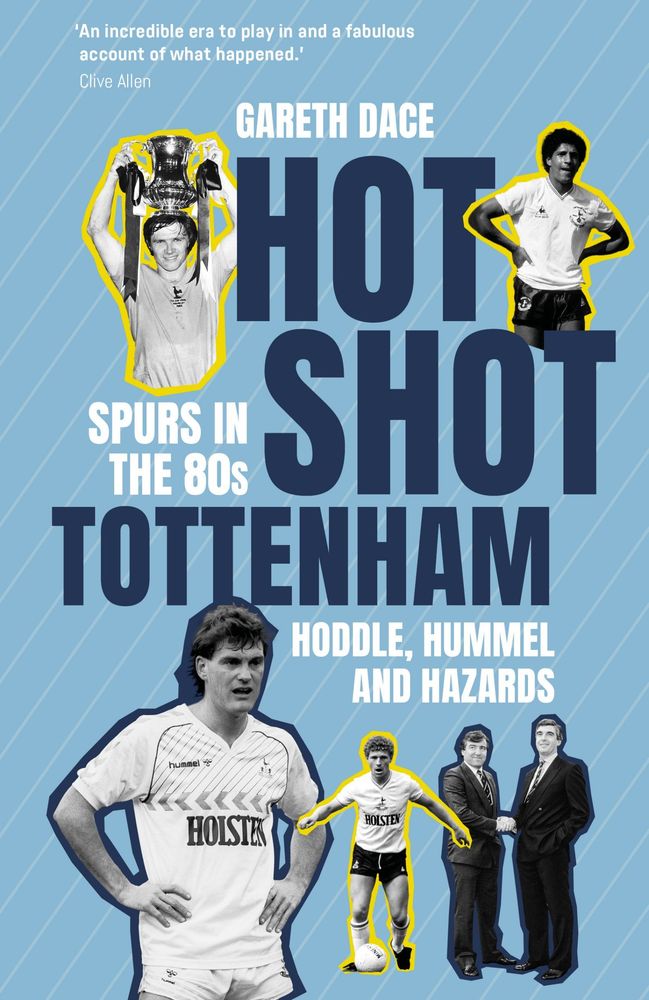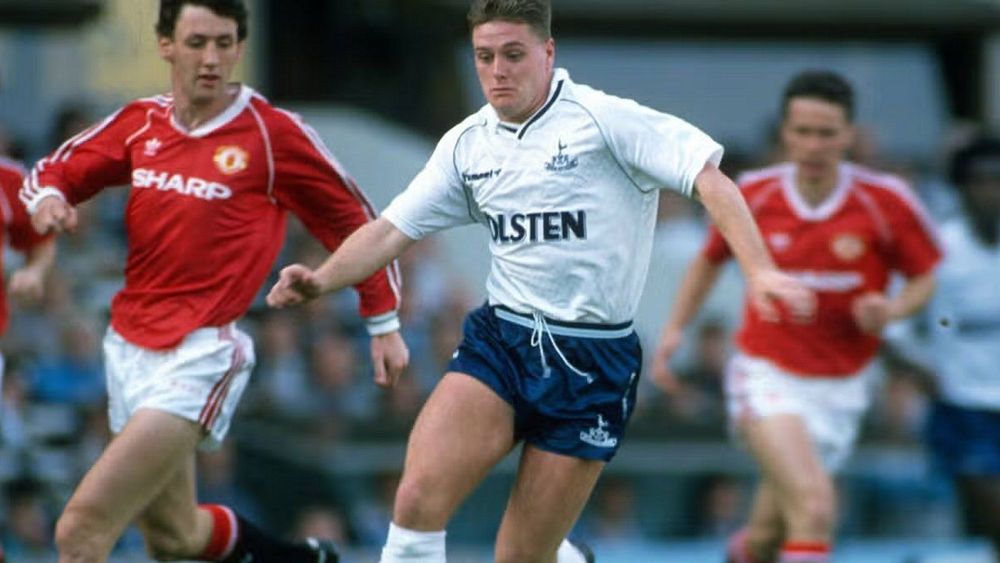
Gareth Dace explains why Micky Hazard, Graham Roberts, Paul Miller and Chris Waddle all became part of a pattern that cost Spurs dearly.
Tottenham Hotspur spent much of the 1980s assembling teams capable of challenging England's best, only to repeatedly lose important players before those sides could establish sustained dominance.
Micky Hazard, Graham Roberts, Paul Miller and, most famously, Chris Waddle all left during the decade, with Tottenham supporters left wondering how some of their most committed and talented players could be allowed to walk away.
For Gareth Dace, author of "Hot Shot Tottenham", there was no single explanation.
Some departures were financial. Others were managerial decisions. And in Waddle's case, the timing created one of the great "what if?" scenarios in Tottenham history.
"Yeah, it's—I mean, obviously talking with the benefit of hindsight in a lot of cases," Dace told Football Presse.
"But Micky Hazard left. He very, very reluctantly left to go to Chelsea. He said he regretted it almost the following day."
Hazard's departure was not simply about a manager deciding he no longer wanted the midfielder.
"Spurs needed—wanted the money for him," Dace said.
"That was the problem, that Scholar received what was then a record transfer fee from Chelsea and Spurs were a PLC by that point, so you're not just responsible to the manager and the supporters, you're responsible to shareholders."
That distinction is important when considering Tottenham's 1980s.
The club was becoming increasingly commercial under chairman Irving Scholar, but that transformation also changed the pressures surrounding decisions over players.
"Definitely missed a trick," Dace said of Hazard's departure.
The same cannot necessarily be said of Graham Roberts, whose exit came after David Pleat took charge.
Dace's research suggests the influential defender's departure was much more directly connected to the manager's view of his squad.
"Roberts, I think that was a manager's decision," Dace said.
"I think that was purely on Pleat that he didn't see value in keeping Roberts at the team, which was probably a personality thing more than a footballing reason."
For Dace, that is one of the more questionable decisions of Pleat's time at Tottenham.
"Which again, I guess, is something that you'd stack in the negatives on the complete summary," he said.
Paul Miller can also be included in the discussion.
"I'm sure he had a bit more left in him," Dace said.
The problem with looking at those departures individually is that it can obscure the wider issue.
Tottenham were repeatedly losing players who understood the club, had already won major trophies and were part of dressing rooms capable of competing with the best teams in England and Europe.
And then came the departure that perhaps remains the most painful of all.
Chris Waddle was sold just after Gary Lineker arrived at White Hart Lane.
"The one that upsets most supporters more than anyone was when Chris Waddle was sold right at the back end of the decade," Dace said.
"And that was a week after Gary Lineker had joined."
The timing was extraordinary.
Tottenham had just acquired one of the world's great goalscorers while already possessing Gascoigne and Waddle, two players capable of providing the creativity and unpredictability to feed him.
"If Lineker, Gascoigne and Waddle had had time together in that Spurs team, now what would that have been like?" Dace said.
"I mean, my goodness, it would have been great fun."
There was also a footballing expectation attached to Lineker's arrival.
"Lineker really signed on the promise that he was going to be playing with Gascoigne and Waddle," Dace explained.
"So I don't think anyone was more miffed than Lineker himself when he then learned that Waddle had been sold."
It is difficult to imagine a more obvious example of Tottenham's failure to preserve a potentially exceptional team.
Dace believes Waddle and Gascoigne had already developed a particularly strong relationship, both on and off the pitch.
"The pair of them, who formed a really, really strong friendship which definitely helped with Gazza settling in," he said.
Their football was equally compelling.
"At the back end of the '88-'89 season, it was almost as if they were in a secret competition to see who could outdo the other one with some incredible skills and goals," Dace said.
"Some of the goals that the pair of them score individually at the end of that season are just quite incredible."
Then Waddle was gone.
For Dace, the loss was made even more frustrating by the fact that Gascoigne was about to enter his extraordinary peak.
"We saw the best of Gazza," he said.
"Maybe more in 1990 rather than perhaps the '80s, but 1990, either side of the World Cup, he was—obviously it's completely subjective—but arguably he was the best player in the world at that time."
Dace's admiration for Gascoigne is obvious, but his argument is less about nostalgia than the consequences for Tottenham.
"I've never seen a player really drag his team through some pretty difficult times and difficult moments in games, as Gazza did, both for Spurs and for England," he said.
And that makes the decision to sell Waddle even harder to assess.
Tottenham had two extraordinary talents who had developed an understanding and a friendship, then added Lineker, one of the finest finishers of his generation.
Instead of seeing what the three could produce together, Spurs broke the combination apart almost immediately.
"I mean, it's so sad that the pair—that pairing was broken up, you know, a week after Gary Lineker was signed," Dace said.
The departures of Hazard, Roberts, Miller and Waddle were not identical cases, and Dace is careful not to pretend they were.
Hazard was partly a consequence of Tottenham's new financial and corporate reality. Roberts was a managerial decision. Miller was an experienced player Dace believes still had something to offer.
Waddle was different again.
His departure came at exactly the moment Tottenham appeared capable of putting together an attacking line-up of extraordinary quality.
But viewed together, the decisions tell us something important about Tottenham's 1980s.
"These were players that were absolutely loving playing for Spurs," Dace said.
"And then to offload them like that seems so strange."
That may explain why the decade continues to produce so many questions for Tottenham supporters.
Spurs had the players. They had the talent. They won major trophies.
But they repeatedly struggled to keep their best footballers together long enough to find out just how far those teams could go.
And perhaps the greatest regret is not the player Tottenham failed to sign, but the teams they never allowed to fully develop.
Gareth Dace is author of "Hot Shot Tottenham: Spurs in the 80s – Hoddle, Hummel and Hazards" from Pitch Publishing - which is available here.