The former Manchester City chairman accepts that the move to the City of Manchester Stadium was essential for the club's future, but the emotional cost of leaving his beloved old ground has never completely disappeared.
“I mean, the move had to be done and the new stadium is fantastic, but I think the old stadiums did have that little bit of something extra,” Bernstein told Football Presse.
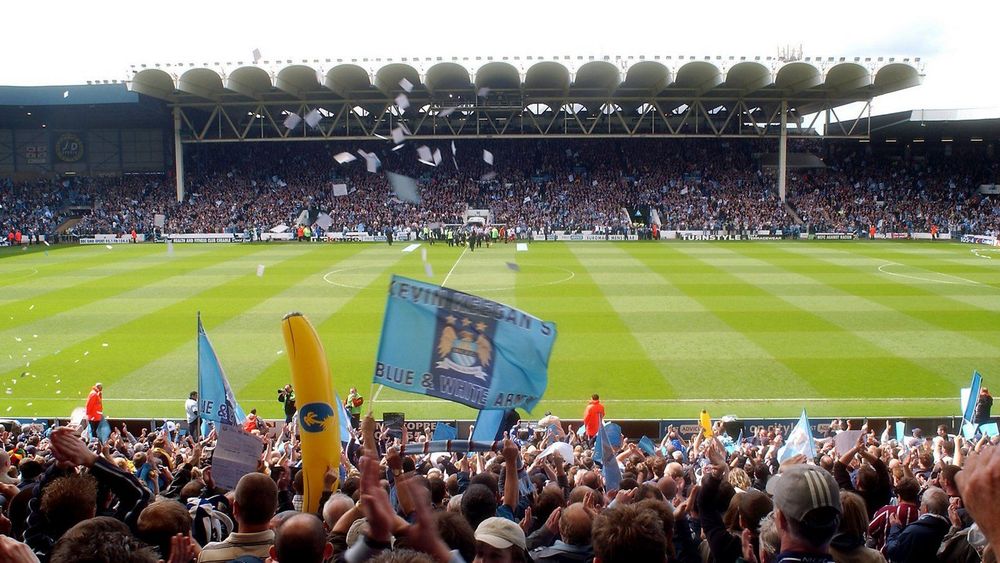
“I loved Main Road. I mean, even though it wasn't the greatest state, I really loved going there.”
Bernstein was chairman as City began the process of moving away from the ground that had been their home since 1923. The City of Manchester Stadium, originally built for the 2002 Commonwealth Games, became City's new home in 2003.
But for Bernstein, this was never simply a question of replacing an old stadium with a new one.
“There was a lot of thought,” he said. “For me in particular, I've been a fan for decades and Main Road was my sort of spiritual home.
“I used to be so excited to get to go to Main Road and I just loved it.”
The atmosphere was something Bernstein believes modern stadiums struggle to reproduce.
“When you had nearly 40,000, 38,000 people there, it was absolutely tremendous on occasions,” he said. “And I don't think the Etihad or some of the other new stadiums, however great they are, quite match that.”
Bernstein still sees something special in the old grounds that have survived the modernisation of English football.
“That's why I rather think it's rather good that Old Trafford and Anfield are still in their sort of bigger but original states,” he said. “I think those old stadiums have got something about them.”
But nostalgia could not dictate the club's future.
“Having said that, the move — it had to happen,” Bernstein said. “It was the right, completely the right thing for the club.”
And Bernstein believes the importance of the move has only become clearer with every passing year.
“Without it, the club would not be where it is now.”
That sentence is difficult to argue with.
City moved into their new home in 2003, five years before Sheikh Mansour's takeover transformed the club's financial capacity. The stadium has since become the centrepiece of an organisation that has developed into one of the dominant forces in world football.
But even Bernstein could not have envisaged the scale of what would follow. When he became chairman in 1998, City were heading into the third tier. His ambition at the time was considerably more modest.
“I used to say my ambition is that Manchester becomes the Madrid of the north of England with two great football clubs in it,” he said.
“That was what I was really aiming for.”
What happened subsequently went far beyond that.
“Little did I think that Manchester City would leave Manchester United trailing as they have done.
“So to say, have they fulfilled their potential? I think they've exceeded that.”
Bernstein struggles to find a way of describing just how unlikely the transformation would have appeared when he was sitting in the chairman's office in the late 1990s.
“They've done more than anybody could have possibly envisaged,” he said. “I mean, who 20 years ago could have seen City as the absolute outstanding club in this country, ahead of Arsenal and Spurs and Chelsea and Liverpool and Man United and everybody else?
“You couldn't have imagined it.”
The achievements since then have made the comparison even more extraordinary.
City have won multiple Premier League titles, the Champions League and the Treble, while establishing themselves as one of the world's leading clubs. Bernstein believes the club's modern status has gone beyond anything he could have dreamed of when he was trying to rescue it from the lower divisions.
“This club has come from nowhere to be the Treble winners and world champions,” he said.
And Bernstein has no hesitation in praising the people who have taken City from the foundations laid during his time to the level they occupy today.
“You can't criticise the owners really in any way,” he said. “I think they've worked hard.”
He also recognises what the modern club has become.
“City is now an international institution as well as being a great Manchester football club.”
That creates a challenge Bernstein understands all too well: preserving the relationship between an enormous global institution and the supporters who remember when the club was anything but that.
“It's very difficult to maintain the same relationship with the fans as you did in those early days,” he said. “When I was there, you could put your hands, your arms around the club.
“You could understand it.”
Even the money has become difficult to comprehend.
“The figures you talk about, the monetary figures were understandable,” Bernstein said. “£100,000 was a lot of money. Half a million pounds, a great deal of money.
“Now you're talking with these tens of millions of players' contracts and so on. It's really, in reality, way out of the scope of thinking of most people, really, including myself.”
Yet Bernstein's most striking reflection is not about money, trophies or stadiums.
It is about expectations.
When he was trying to rebuild City, he wanted Manchester to have two great football clubs. He never imagined that City would eventually become the dominant one.
“I think it's gone beyond this,” he said.
“Where we are now — it's beyond anything I could have possibly envisaged.”
And perhaps that explains why Bernstein can mourn Main Road and celebrate the Etihad at the same time. The old stadium represented everything City had been.
The new one became the place where everything Bernstein could not have imagined was eventually built.
“The move had to happen,” he said. “It was the right thing for the club.”
Then came the conclusion that says almost everything about the journey from Main Road to the modern Manchester City:
“I think they've done more than anybody could have possibly envisaged.”
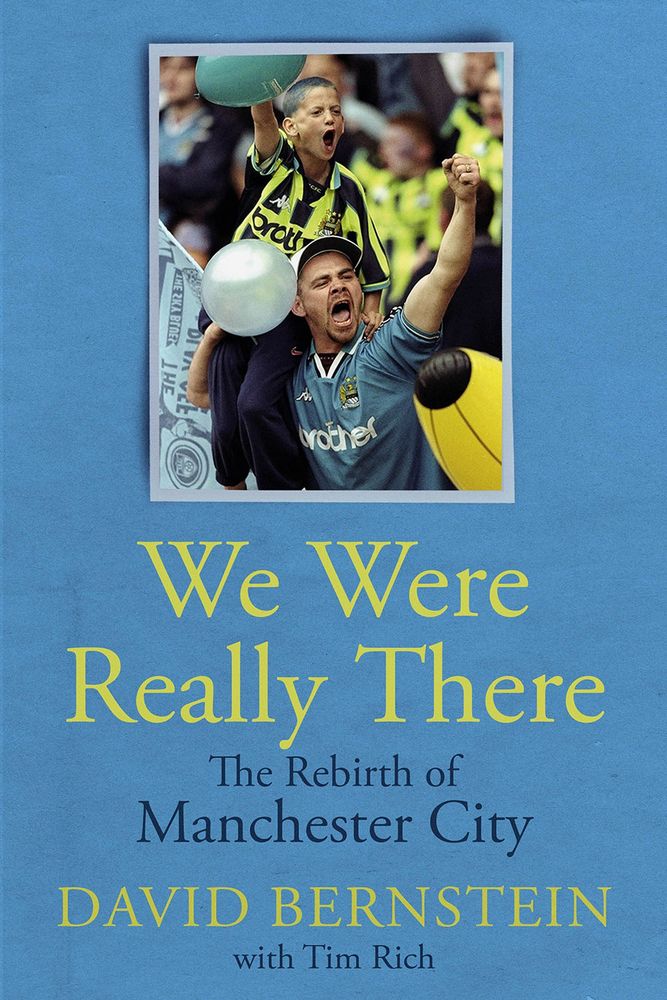
David Bernstein's book "We were really there: The Rebirth of Manchester City" is from Pitch Publishing - which is available here.