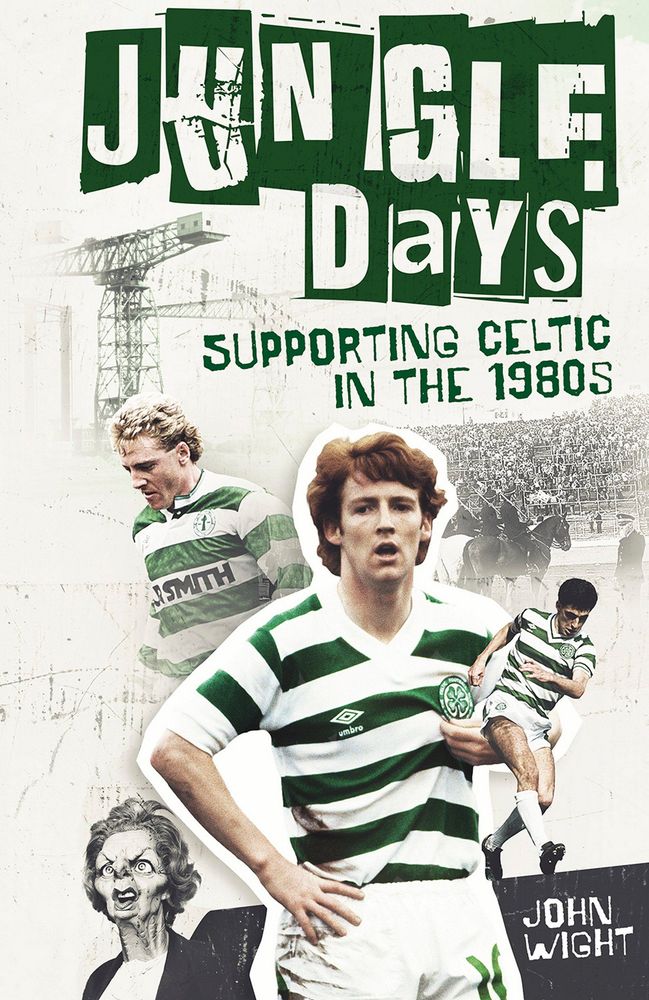
For a generation of Celtic supporters, the Jungle was not simply a stand at Parkhead. It was a place where football, heritage and identity collided.
Writer John Wight, author of "Jungle Days: Supporting Celtic in the 1980s", believes the famous terrace represented something much deeper than matchday passion. For many supporters who grew up during a turbulent period in Scottish history, Celtic provided a sense of belonging.
"The Jungle, the Jungle was the iconic stand in the old Celtic Park, or Parkhead as it’s more colloquially referred to," Wight told Football Presse.
"That was the beating heart of the club. It was a place of raucous, you would say ultras today, but there was no such thing as ultras in those days. It was a place where the passion of the club was most pronounced."
The 1980s were a defining period for Celtic and Scottish football. The country was dealing with significant social and economic change, while football grounds remained central gathering places for working-class communities.
For Wight, who grew up in Edinburgh with an Irish Catholic family background, Celtic became a source of identity during a period when those cultural differences could still create division.
"I come from an Irish Catholic background through my mother's side. My father was Italian Catholic," he explained.
"To be that in the 1980s in an Edinburgh housing scheme was a hostile environment because of the Troubles, because of the history of anti-Irish Catholic racism and bigotry that was entrenched in Scottish culture."
Wight describes Celtic as a sanctuary during his childhood, a place where he felt connected to something larger than himself.
"When I would go to see Celtic, no longer was I part of a benighted minority. I was part of a powerful family, proud of my heritage, proud of my culture, proud of my background."
That connection is central to "Jungle Days", which explores Celtic during a decade when the club was operating in the shadow of changing football economics but retained a powerful emotional connection with supporters.
The Jungle itself became a symbol of that relationship between club and community. It was famous for its noise, chaos and intensity, particularly during games against Rangers when the Old Firm rivalry reflected wider social divisions.
"It was a place of chaos, of noise, of unbridled passion, and when they played Rangers, their fierce rivals, of unbridled hatred," Wight said.
The rivalry between Celtic and Rangers in the 1980s was shaped by more than football. Both clubs represented different historical traditions, and matches between the sides carried a significance that went beyond league positions.
"It was working-class civil war," Wight said.
"Both united, predominantly, not all, but predominantly working-class support. But there, as I say in the book, all congruence ended. They are loyal to the Crown, they are loyal to the status quo. We're rebels, we're in rebellion, that's our history."
The famous 1980 Scottish Cup Final, when supporters invaded the pitch following Celtic’s victory over Rangers, became one of the defining images of the era and highlighted the intensity surrounding the fixture.
Wight believes the atmosphere of that period was impossible to separate from the wider cultural environment.
"That was the backdrop to Celtic in the 1980s because of the Troubles. The conflict in Ireland was raging at the time, and that fed into what it meant to be a Celtic fan."
However, he also stresses that the relationship between Celtic and its supporters has always extended beyond one period or one location. The club’s identity has travelled around the world through the Irish diaspora.
After spending seven years living in Los Angeles, Wight experienced that connection first-hand through Celtic supporters thousands of miles from Glasgow.
"I would go and see games right on a regular basis at an Irish pub in Santa Monica. I don't know if you know Los Angeles, in Santa Monica, very wealthy white area by the beach. I was living in Hollywood and I drive down and walk in at 7 in the morning to watch a game live, given the time difference.
"It was just like walking into a pub in Glasgow."
That global connection remains one of Celtic’s defining characteristics, with supporters’ clubs established across continents from Australia to North America.
For Wight, Celtic’s significance comes from the way it combines football with history and community.
"Celtic is a club of universal values. It's not any normal club."
The Jungle no longer exists in its original form, and football itself has changed dramatically since the 1980s. The modern game is wealthier, more global and more accessible, but Wight believes something has been lost in the process.
"The fans and at these clubs, major clubs and smaller clubs across Europe, they are not treated well, in my estimation. The tickets are too expensive for the average person."
Yet the memories of the Jungle remain powerful because they represent a time when football was deeply rooted in local communities.
Through "Jungle Days", Wight captures not only the story of Celtic in the 1980s, but the wider story of how football clubs can become places where people find identity, friendship and belonging.
John Wight is the author of "Jungle Days: Supporting Celtic in the 1980s" from Pitch Publishing - which is available here.