
For a country that has lifted the World Cup four times, produced some of the greatest players in the history of the game and shaped tactical thinking across the world, another absence from football’s biggest stage has created a sense of urgency.
But the latest failure is not viewed by those inside the game as an isolated disappointment.
Across this past week, Football Presse has spoken to five figures with deep connections to Italian football: former Napoli sporting director Mauro Meluso, European Championship winner Alberico Evani, Cagliari legend Marco Sanna, former Italy striker Giuseppe Incocciati and ex-Rangers forward Marco Negri.
Their backgrounds are different, but their message is remarkably similar. Italy’s problem is not simply about finding the right coach or changing one formation. It is about rediscovering the values that once made Italian football unique.
Mauro Meluso believes the issues run much deeper than what happens on matchday.
The experienced sporting director, who has worked at clubs including Napoli, Spezia and Lecce, pointed towards the changing structure of the modern game and the difficulty clubs face balancing financial demands with sporting ambition. For Meluso, Italian football needs to look carefully at how clubs are managed and how football decisions are made.
“Everyone, from the club to the last member of staff, has to give their best for the team,” Meluso told Football Presse. “The results arrive when everyone works together and creates the right environment around the players.”
That idea of building a stronger football culture was repeated throughout the week.
Alberico Evani, who was part of the Italy coaching staff that won Euro 2020, believes the country must return to improving the foundations of the game. The former AC Milan midfielder has seen both the golden generation of Italian football and the modern challenges facing young players.
For Evani, technical development must become the priority again.
Italy has traditionally produced footballers who could think, create and solve problems under pressure. However, the modern game has increasingly pushed towards tactical discipline and physical demands. The danger, according to several of Football Presse’s guests, is that individuality is being lost.
Giuseppe Incocciati was particularly strong on that point. The former Milan and Napoli forward believes Italian football has moved away from developing players with imagination and personality.
“Today what is missing is individual technique,” Incocciati explained to Football Presse. “We need to protect talented players and make sure they are not only taught to become simple executors of tactical instructions.”
For a country that once produced Roberto Baggio, Alessandro Del Piero, Francesco Totti, Gianluca Vialli and Christian Vieri, the decline in attacking talent has become one of the biggest concerns.
Marco Negri, who enjoyed a successful career in Serie A before becoming a Rangers icon in Scotland, also highlighted the difference between the past and present. The former striker remembers a time when Italy could choose from a generation of world-class forwards.
“During my time there were 10 or 11 players of the highest level in attack,” Negri told Football Presse. “Now Italy struggles to find four or five players who can make that difference.”
For Negri, the solution has to begin in the youth system. The former Italy international believes the country needs to examine coaching methods, facilities and the way young players are developed.
The same theme emerged from Marco Sanna, the Cagliari legend who continues to work within Italian football and remains passionate about the future of the game.
Sanna believes Italy must protect creativity. The former midfielder warned that young players cannot simply become products of tactical systems.
Italian football’s greatest strength historically came from players who combined intelligence with technical ability — footballers capable of producing something unexpected.
That quality must be encouraged again.
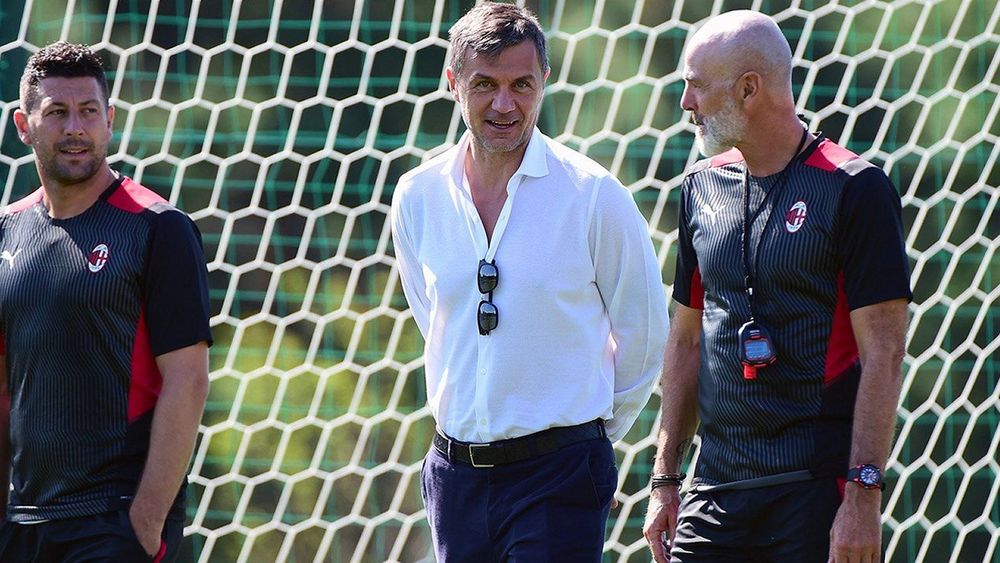
The appointment of Paolo Maldini as FIGC technical director represents a significant moment. A figure who represents one of Italy’s greatest football traditions now has the opportunity to help shape the future direction of the national game.
But those interviewed by Football Presse understand that one person cannot solve decades of problems alone.
The challenge is cultural.
Italy must improve its structures, invest in youth development and create an environment where talented players are encouraged rather than restricted. The financial gap with Europe’s biggest leagues has also changed Italian football’s position.
As Negri explained, Serie A is no longer the destination it once was.
“Once every player wanted to come to Italy because it was the league where you could grow and show your qualities,” he said. “Now unfortunately that is no longer the reality.”
The Premier League’s financial power has changed the landscape, while Spain continues to produce technically gifted generations of players. Italian clubs are increasingly relying on experienced stars arriving later in their careers rather than producing enough homegrown talents ready to lead the national team.
However, there remains optimism.
Italy still possesses one of football’s richest cultures, passionate supporters and clubs with extraordinary histories.
The message from Meluso, Evani, Sanna, Incocciati and Negri is not that Italian football is finished. It is that Italian football must rediscover itself.
The country does not need to copy England, Spain or anyone else.
It needs to remember what made it successful in the first place: technique, intelligence, creativity and players with the personality to decide matches.
The World Cup absence should be viewed not only as a failure, but as a warning. Because the next generation of Italian football will not be built overnight.
It will be built by the decisions made today.