Bernstein joined the City board in 1994 and became chairman in 1998, with the club heading towards the third tier of English football. City were relegated in May 1998, beginning a remarkable period of recovery that would eventually take them from the old Second Division to the Premier League.
“I think we were in a difficult position,” Bernstein told Football Presse. “We made changes from back to front.
“There were no sacred cows.”
That meant accepting that almost every part of the club had to be reconsidered.
City had the size, support and history of a major club, but their circumstances were anything but those of one. Bernstein believes that contradiction was actually the starting point for the rebuild.
“We had to cut costs wherever we could,” he said previously. “We were operating very efficiently. There was no spare cash.”
Yet Bernstein did not regard the situation simply as a problem to be survived.
“There was an opportunity there,” he said. “Manchester City was a big club, with a big support, and we had to try to build it properly.”
The first task was to stop the decline.
City eventually recovered sufficiently under Joe Royle to win promotion from the third tier in 1999 and then immediately reach the Premier League, but Bernstein understood that promotion alone would not be enough.
The club needed stronger foundations.
That was why the 1999 play-off final against Gillingham became so significant. City’s victory secured promotion, but Bernstein believes the consequences went far beyond the result at Wembley.
Had City lost, he says, there was “every possibility” that the proposed move away from Maine Road would not have happened.
Promotion gave City credibility as they negotiated with Manchester City Council over the stadium that had been built for the 2002 Commonwealth Games. The eventual move to what is now the Etihad Stadium provided the capacity and infrastructure for what followed.
But Bernstein’s ambitions were already considerably bigger than simply getting City back into the top flight.
“When I was chairman down in the third level of football, I said my ambition was that Manchester would become the Milan of English football with two great sides,” he said.
“My dream was to get up close to the then dominant Manchester United.”
What Bernstein could not have known was just how far City would eventually go.
“If you’d have told me about that 25 years ago, I would have said, ‘No, no, that’s a dream too far’.”
Before that extraordinary future could emerge, however, City needed somebody capable of accelerating the footballing recovery.
That man was Kevin Keegan.
Bernstein still regards Keegan’s first season as manager as one of the great highlights of his time at the club.
“Kevin Keegan’s first year for us was terrific,” he said.
“We wanted to make an impact, to get back quickly. He did that.”
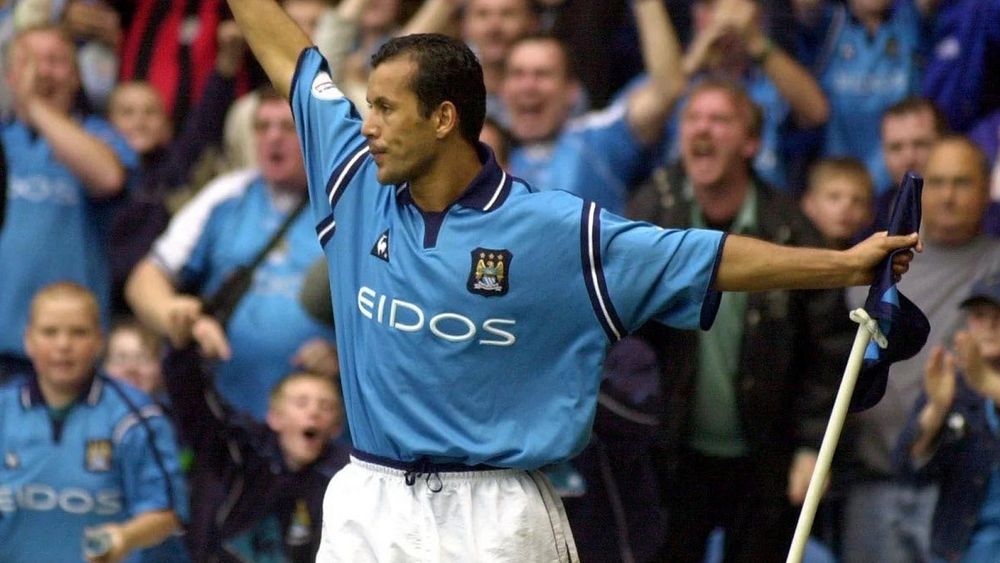
Keegan’s City were spectacular. Eyal Berkovic and Ali Benarbia operated as creative midfielders in a system that seemed to defy conventional wisdom, while Shaun Goater and Paulo Wanchope provided the goals.
“He actually played two creative players in midfield that you think wouldn’t work, but it did with Berkovic and Ali Benarbia, which was remarkable,” Bernstein said.
“They played the most fabulous football.”
City won the 2001/02 Division One title with 99 points and 108 league goals, returning to the Premier League at the first attempt.
But that spectacular success also exposed the difference between Bernstein and Keegan.
“Kevin had plenty of ambition,” Bernstein said. “But I think it verged onto the irresponsible.
“The balance is between ambition and responsibility.”
Keegan, Bernstein recalled, had his own calculations about what City could afford and what the club should be doing.
“He'd say, ‘Mine are the right numbers’,” Bernstein said.
“But they weren’t.”
The disagreement was ultimately philosophical rather than personal.
“We were just quite a way apart philosophically.”
Bernstein believed City had to build carefully after years of instability. Keegan wanted to push the club forward faster.
The tension eventually spread beyond the chairman and manager.
“In the end, the problem was… he got some of the other people on board, particularly John Wardle, David Makin,” Bernstein said.
“They got sort of sucked in by Kevin.”
Bernstein’s relationship with Keegan therefore became complicated, despite his enormous admiration for what the manager achieved.
“Absolutely. He’s definitely charismatic, he’s definitely entertaining. He was a personality,” Bernstein said.
“On a good day, he was great, but on a bad day, he wasn’t so good.”
For Bernstein, the distinction mattered because he had learned that rebuilding a football club was not simply about finding talented people. It was about knowing who you could trust when circumstances became difficult.
“The people I had at City… were people… you could be in the trenches with,” he said.
“When things are becoming difficult, you want people you could rely on.”
And that was where Keegan ultimately fell short in Bernstein’s eyes.
“To be honest, Kevin was not someone I felt I could be in the trenches with.”
Bernstein left the chairmanship in March 2003, but the foundations laid during those years remained.
The stadium, financial discipline, infrastructure and restored Premier League status gave City a platform that later ownership could transform beyond anything Bernstein had imagined.
“I think it’s gone beyond this,” he said.
“City has exceeded anything that I could have possibly envisaged.”
From a club struggling in the third tier to an international institution, the scale of that transformation still astonishes him.
“I think they’ve done more than anybody could have possibly envisaged.”
And perhaps that is the most revealing part of Bernstein’s story.
He did not inherit the Manchester City that exists today. He inherited a club that was broken, vulnerable and falling down the divisions.
But he saw what it could become.
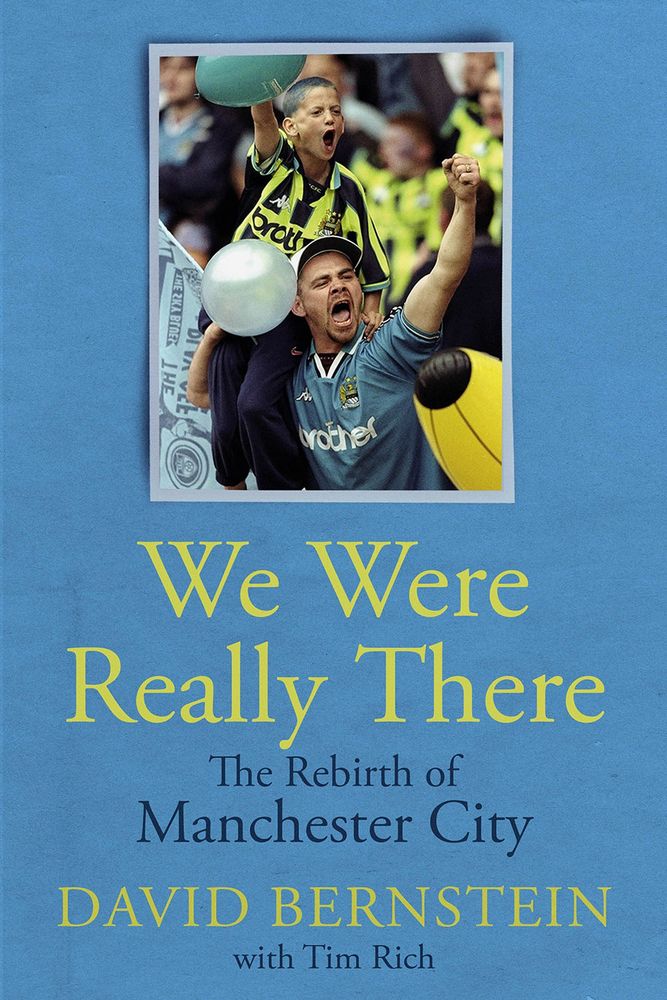
David Bernstein's book "We were really there: The Rebirth of Manchester City" is from Pitch Publishing - which is available here.