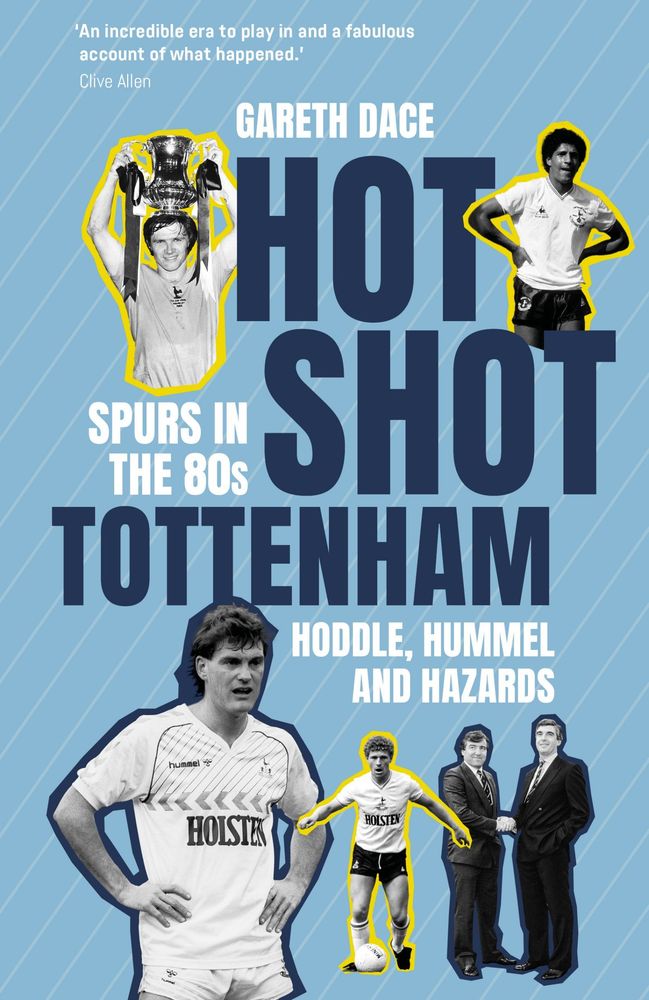
So why did they never win the league? Author and Spurs historian Gareth Dace believes the answer lies not in bad luck, but in the club's footballing identity.
Tottenham Hotspur's teams of the 1980s remain among the most admired in English football history. Glenn Hoddle, Ossie Ardiles, Ricardo Villa, Steve Perryman, Graham Roberts and later Chris Waddle and Paul Gascoigne produced football that is still celebrated by supporters more than four decades later.
Yet for all the silverware – two FA Cups and a UEFA Cup – one glaring omission remains.
They never became champions of England.
It is a question that has long intrigued Tottenham supporters, and one Gareth Dace set out to answer while researching "Hot Shot Tottenham", his season-by-season study of one of the club's defining decades.
His conclusion surprised even him.
"I think from all the research I did, it's unfair to frame it that way," Dace told Football Presse.
"I think actually the question you should ask is, how did they go from being a team that had come up from the Second Division in 1978 that went on to be so successful to win domestic cups and to win the UEFA Cup in '84?"
That perspective shifts the conversation away from failure and towards achievement.
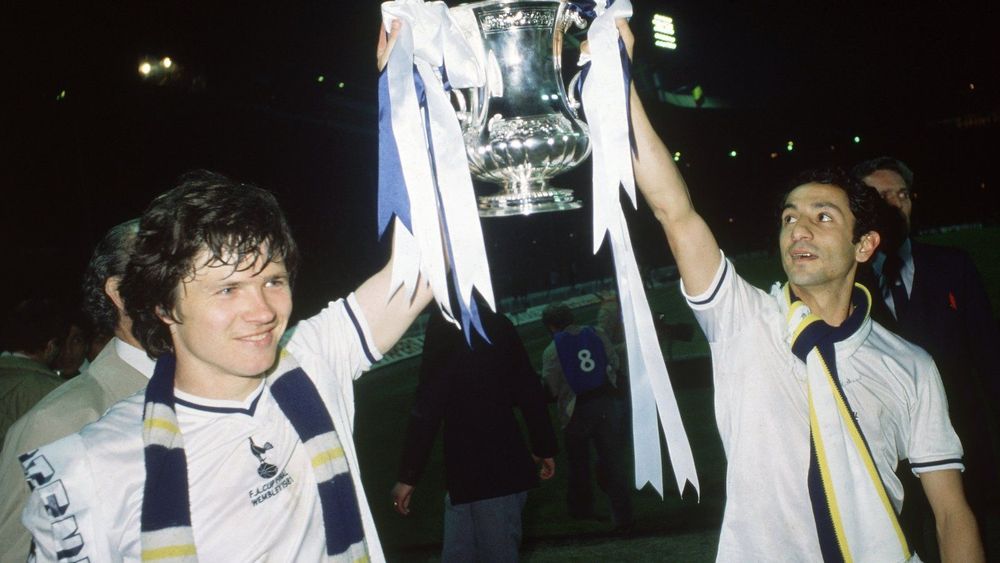
Keith Burkinshaw inherited a club rebuilding after relegation before assembling a side capable of competing with Liverpool, Everton and Manchester United. Tottenham won the FA Cup in 1981 and retained it a year later before lifting the UEFA Cup in 1984, all while playing a brand of football that became synonymous with the club's identity.
But Dace believes the very principles that made Spurs so admired also stopped them from becoming league champions.
The key insight came from Steve Perryman, Tottenham's record appearance holder and captain throughout much of the era.
"So Steve Perryman said that in all the years he spent at Spurs, he was never taught to go down injured when you're 1-0 up to waste some time, or never to kick the ball down in the corner flag," Dace explained.
"It just wasn't really within that Spurs psyche to be a little bit more like the Merseyside pair."
It is a revealing observation.
Liverpool, who dominated English football throughout much of the decade, built their success on relentless consistency. Everton developed similar resilience under Howard Kendall. Both sides understood when to entertain and when to manage games.
Burkinshaw, according to Dace's research, remained committed to something different.
Tottenham would try to win beautifully.
That philosophy reflected what many supporters regard as the club's traditional DNA. Flair, creativity and attacking football were not simply tactical choices; they were part of Tottenham's identity.
The downside was that league championships are often won through pragmatism rather than romance.
The 1981-82 season perhaps demonstrates that better than any other.
Spurs entered the closing months of the campaign chasing an extraordinary four trophies.
They eventually played 66 matches across all competitions, losing the League Cup final to Liverpool after extra time, falling to Barcelona in the European Cup Winners' Cup and lifting the FA Cup after an exhausting campaign.
For Dace, the physical cost lingered long after the celebrations.
"I call that chapter the '82/83 year battle weary," he said.
"It certainly feels that all the physical exertion that went into that '81-'82 season, it took them two or three years actually to recover from that physically."
The near miss that perhaps hurts most arrived three years later.
Tottenham mounted a serious title challenge in 1984-85 before Everton eventually pulled clear.
Again, Dace believes the squad possessed the quality required to become champions.
What they lacked was the ruthless edge that often separates great teams from title-winning ones.
Researching the decade also changed Dace's own appreciation of football history.
Born in 1981, he relied heavily on interviews with former players and supporters who experienced the era first-hand.
That distance allowed him to see patterns often hidden by the emotion of weekly results.
"You can get really, really caught up in the moment," he said.
"Writing retrospectively about a decade from 40 years ago definitely gives you that depth and perspective."
His research found a team capable of brilliance one week before unexpectedly dropping points the next. Supporters still cherish the spectacular victories, yet the league table tells a more complicated story.
Tottenham were entertaining enough to beat anyone.
They were not consistently ruthless enough to finish above everyone.
History can sometimes be unfair to teams that fail to secure a league title.
The Tottenham side of the 1980s is often remembered for what it did not achieve rather than what it represented: a club that remained fiercely committed to attractive football during one of English football's most competitive eras.
Dace's research suggests that commitment was not an accident or a weakness.
It was a conscious choice.
In the end, Tottenham's greatest strength may also have been the reason they never ruled English football.
They stayed true to the way they believed the game should be played, even if it meant watching others lift the championship trophy.
Gareth Dace is author of "Hot Shot Tottenham: Spurs in the 80s – Hoddle, Hummel and Hazards" from Pitch Publishing - which is available here.