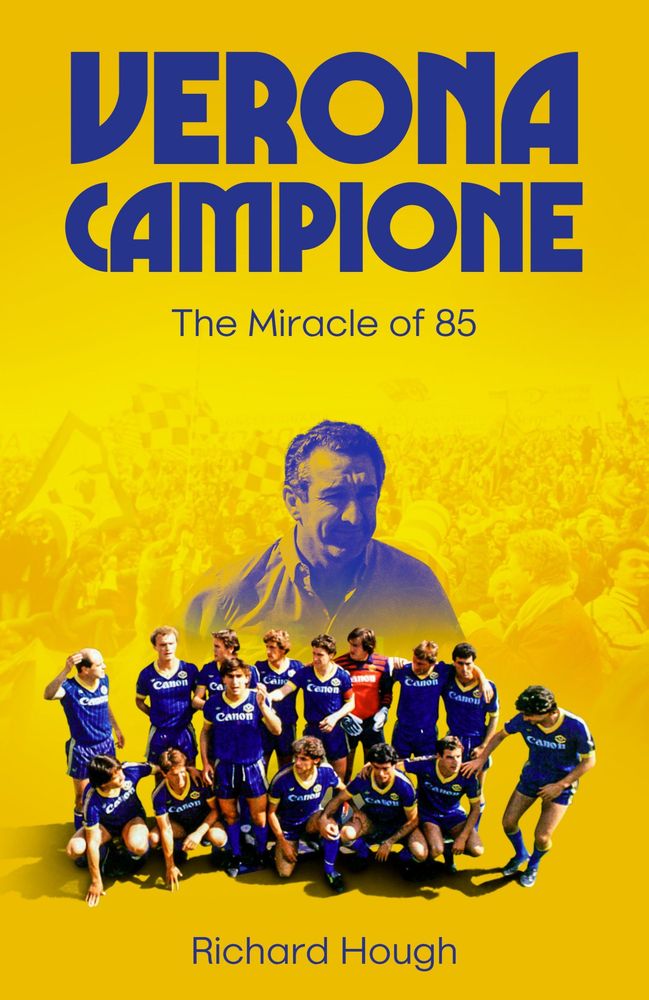
When Hellas Verona lifted the Scudetto in 1985, it entered Italian football folklore as one of the great underdog achievements. A club without the financial power of Juventus, Inter Milan or AC Milan had somehow conquered Serie A, defeating some of the biggest names in European football.
But according to football historian Richard Hough, the reality behind Verona’s famous title was very different from the romantic version that developed over the following decades.
The players were not a group who confidently believed they were destined for glory. Instead, they were a team that slowly found itself in an unexpected position, carrying increasing pressure while trying not to think about what might happen.
"It was almost inevitable, knowing Italy and knowing Italian football, that having reached such an incredible peak, things would somehow deteriorate," Hough told Football Presse while discussing his research into Verona’s remarkable championship season.
"But the actual season itself, when you go back through the newspapers and speak to the individuals and the players, the pressure building was immense."
Hough spent months examining contemporary reports from sources including Verona’s local newspaper L’Arena and the archive of Corriere della Sera, allowing him to reconstruct the season as it unfolded rather than relying only on memories created 40 years later.
That distinction was important.
Players involved in historic moments often repeat the same stories for decades, and over time those memories can become part of football mythology. But contemporary newspaper reports provide a different perspective — the uncertainty, doubts and changing emotions of the moment.
"Speaking to the players, you get a kind of different sense," Hough explained. "They've told the same story every day of their lives for the last 40 years, so it becomes almost mythologized.
"Whereas if you actually go back to the newspapers from the time, you get a sense of what was happening day by day."
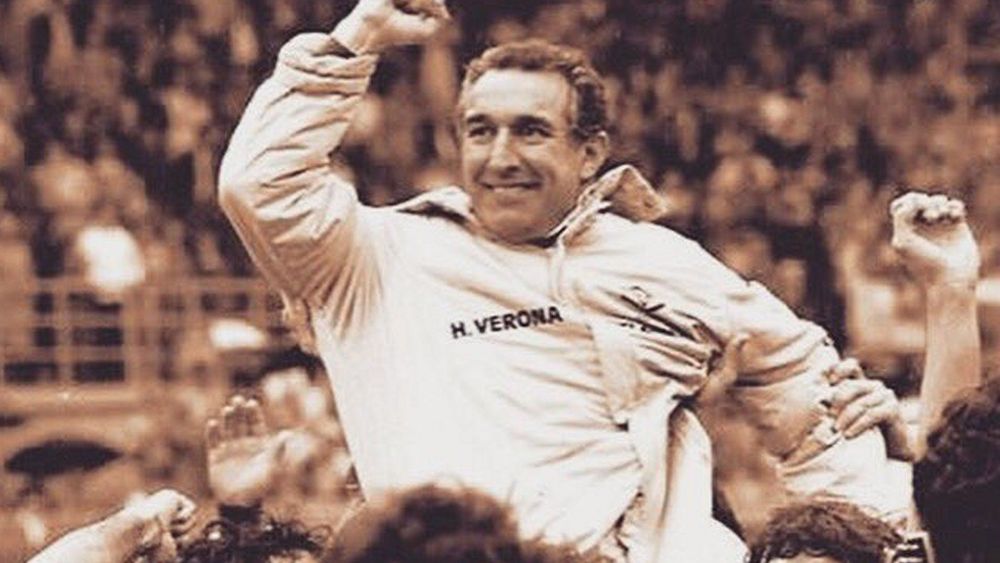
Verona’s success was built under the leadership of manager Osvaldo Bagnoli, a coach renowned for his calm approach and ability to create a united squad. Even as the title became a realistic possibility, Bagnoli refused to allow his players to get carried away.
He would not even let them use the word "Scudetto".
The approach reflected the mentality of a side that believed in its ability but did not want to invite pressure by publicly discussing an achievement that still seemed beyond reach.
Hough discovered that even the players themselves have different memories of when they began believing the title was possible.
Some point to important victories during the campaign, including a dramatic 5-3 win away at Udinese and a 3-1 victory at Fiorentina. But others insist belief only arrived much later, when Verona remained at the top of the table and the season entered its decisive stage.
The reason was simple: everybody was waiting for Verona to fall.
"The bigger clubs like Juventus and Inter Milan and maybe Torino, Sampdoria and AC Milan were losing points at crucial points in the season," Hough said.
"Whereas Verona just had a way of picking up those important points."
The team’s greatest strength was consistency. In an era when Serie A matches were often low-scoring and defensive, Verona collected vital results through organisation, discipline and collective belief.
The title was eventually secured after a draw away at Atalanta on the penultimate matchday, completing one of the most unlikely championship victories in football history.
Yet Hough’s research also challenges another common assumption about Verona’s triumph. The famous controversy surrounding the introduction of random referee appointments during that season was not something dominating discussion at the time.
"During the course of that season, that particular issue isn't one that came up," he said.
The debate developed later, helped by the coincidence that the first season of the new system coincided with a smaller club winning the league.
Forty years on, Verona’s achievement remains extraordinary because football has changed so dramatically. The financial gap between Italy’s biggest clubs and smaller sides has widened, making another Verona-style championship increasingly unlikely.
But the story of 1985 endures because it was not simply about an outsider winning a trophy.
It was about a team that resisted pressure, ignored expectations and achieved something that even those inside the dressing room struggled to believe was possible.
Richard Hough is the author of 'Verone Campione' from Pitch Publishing - which is available here.