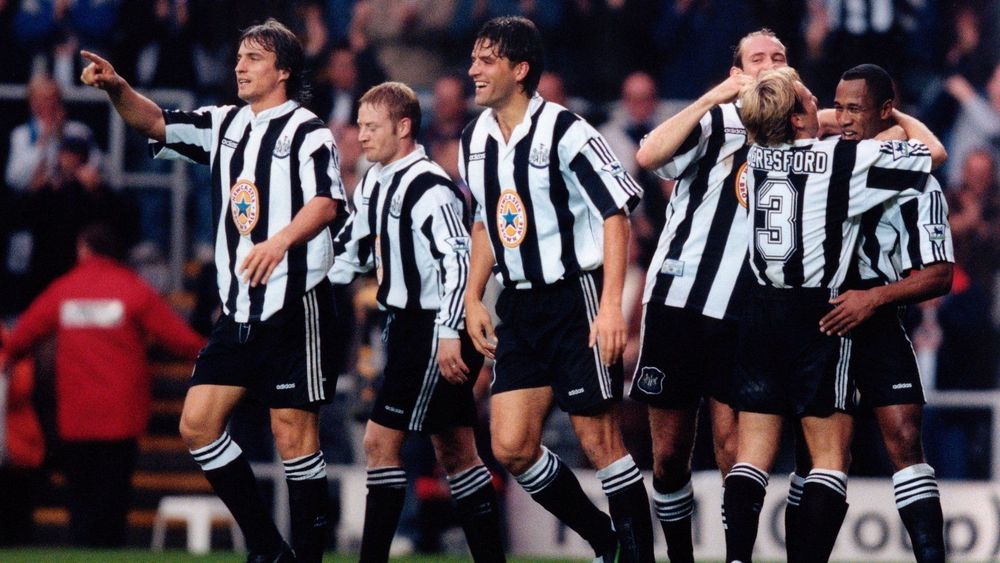
But the team that captured the imagination of English football in the 1990s was built on something more fundamental: a transformation in what Newcastle believed was possible.
For Gary Sherrard, who has followed the club through its highs and lows, the story begins before the arrival of the celebrated names who would eventually define the era. It begins with a club in trouble, an ambitious chairman prepared to gamble and a manager whose return would change Newcastle’s history.
“Kevin Keegan is the most central person in the Newcastle United story, but without John Hall’s decision to bring him in as manager, none of that would have happened — or it would have happened in a different way,” Sherrard tells Football Presse.
The circumstances made the appointment extraordinary. Newcastle had been in danger of dropping into the Third Division, while financial problems threatened to make the club’s future considerably more precarious than its league position alone suggested.
To bring back a man whose previous connection with Newcastle had been as a celebrated player, and entrust him with the task of transforming the club, was a remarkable decision.
“John Hall has since admitted the size of the gamble. And I think Kevin Keegan, in his autobiography, admits that it was a gamble as well.
“Can you imagine the legacy Kevin would have had if something had gone wrong? After everything he’d done in the game, he came back and wasn’t a success.
“To be nearly in the Third Division and go into the last game of the season still not sure whether you’d be in the Second Division — the club was massively in debt. And where do you attract funding from if you’re in the Third Division?
“For the city, which is so attached to its football club, to be staring that straight in the face is just astonishing.”
The scale of the challenge makes what followed all the more remarkable. Newcastle did not suddenly become a glamorous destination simply because Keegan walked through the door. There was work to do, a squad to improve and a club that needed to be rebuilt from the foundations.
The foundations behind the Entertainers
Keegan’s first task was to give Newcastle a platform from which to grow. The transformation was not simply about collecting exciting attacking players; it required a stronger team, greater experience and the backing to make meaningful changes.
Sherrard recalls how the manager initially faced the prospect of working with a squad that needed substantial improvement, despite having limited resources available.
“He’d come in and there was a great run when he first arrived, but then Newcastle slipped back into the bottom three. There were promises about bringing players in and spending money, but I think the kitty was £150,000.
“Even then, that wasn’t a lot of money. Keegan was probably looking at the squad thinking there were a lot of places he could spend £150,000.
“And from his quotes at the start, where he said he didn’t know the players — he didn’t know whether Kevin Scott was a defender, a midfielder or a striker — that’s absolutely astounding, that it turned out the way it did.”
Keegan needed backing, and Hall eventually provided it. The subsequent recruitment of players such as Barry Venison and Paul Bracewell helped give Newcastle the experience and structure required to develop the younger members of the squad.
Brian Kilcline and John Beresford were among those who helped establish the platform on which the team could grow.
Sherrard sees the importance of those signings in the context of what Newcastle were trying to achieve. Before the spectacular football and the celebrated attacking names, the club needed players who could make the whole project work.
“John Hall backed those conditions, and then you had the signings of Barry Venison and Paul Bracewell — the kind of players who would make such a difference and give that team a backbone and a platform.
“If those young lads needed somebody to look at and improve, then you had the likes of Paul Bracewell, Brian Kilcline, Barry Venison and John Beresford in there. That’s a great platform to build from.”
It was a combination of ambition and practical rebuilding. Keegan was not simply assembling a collection of individuals; he was creating a team capable of playing the way he wanted.
And, crucially, Newcastle were beginning to think differently about their place in the game.
When Newcastle started believing they could sign anybody
There is a particular moment in Sherrard’s recollection that captures how dramatically the mood around Newcastle changed.
It concerns Philippe Albert, the Belgian defender whose arrival became one of the defining examples of the club’s growing ambition.
Sherrard remembers watching Albert score for Belgium at the World Cup. Only a couple of days later, news emerged that Newcastle were interested in signing him.
The sequence captured something that supporters had not been accustomed to experiencing: watching a player perform on the international stage, admiring his ability and then discovering that Newcastle might actually bring him to St James’ Park.
“I remember the Philippe Albert one because I remember seeing him score a goal for Belgium in that World Cup. And a couple of days later, there was the story that Newcastle were interested in this Philippe Albert.
“It was almost like fantasy football. You saw somebody who was playing well, and the next thing you heard was that you weren’t the only one who thought he was playing well. Kevin Keegan thinks he’s playing well — or John Hall.
“There was a possibility we could sign anybody.”
That last thought gets to the heart of the Entertainers. Newcastle’s transformation was not only visible in the team that took to the pitch; it was felt in the anticipation surrounding the club.
The possibility of signing a player of Albert’s quality was exciting in itself. The prospect that Newcastle might continue doing so, bringing in more players capable of changing matches, made the future feel limitless.
Sherrard also remembers the rumours that accompanied this new sense of possibility, including a story about Roberto Baggio after a Baggio shirt was reportedly spotted in the back of a director’s car.
“There was a story about Roberto Baggio for a while because apparently there’d been a Baggio shirt spotted on the back seat of one of the directors’ cars, and it just came out of nothing.
“But being in a situation where excitement can build so much, and excitement adds so much to your week as a football fan, builds up to matchday, and then you look out at the players that ran out in a Newcastle shirt in that spell.
“And Philippe Albert would never have played for Newcastle United in any other era than that one.
“And they become heroes and create a legend of their own.”
Albert became part of a team whose individual characters and abilities combined to create a legend of their own. The signings were exciting, but what made the era endure was the way the players became associated with a particular style of football and a particular moment in Newcastle’s history.
The gamble that made the dream possible
The arrival of Albert was part of a wider transformation that required Newcastle to think bigger. Sherrard believes Hall’s business instincts were crucial because the chairman understood that the club would have to invest to reach the position he believed it deserved.
“John Hall had been successful in business by thinking big. He didn’t really have parameters of, ‘No, I don’t suppose we could do that.’ He would say, ‘Well, why couldn’t we do that?’
“To have the business acumen, the money and the inclination, and the expertise to bring in others to share that, you can’t understate it. We’ve got a lot to thank him for.”
Hall’s willingness to back Keegan gave the manager the opportunity to turn his ideas into reality. It also allowed Newcastle to develop a more ambitious outlook, rather than continually responding to problems or accepting that certain targets were beyond the club.
For Sherrard, that change in mentality was essential.
“I think that business principle of ‘speculate to accumulate’ was probably the big difference. John Hall knew it would cost money to get the club where he thought it should be.
“Once you’ve got to that platform, then you have the income and the awareness. At that stage, it was probably a little simpler than it is now, but it was still about speculating to accumulate.
“You have a vision, and that’s probably what the club had been criticised for lacking. What was the vision and ambition? You cannot fault the fact John Hall had the vision and ambition to do something about it.”
Keegan was the central figure on the football side, but the Entertainers were the product of a wider project. The manager needed the resources to recruit, the club needed a stronger foundation and supporters needed reasons to believe that the old limitations no longer applied.
By the time Newcastle were competing at the top of the Premier League, that belief had become part of the club’s identity.
Andy Cole, the leap of faith and the arrival of Shearer
The Entertainers story was not a straightforward progression from one exciting signing to the next. It included moments when supporters were forced to question whether the club’s ambition was being undermined.
Andy Cole’s departure for Manchester United in 1995 was one such moment. Cole had scored at a remarkable rate for Newcastle, and supporters could reasonably wonder how a team that seemed to be improving would benefit from losing its leading striker.
Sherrard remembers the immediate reaction and the feeling that Newcastle were giving up a player who could have achieved even more as the team around him improved.
“We’d seen nothing like it. He’d rewritten the history books, and you were thinking, where does he go as the team gets better around him? This is going to go stratospheric.
“I’ve got very personal memories of that day.”
Keegan’s response was to face the supporters directly, explaining the decision and asking them to trust him. Sherrard remembers watching the manager speak outside St James’ Park, with the emotion of the moment clear.
“You can see the emotion in the bit where some of the fans are having a chirp on the steps, and there’s a bit where he looks like he’s swallowing hard and he’s saying, ‘Just trust me, you’ve got to trust me.’
“Those fans had been through Malcolm Macdonald, Chris Waddle, Paul Gascoigne and those kind of things. They’d reached the point where you thought, ‘Oh, Kevin Keegan is going to every club in the country and he doesn’t care what their reputation is — he wants their best player in this Newcastle team.’
“And we trusted him.”
The subsequent arrival of Les Ferdinand and, later, Alan Shearer helped explain the thinking behind Keegan’s decisions. Newcastle had not abandoned their ambition; the team was evolving again.
The sight of those players in black and white represented the scale of the transformation. Newcastle were now attracting some of the most celebrated attacking talent in English football.
For Sherrard, the excitement surrounding the signings was inseparable from the football they promised to produce.
Why Shearer and Ferdinand worked
The Entertainers are often remembered through their goals, but the attacking force of the team was not simply a matter of putting famous strikers together and hoping for the best.
Keegan wanted Newcastle to get forward, create chances and play with an attacking intent that gave the side its distinctive character. Shearer and Ferdinand brought different qualities, and the team had to provide the service and movement that made the partnership effective.
Sherrard explains that the central challenge was not necessarily to build the entire team around Shearer. It was to create a system that allowed Newcastle’s attacking players to flourish.
“The difficulty was: how do you create enough chances for Alan Shearer and Les Ferdinand to both be happy about playing for Newcastle United?
“There was that spell where they were extremely happy to be playing alongside each other. They scored different kinds of goals and played differently in the team.
“Les Ferdinand was a hard worker, Shearer a grafter. It wasn’t just what they did at the end of a cross. They had wing players who wanted to get the ball into the box and midfielders who wanted to get the ball forward.”
That distinction matters. Newcastle were not simply dependent on individual brilliance; their attacking players were supported by a team designed to get the ball forward as quickly as possible.
Sherrard believes the system itself was central to the team's identity.
“The machine was built to get the ball forward, and if you had the best striker, possibly in the world at that stage, at the front of it, then you were going to see the results.”
It was this combination of individual quality and collective intent that made the Entertainers so memorable. The team could attack in numbers, create opportunities and give supporters the sense that something exciting might happen whenever they went forward.
The quality of the players mattered enormously. So did the conviction behind the football.
More than a team: an era that became a legend
The Entertainers remain such a powerful part of Newcastle’s story because the team represented more than a successful period on the pitch. It was the culmination of a shift in the club’s fortunes, its ambitions and the expectations of its supporters.
Sherrard believes Newcastle's appeal extended well beyond its own supporters. During the Entertainers era, the team became a draw for neutral viewers, too.
“When teams weren't on telly every night and not every game was filmed live, Newcastle were on live more than most because you knew you were going to get a really good game.
“And it wasn't because — it's a very lame one to say — we want to score more, one more goal than the opposition. Newcastle at times had a defence that didn't give much away either, and was still exciting to watch because they wanted players to get forward and express themselves and had the right players to do that.
“So I'll look at it now and actually don't really have that regret. You go, yeah, we could have won it. Yeah, we could, but we didn't, and life goes on.
“And we've had Kevin Keegan in charge. We had Sir Bobby Robson in charge.
“We've had some horrible seasons since then, some poor managers, some poor decisions, some poor players, and you think, no, it's great. We were battling with the big boys for five, six years in that period, and it went on for quite a while.”
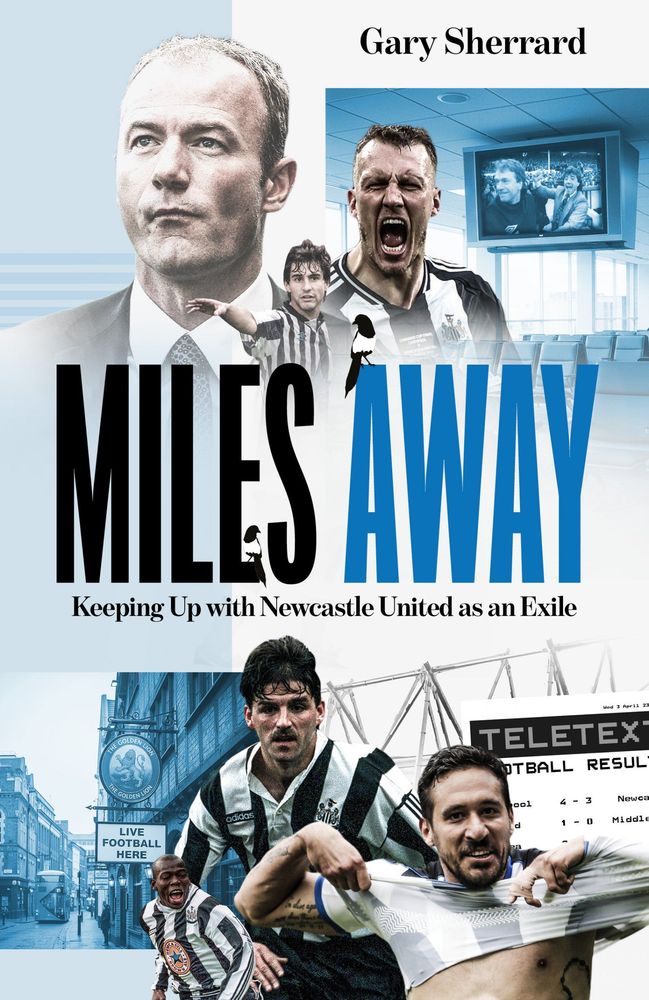
Gary Sherrard is author of "Miles Away: Keeping Up with Newcastle United as an Exile" from Pitch Publishing - which is available here.