
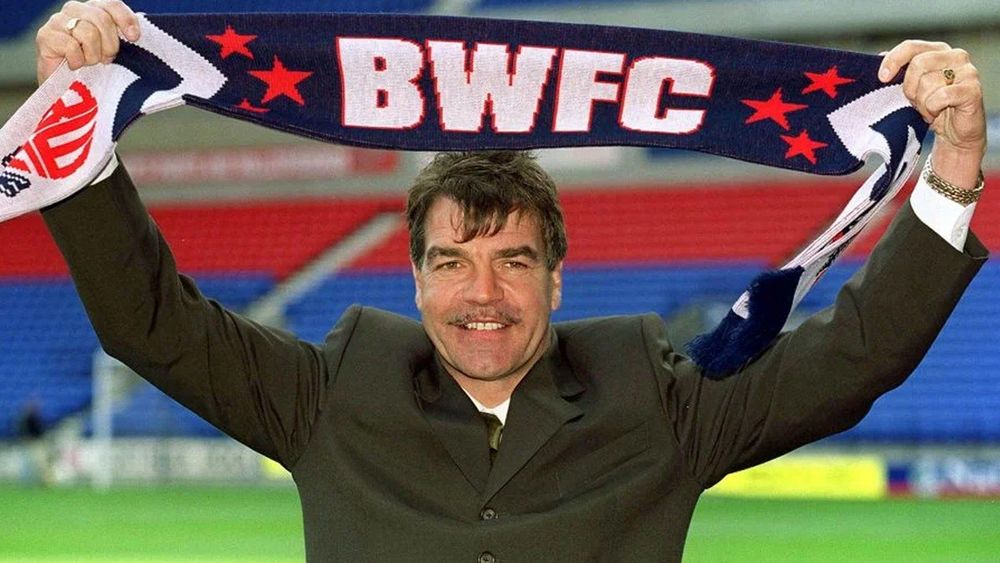
Both had connections to Bolton Wanderers, where Brown had played before finishing his career with the Seasiders. But it was Blackpool director of football Billy Bingham, not Allardyce, who had brought Brown to the club, and the circumstances surrounding the new manager’s appointment would change the direction of his career.
“I knew of him because he was a Bolton player and I lived in Bolton by this time," Brown told Football Presse.
"And I knew of him, I knew of him socially. He had businesses outside the game. He was planning for a future that could be bleak in management. You know, one minute you're top of the tree, next minute you're bottom. So he was planning for them eventualities.”
Bingham was recruiting players before a manager had been named, with several experienced footballers arriving during the pre-season preparations. Brown remembered a dressing room containing players who knew the professional game but were not necessarily equipped to coach it.
“Billy Bingham was the director of football at Blackpool, and he was recruiting. He was head of recruitment before the manager was named.”
“And when Billy decided that we need a manager, we need a coach, a manager that can coach, Sam Allardyce was perfect for that job. So when he came in, and he brought Bobby Saxton in. I was a player. I was captain of the club at the time. So it was a sort of a shoehorning into a relationship that actually blossomed.”
The appointment came in July 1994, following Billy Ayre’s departure. Allardyce inherited a club with ambitions of progress but limited financial resources. Blackpool finished 12th in Division Two, then the third tier of English football, in his first season. Brown’s account of the period is as much about the realities of operating within those constraints as it is about the personality of the manager.
“The hardest part of that was the financial situation at the club at Blackpool at the time. Well, it wasn't right for any kind of promotion, shall we say, it wasn't right for any kind of progress and Sam was trying to find a way of getting that progress and trying to squeeze every last drop.”
“He was successful, there's no doubt about it, you know. But when Bobby Saxton got the sack I got a phone call from Sam saying to meet him. And I went to meet him and he just said, ‘I know what wages you're on,’ he said, ‘but I want you to become a player coach.’”
The offer carried a significant financial sacrifice. Brown would receive his full wages when selected to play, but the coaching element was worth only a quarter of his existing earnings. He had to discuss the decision with his family, who supported him through the first year as he moved towards a different career.
“That coaching side of it was like 25% of what you're on now. So if you're playing, you'll get your 100% wages. If you're not playing, 25%. So I had to go home, discuss it with the family. The family then catered for me for the first year, and it was the right decision because I went from that to Bolton Wanderers in the Championship.”
For Brown, the transition meant learning to see football from both sides of the dressing-room door. He was no longer simply a player expecting the coaching staff to make decisions and organise the work. He was becoming one of the people responsible for those decisions, while still trying to retain the confidence of teammates who had previously regarded him as one of their own.
“The hard part of me taking anything in was the fact that I was only a sub. I wasn't playing, and it wasn't my decision that I wasn't playing. It was the manager's decision, which was Sam, obviously.”
“I had to be held accountable for anything that went up, you know. So any kind of information that was leaking out the changing room, all eyes were on me because I was the assistant manager or the first-team coach. And that was the hard part. I had to get the trust of the team back.”
Brown acknowledged that it was a difficult period, but believed the arrangement worked because of the people in the dressing room and the way Allardyce brought the group together. Andy Preece, Andy Morrison and Tony Ellis were among the players he remembered as people who subsequently remained involved in football through coaching and management.
“There's no doubt in my mind that it worked. I think it was down to the fact that we had Andy Preece, we had Andy Morrison, we had Tony Ellis, that all are still involved in the game because they're involved in coaching and management, and hopefully that was just the starting sign of it, the way Sam brought it all together.”
The relationship between Brown and Allardyce was not built on unquestioning agreement. Brown recalled a manager who welcomed debate and was prepared to listen when someone challenged him.
“Yeah, he was on the same page as me. Good, good crack, good banter. He wasn't afraid to put his opinion across.”
Brown continued: “He wasn't frightened to put his opinion across. Doesn't mean to say I'm not here not to listen to you. I want to hear what you've got to say as well. So I was always part and parcel of that kind of conversation.”
Blackpool’s 1995–96 campaign brought the project close to its objective. Allardyce’s side finished third in Division Two, missing automatic promotion on the final day before facing Bradford City in the play-offs. Blackpool won the first leg 2–0 away from home but lost 3–0 at Bloomfield Road, ending their promotion hopes. Allardyce was dismissed in May 1996.
Brown left Blackpool with more than the experience of a difficult season. His move into coaching had opened a route back to Bolton, where he would join Allardyce again and subsequently experience promotion to the Premier League.
“But as I say, at the end of that season, we go into playoffs, we missed out in the playoffs, and Sam got the sack. And then I went to the Championship and then the Premier League. So we were doing something right, there's no doubt about it.”
The Blackpool partnership had ended without promotion, but it had given Brown his first substantial opportunity to build a future beyond playing.
What began as a financially risky player-coach arrangement became the foundation for the next stage of his career.
Follow our 5-part series with Phil Brown this week as we discuss his almost 50 years in the professional game.