
He experienced the Bundesliga as a teenager, the struggle of relegation and the achievement of promotion, giving him a perspective on German football that extends beyond watching from the outside.
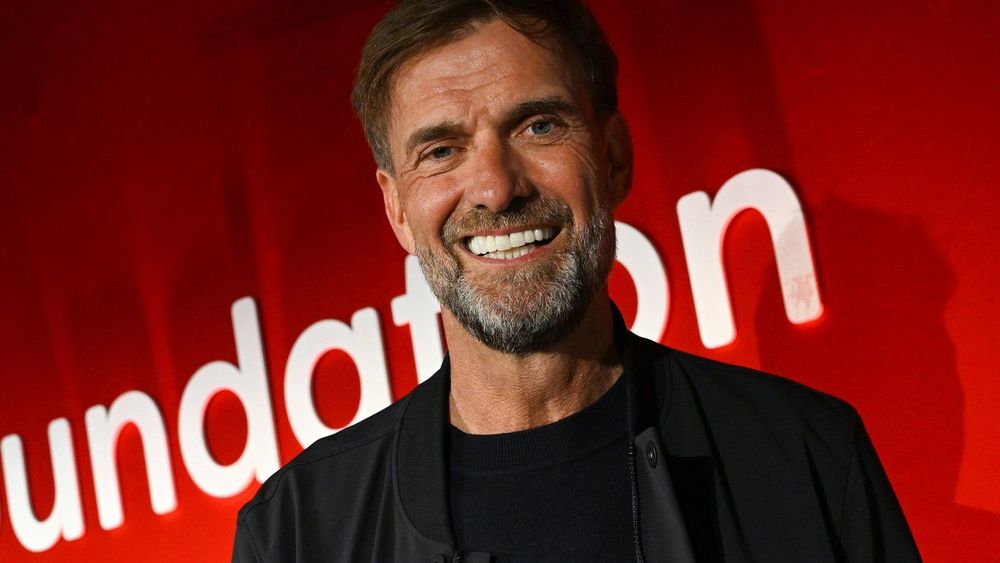
So when Rafael discusses Jürgen Klopp's appointment as Germany coach, his enthusiasm comes from more than Klopp's reputation.
He sees a manager who understands the country's football culture.
"That was something that I wish it could happen already three or four years ago," Rafael tells Football Presse. "I mean, with Hansi Flick they really had a good trainer, good person. He's a father figure, but Jürgen Klopp really represents the German mentality.
"For me, you couldn't get a better coach who knows German football, who knows the German culture and the identity of German football."
Rafael believes Klopp's experience outside Germany is equally important. His years in England, particularly his transformation of Liverpool, gave him an understanding of how to rebuild something with history, expectation and an established identity.
That experience, Rafael argues, could be particularly valuable to a German national team searching for its own direction.
"Being in England, having that experience and really giving Liverpool the identity back that Liverpool had back in the days, that is something special. He understands what it means to build something, and also what it means to deal with players individually.
"Klopp knows how to deal with players individually because he showed that already when he was probably 11 years in Liverpool, which wasn't the easiest club to come into with that type of history, and still maintaining and building it up."
For Rafael, Germany's current challenge is not simply a question of talent or coaching tactics. It is a question of identity.
During his career in Germany, he saw first-hand the different demands placed on players at Hertha, Mönchengladbach and Augsburg. His early Bundesliga education taught him about the importance of results, while relegation later exposed the intensity and collective responsibility required to survive.
Those experiences inform his belief that German football has traditionally possessed a particular mentality that should not be abandoned in the pursuit of other footballing models.
"A lot of countries or even clubs made a mistake to believe that the way Spain played football is the right way, is the best way. Even if you know the structure and the history, how they play football, this type of football came from Holland, actually came from Ajax.
"Johan Cruyff and Rinus Michels brought that to Spain, where Barcelona adapted and embraced this type of ideology, bringing Pep Guardiola and all these guys who really strictly believe in that type of football, which dominates and changed actually the way of playing football in the last decade."
Rafael's argument isn't that Germany should reject technical football or tactical evolution. Rather, he believes a national team needs to understand what makes it distinct.
For him, German football's identity has historically been built around competing, managing difficult moments and finding ways to win.
"German football, in every tournament that you can imagine, the World Cup or the European Championships, Germany or German clubs would always finish quarter-final or semi-final or play the final.
"Germany, the standard was like, the semi-final is the beginning of the tournament, if we can go back in time and really see the performance and winning the World Cup, having a period of time not winning the World Cup and then winning the World Cup again."
That expectation shaped German football for generations. Rafael remembers a culture where reaching the latter stages of major tournaments was not considered an exceptional achievement but the minimum standard.
The recent decline, in his view, makes restoring that mentality particularly important.
"What makes Germany special is this identity. And I think that even though with the changing of culture and changing of the game, or the game evolving in Germany, the identity should always be the same."
His comparison with other football cultures is revealing. Rafael sees South American football as possessing its own distinctive characteristics, while Germany historically had a different version of the same competitive instinct.
"If you can see, for example, South America, they have their identity. They're like fucking dirty players. They're not going to play fair. They're going to intimidate you, they're going to kick you, push you, bite you, and do everything to win. And they can fucking play football.
"Guys who know how to win.
"German had the same mentality and attitude as well, but in a German way. Always to manage to win games, not playing the most beautiful football, all about winning football games and then in the end reaching the semi-final, reaching the final, or winning the cup."
That description reflects Rafael's own education in Germany. At Borussia Mönchengladbach, he experienced relegation and learned that technical quality alone could not guarantee survival. At Augsburg, he became part of a team that fought its way into the Bundesliga through collective discipline and responsibility.
Germany, he suggests, has always understood that football is ultimately about managing pressure.
Klopp's appeal lies partly in his ability to communicate that message.
Rafael doesn't simply describe him as tactically knowledgeable. He describes a coach capable of creating belief among players, something he considers equally important at international level.
"If you followed his interview, he said a couple of things where I would say, fuck no, man, I would like to play for this guy.
"Because if you follow the way he guides himself, the way he presents himself, you can always see how professional he is, but also the human part of him trying to inspire you, protecting you and giving you the feeling that I truly believe that you can do it."
That combination of intensity and personal connection is central to Rafael's belief in Klopp. A national team manager has limited time with players compared with a club coach, making the ability to establish trust particularly important.
But Rafael believes Klopp's influence should extend beyond the senior team.
He points to the structure of German football itself as an area requiring attention, arguing that the national team cannot simply be treated as an isolated project.
"I'm very happy with what he said also in his interview. It's not only about the first team, but it's about the whole organisation.
"His focus won't only be with the first team, even though the next tournament is in two years and the qualification is going to start soon. The whole structure has to change.
"And that is something that I believe, if he has the chance and if they are patient enough to give him this opportunity, I 100 per cent believe that maybe the next World Cup will completely look different than what we experienced in the last two big tournaments where Germany played."
For Rafael, Klopp represents more than a change of coach. He represents the possibility of reconnecting German football with something it once understood instinctively.
Having spent his formative professional years in the country, he knows the expectations that surround the national team. He also knows that German football has never needed to imitate another country's identity to be successful.
The challenge, as he sees it, is remembering what made it successful in the first place.