Tottenham Hotspur wanted to be more than one of English football's biggest clubs in the 1980s.
They wanted to be the biggest.
Yet when the Premier League arrived in 1992, Spurs were moving in the opposite direction, leaving them watching as Arsenal, Manchester United, Blackburn Rovers and Newcastle United emerged as the clubs best placed to exploit English football's new era.
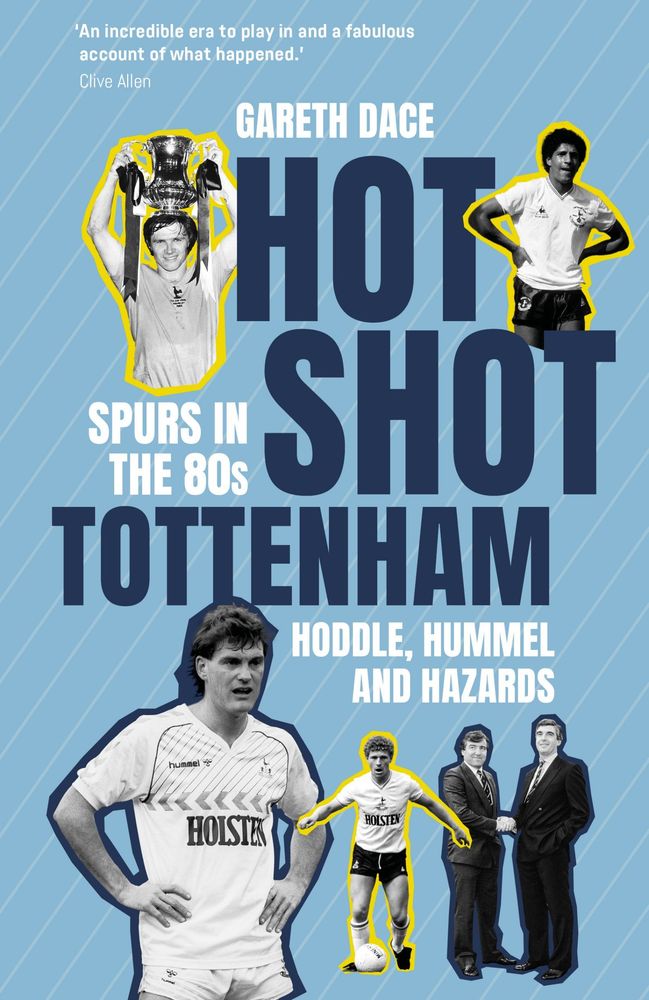
Gareth Dace, author of "Hot Shot Tottenham", believes the explanation can be found in the complicated final years of the previous decade.
"I think Spurs undoubtedly were London's top side until 1986-'87," Dace told Football Presse.
The question, then, is why Tottenham failed to turn that position into lasting supremacy.
One of the answers lies with Irving Scholar, whose ambitions for the club went far beyond simply winning the occasional trophy.
"His aspirations for Tottenham were undoubtedly for Tottenham not just to be one of this Big Five, but to be the big one within that Big Five," Dace said.
"He wanted Spurs to be English and European champions."
Scholar wanted Tottenham to look like a modern superclub before the concept had properly arrived.
"He wanted them to play with swagger and to be signing the best players," Dace said.
The ambition was there. So was the football.
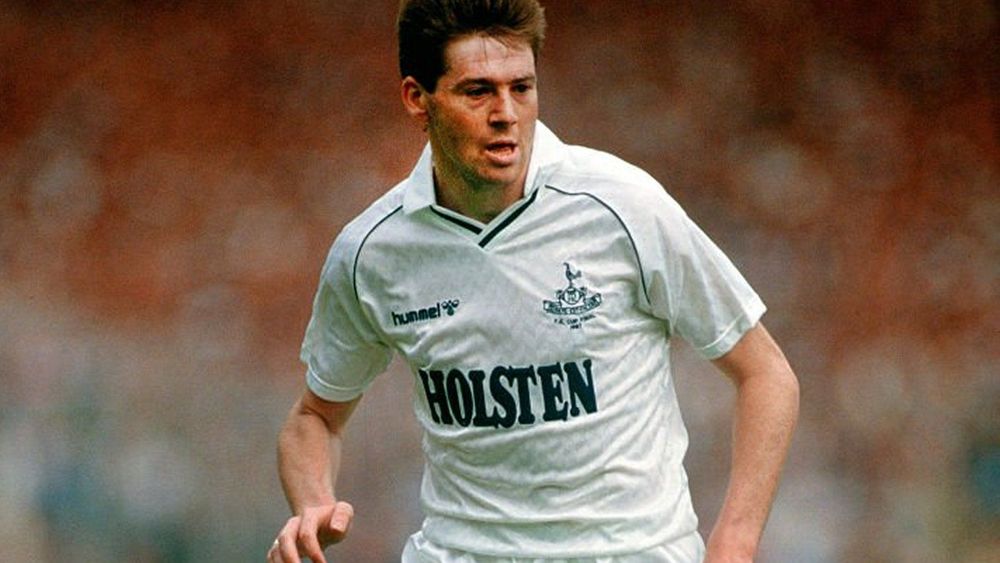
Tottenham won the FA Cup in 1981 and 1982 before adding the UEFA Cup in 1984, while teams containing Glenn Hoddle, Steve Perryman, Paul Miller, Graham Roberts and other leading players repeatedly challenged at the top of English football.
But the club could not convert that success into sustained dominance.
"Because of the financial turmoil, which he in part is responsible for, it leaves Spurs going into the '90s really on the decline," Dace said.
"And ultimately suffering an existential crisis where it needed Alan Sugar to come in and invest in the club and get them out of that debt."
The timing was particularly damaging.
English football was about to enter the Premier League era, when television, sponsorship and commercial income would transform the game.
"The inception of the Premier League was the time when you needed as a club to be on an upward trajectory," Dace said.
"And Arsenal and Manchester United, you know, definitely are."
Tottenham were not the only club to recognise the opportunities coming.
"Newcastle and Blackburn have suddenly inherited or come into lots of money," Dace said.
"And those are the teams that as the '90s progress, are on the way forward."
Spurs, however, were going backwards.
"But Spurs become, unfortunately, become a real irrelevance in the '90s," Dace said.
That decline is why Dace believes the 1980s are essential to understanding Tottenham's subsequent history.
"You've got to go back to the '80s to understand the genesis of that."
And Dace is keen to distinguish between the ambition behind Scholar's project and the failure to execute it.
"Whereas the intention and the ambition from the owner Irving Scholar was probably absolutely right, the execution and external factors that came into play meant that they weren't."
In some respects, Scholar was remarkably early to the commercial revolution that would reshape football.
"He was this visionary, not just for Tottenham but for English football," Dace said.
"He really dragged English football through its darkest period in the mid-'80s and had this vision for how it could promote itself, how it could be better at enticing more people to football, how it could be better at enticing an international audience to English football."
Dace's own background gives him an interesting perspective on that international ambition.
Born in 1981, he researched the decade through people who had actually lived through it, while also bringing an understanding of how English football was consumed outside Britain.
"Scandinavia was really a bit of an outlier," he said.
"For the rest of the world that was interested in European football, it was France, Germany, and more particularly Italy, which were the leagues that people wanted to watch."
Scholar wanted English football to compete for that audience.
"Scholar wanted people to understand the value that football had commercially," Dace said.
"Certainly with television, with sponsorship, with outside and potential fan bases across the world."
The remarkable part, Dace argues, is how much of Scholar's thinking eventually became standard practice.
"He didn't necessarily just drag Tottenham into the modern day when he took over the club," Dace said.
"He dragged Tottenham into the future."
And yet the same period that demonstrated Scholar's vision also exposed the weaknesses in his approach.
"He was badly let down, I think, by business partners that he had at Spurs," Dace said.
"He wasn't able to form the key relationships that he needed to."
His relationship with Keith Burkinshaw was particularly problematic.
"Scholar was really the proverbial kid in the sweet shop who had the keys to the shop," Dace said.
"And whereas chairman and directors prior to Scholar had been almost invisible, Scholar wanted to be in the dressing room, he wanted to be mates with the players, he wanted to have a say in team selection and who the manager was buying."
"Him and Keith Burkinshaw were always going to clash."
The same pattern subsequently emerged with Terry Venables.
Scholar believed Venables could finally deliver the league title that had eluded Tottenham during their great period of the early 1980s.
"He really went on a beeline to get Terry Venables to come in, and he thought that would be it," Dace said.
"He thought, 'I'll get Venables in, he's going to win the league championship with us.'"
But the relationship did not develop as Scholar hoped.
"Scholar and Venables clashed," Dace said.
"They had disagreements over the type of players that they needed to buy."
Then came the financial problems.
Dace believes Scholar deserves responsibility, but argues that external circumstances also played their part.
"Ultimately he's the number one at the club, so he ultimately has responsibility for it," he said.
"But there's lots of things that he couldn't help, like a stock market crash in 1987 which wiped shares off the company and off the stock exchange in total."
"Different market forces had an impact and a negative effect on the club."
Meanwhile, Scholar was also losing supporters.
"He alienated the fan base with the rebuild of the East Stand or the Shelf, which is the famous side of White Hart Lane," Dace said.
"When corporate boxes were put in there, I think that really lost the majority of the fans."
By the end of the decade, the grand vision had collided with reality.
Tottenham had wanted to become English and European champions. Instead, they needed Alan Sugar to rescue them financially and entered the Premier League era without the momentum their rivals possessed.
That is why Dace believes the timing of Spurs' decline is so important.
"The Premier League, the inception of the Premier League was the time when you needed as a club to be on an upward trajectory," he said.
"And Arsenal and Manchester United, you know, definitely are."
"Newcastle and Blackburn have suddenly inherited or come into lots of money."
"And those are the teams that as the '90s progress, are on the way forward."
"But Spurs become, unfortunately, become a real irrelevance in the '90s."
That word is deliberately stark.
Tottenham had not become a small club. They had become a club whose ambitions and reputation were no longer matched by their position in English football.
Dace believes that distinction explains why the eventual rise under ENIC is so significant.
"When ENIC take over from Sugar in the early 2000s," he said, Spurs were not necessarily "in a financially terrible state".
It was something else that had become the problem.
"It was just the irrelevance that Spurs were in English football."
The distance travelled since then makes that decline even more remarkable.
"Just to see where Spurs are now and just the fact that whether you're for or against, I imagine that most people are against the whole concept of that European Super League, but for Spurs even to be mentioned in that conversation is completely unbelievable when you think where they were in, you know, '99, 2000."
That is ultimately the paradox at the heart of Tottenham's 1980s.
Scholar's ambition was not necessarily misplaced.
His vision of a commercially powerful, internationally recognised Tottenham was remarkably prescient.
But Dace's research suggests the club failed to build the stable footballing and financial foundations required to turn that vision into reality.
"Whereas the intention and the ambition from the owner Irving Scholar was probably absolutely right, the execution and external factors that came into play meant that they weren't."
Tottenham had spent the 1980s trying to become England's biggest club.
By the time English football entered its most lucrative era, they were instead trying to recover from the consequences of that pursuit.
The opportunity had been there.
The tragedy for Spurs was that they had seen the future coming – and still weren't ready for it when it arrived.
Gareth Dace is author of "Hot Shot Tottenham: Spurs in the 80s – Hoddle, Hummel and Hazards" from Pitch Publishing - which is available here.