Jorge Valdano's career could have turned out very differently if he had simply accepted a transfer arrangement and travelled to Zaragoza with his Alavés team-mate José Ramón Badiola.
Instead, a disagreement over the deal meant Valdano stayed behind.
Badiola travelled to Zaragoza and checked into the Hotel Corona de Aragón.
The following morning, the hotel caught fire.
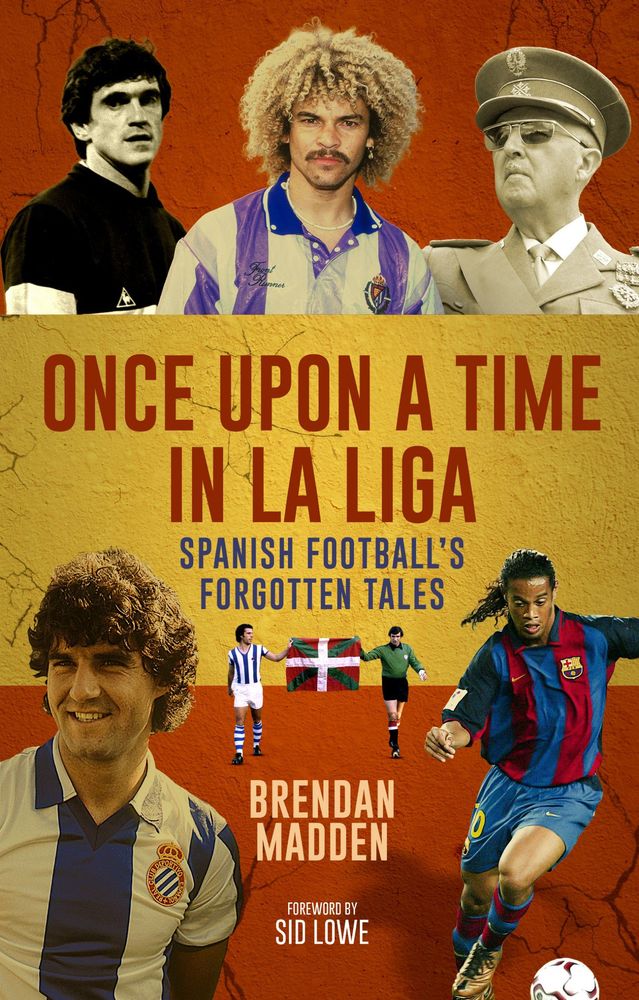
For Brendan Madden, who uncovered the extraordinary story while researching "Once Upon a Time in La Liga", it is one of the most remarkable examples of football history being changed by a seemingly insignificant decision.
"Pretty incredible story. Yeah, very sliding doors story," he tells Football Presse.
Valdano and Badiola were two of the hottest properties at Alavés in the late 1970s, with both players heading for Zaragoza.
Madden describes Badiola as the more naturally gifted of the pair, while Valdano was the more powerful centre-forward.
"Valdano and a guy called José Ramón Badiola were both playing for Alavés in the second division.
"These two guys are the two hottest properties.
"They're both sort of forwards. Valdano's a bit more of a muscular centre forward. Badiola's this very, very talented winger.
"And Valdano himself says Badiola was the talented one. He was the one that sort of, yeah, very much a huge talent in the making."
The two players were due to stay at the Hotel Corona de Aragón, one of Zaragoza's best-known hotels, after completing their transfers.
But Valdano had become unhappy with part of the agreement.
"So they both go down to — well, in theory, they both booked to go down to Zaragoza that night in a hotel, Corona de Aragón.
"Badiola does go.
"Valdano, by — if there's something in the contract that he's not happy with, he's not happy with the Alavés board, some share of it, of the transfer or whatever.
"So by way of his little protest, he decides not to go that night, and he follows down the next day in his own car."
That apparently minor dispute had enormous consequences.
The Hotel Corona de Aragón caught fire the next morning, with smoke spreading rapidly through the building.
Madden explains that Badiola initially made a desperate attempt to escape.
"The hotel is disastrously equipped to cope with a fire and it spreads quickly and people are in bed basically, and smoke's come into their room either directly from the fire or through the air conditioning vents.
"Even on the top higher floors, there's smoke coming into people's rooms."
Badiola was on the first floor but, in the confusion, ran upwards rather than towards the exit.
"Badiola sort of panics and he runs out.
"Instead of going to the first floor, he's on the first floor, and instead of going downstairs, he goes upstairs.
"There's flames coming up the stairs."
He eventually reached a balcony and jumped.
"There is one of those life nets to jump on, but I think he rebounds off that, hits his head, goes into cardiac arrest.
"For a moment, the rest of the directors have him down as dead."
Badiola survived, but the consequences were devastating for his football career.
Madden says that while there was no obvious physical reason why he could not continue, something had changed.
"Luckily he's not dead. He survives, but he's never quite right again.
"To all intents and purposes, physically he's fine, but something's not quite right."
The contrast with Valdano could hardly have been greater.
The Argentine had avoided the hotel fire simply because he had been unhappy with his transfer arrangements.
"Valdano, who's avoided this whole disaster purely by, purely thanks to the fact that he's had this dispute with the board, he's miraculously escaped being in that situation."
Valdano went on to flourish at Zaragoza and establish himself as one of the most intelligent forwards of his generation.
His career then took him to Real Madrid, where he became part of one of the most important sides in the club's modern history.
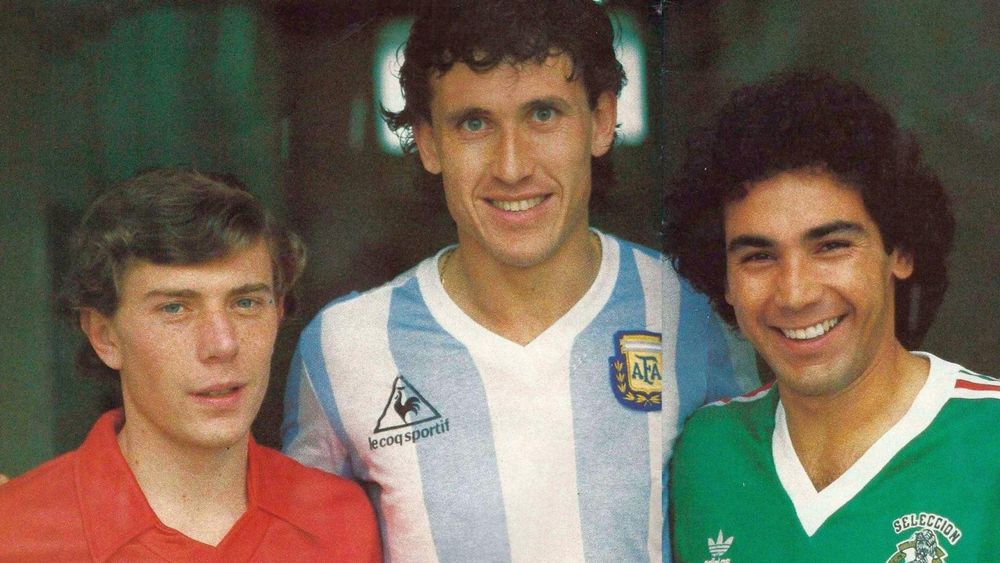
Valdano joined Madrid in 1984 and went on to play alongside the likes of Emilio Butragueño, Hugo Sánchez and Manuel Sanchís.
He was part of the team that won the 1985-86 UEFA Cup and then helped Madrid win the Spanish league in 1986-87, scoring regularly as the club began a period of domestic dominance.
His time at the Santiago Bernabéu also cemented his reputation as a footballer whose intelligence and understanding of the game went beyond his goals.
That reputation would become even more important after his playing career.
Valdano retired in 1987 after a battle with hepatitis, but his relationship with Real Madrid did not end there.
He returned to the club as coach in the early 1990s and led Madrid to the 1994-95 La Liga title, before later becoming the club's sporting director.
His influence extended beyond simply managing teams or recruiting players. Valdano became one of the game's most articulate thinkers, writing and speaking extensively about football while helping shape Real Madrid's sporting direction.
But even after everything he achieved, Madden's research reveals that his career had another extraordinary near-miss waiting in the background.
Valdano had avoided the Hotel Corona de Aragón simply because he had been unhappy with the details of his transfer.
And years later, the future World Cup winner was involved in a helicopter crash in Mexico City.
"Valdano, a few years later, actually escaped another incident. He was in a helicopter crash in Mexico City."
Once again, chance played a role.
Valdano and a young Mexican man were the final two passengers to board the helicopter, which took off from the roof of a building.
The aircraft was overloaded and the thin air at Mexico City's altitude made matters worse.
"There's two rows of three. He chooses one in the middle and the other young Mexican guy chooses one at the end.
"The Mexican guy unfortunately took the brunt of the impact when it fell."
The helicopter crashed into the street below.
Valdano survived with serious injuries, while the other passenger was less fortunate.
"Valdano, I think he had a collapsed lung, maybe a couple of bruised ribs, but he managed to survive."
Madden is struck by how extraordinary the sequence of events is.
"Yeah, amazing, incredibly lucky."
Valdano would eventually become much more than the player who escaped the Hotel Corona de Aragón.
He won the World Cup with Argentina in 1986, scoring in the final against West Germany at the Azteca Stadium, and later became a La Liga-winning coach and influential Real Madrid executive.
Yet Madden's research shows just how close that career came to being radically different.
"Often when he talks about what happened at Corona de Aragón, that's often brought up as well, that sort of two remarkable escapes for one of like Spanish football's most erudite talkers."
Valdano's career is normally remembered through his goals, his World Cup medal, Real Madrid and his later influence on the Spanish game.
But Madden's research reveals another version of the story — one in which a disagreement over a transfer deal may have saved his life, while the same disaster helped bring another promising footballer's career to a tragic halt.
Sometimes the biggest turning points in a footballer's life happen before the next match has even been played.
Brendan Madden is the author of "Once Upon a Time in La Liga" from Pitch Publishing - which is available here.