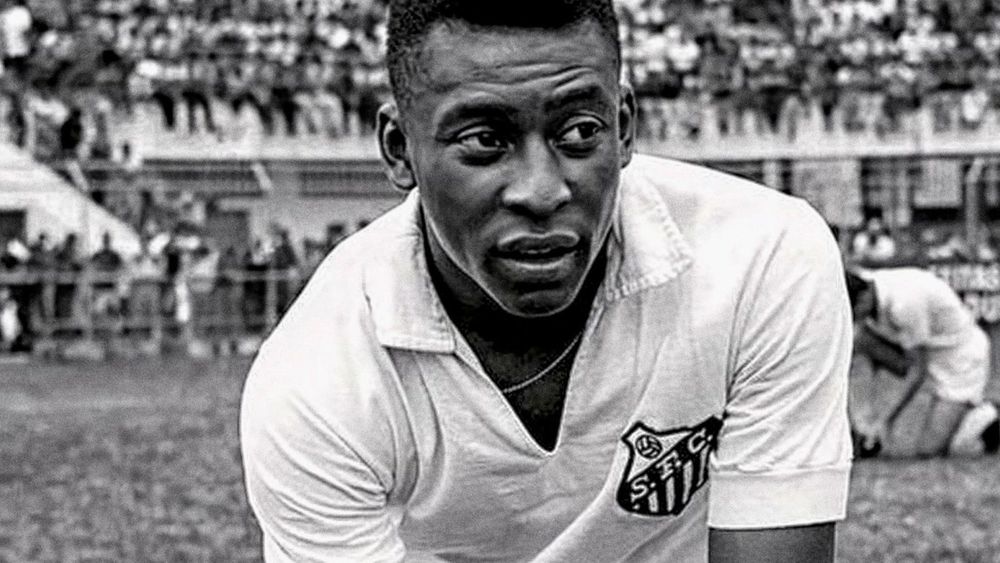
Then there is Pelé, a figure whose influence extended far beyond the football pitch, becoming one of the first truly global sporting celebrities.
Harry Harris knew him personally, interviewed him on numerous occasions and eventually wrote his biography, "Pelé: His Life and Times". What began with a simple suggestion to the Brazilian developed into a relationship that gave Harris access to the man behind the extraordinary reputation.
It also provided an opportunity to speak to those who had shared Pelé's world, including some of Brazil's greatest footballers, and to examine the experiences that shaped a career unlike any other.
The hug that started a remarkable relationship
Harris's proposal came at a particularly interesting time in Pelé's life. Despite his standing in world football, he was experiencing a period when his relationship with FIFA had deteriorated and his wider public profile was not quite what it had been.
Harris had followed Pelé's career for years, watched him extensively on television and met him on numerous occasions around the world. He believed there was a story worth telling, and decided to suggest that somebody should write a book about him.
Pelé's reaction was not what he expected.
"It did," Harris tells Football Presse. "He gave me a great big hug and said, I'm so thrilled that someone even wants to write a book about me.
"But he was going through a bit of a dip in his career. He'd been dropped by FIFA. Previously, he'd been a centre of every World Cup, the draw, the ceremonies, and all that sort of stuff. But he'd been inexplicably dropped by FIFA.
"And he was having a hard time with his political career in Brazil, which might have been one of the catalysts for FIFA pushing back on him.
"And, but I was, you know, saw him as the world's greatest ever player. And I watched him many times in action, mostly on TV, I would say, because I was far too young.
"But having met him many times around the world and spoken to him, he's someone I liked and I'd known for a long time when I made that proposal to him."
The suggestion developed into a much closer working relationship. Harris interviewed Pelé repeatedly, sent him the manuscript and received his comments before publication. Pelé also helped provide access to material that would give the biography a more personal dimension.
"And from then onwards, when I interviewed him many, many times, and I sent him the manuscript, which he sent back with a few changes, and he gave me access to a photographer who had taken personal private pictures, which we used in the book.
"So in a roundabout way, I became his official biographer."
The book, "Pelé: His Life and Times", was first published around 2000 and subsequently appeared in multiple editions internationally.
It also helped restore Pelé's position in the international football spotlight.
"And although it was a dip at the time, not long afterwards, he was back in favour with FIFA and back at the World Cup draws and the ceremonies for the World Cup itself.
"And he—obviously people liked the book and he was inundated with offers to do his autobiography. So he made an awful lot of money on the back of the fact that I'd written his biography."
The relationship had clearly gone beyond the usual journalist-subject arrangement. Pelé invited Harris to the launch of his book, an occasion that brought together some important figures from the Brazilian community.
"But he invited me as one of the few local journalists to the launch of his book at the Brazilian Embassy in London."
Garrincha, the player Pelé put above himself
One of the most revealing moments in Harris's account concerns Pelé's relationship with Garrincha.
The two men were central to Brazil's extraordinary footballing history, particularly the 1958 and 1962 World Cup victories. But their standing among Brazilian supporters was not always identical. Harris had observed that many older fans revered Garrincha even more than Pelé.
He put that observation to Pelé himself, asking how he viewed their relationship and the question of who was the greater player.
The answer was revealing.
"Well, no, he told me he would have put Garrincha as number one, not himself, at that time.
"But, you know, obviously Garrincha's career was cut short because of his lifestyle, etc. And Pelé went on to achieve far, far more and became indisputably the world's greatest ever player ahead of Garrincha.
"Garrincha was a phenomenal player, obviously, seen on the TV."
It was an extraordinary admission from a footballer whose own reputation was already approaching mythical proportions. Rather than automatically placing himself above his contemporary, Pelé was prepared to acknowledge the special qualities of a player who had captured the imagination of Brazilian supporters.
For Harris, the opportunity to explore that relationship extended beyond the conversations he had with Pelé.
His reporting trip to Brazil with Manchester United for the inaugural World Club Championship provided an opportunity to spend considerable time in Rio de Janeiro and speak to people who had known Pelé throughout his career.
There was an irony to the assignment. Harris and his colleagues at the Daily Mirror had campaigned against Manchester United participating in the tournament, believing the decision would damage the FA Cup.
"But I spent an awful lot of time in Rio because I went out with Manchester United for the inaugural World Club Championship, which was a self-contained tournament as they've now made it.
"So I spent some time out there, although at the Mirror we campaigned against Man United going there because I said at the time it would be the beginning of the end of the FA Cup, which of course it was."
The trip nevertheless became an invaluable research opportunity.
"We'd been there and watching not just Man United games, but other games at the Maracanã. It was a great opportunity because all those great Brazilians were there doing commentaries or become journalists or doing media work.
"And they were in the media zone, and I was able to interview them about their lives and Pelé's life and their lives with Pelé together."
Many of those people have since passed away, making the conversations particularly valuable to Harris and the historical record.
"So, of course, most of them, if not all of them, have now passed away. But obviously, that book on Pelé was first published in 2000, has been republished many times.
"It's been published around the world. It's even been translated in Vietnamese, would you believe?
"So my claim to fame is I have a book published in Vietnamese in Vietnam, and it's been by far one of my best global bestsellers. Published in the States, special American edition published by American Pump Company."
Despite the international success, it was the personal relationship that remained most important to Harris.
"I just wish he was still around. He was just such a great guy to speak to."
The first global football superstar
Pelé's importance to football was not confined to his achievements on the pitch. Harris believes he was among the first players to become a worldwide commercial personality, recognised in countries where supporters might never have watched him play.
"He was probably the first worldwide corporate brand as a footballer."
The comparison is particularly interesting given the modern football landscape, where the biggest players have enormous commercial operations built around their names, image rights and social-media audiences.
Pelé achieved that international recognition in a very different era, without the communications infrastructure that now allows footballers to reach supporters directly.
Harris remembers how even the smallest comment from the Brazilian could become a major news story.
"Yeah, no, he obviously—all professional footballers miss playing.
"But, you know, he had a great life going around the world as a pundit, etc. So, you know, he excelled because he was who he was and whatever he said, no matter how limited, it made headline news.
"Yeah, many times for me. It was incredible."
The 1966 World Cup: the experience that nearly ended his international career
One of the most difficult periods of Pelé's playing career came in England in 1966.
Brazil arrived as defending champions, having won the previous two World Cups, but their campaign ended in the group stage. Pelé was repeatedly targeted by opposition defenders, suffered injuries and eventually left the tournament deeply disillusioned.
Harris asked him about his memories of that competition, particularly the treatment he received against Portugal and the possibility that the experience had influenced his decision to withdraw from international football.
His answer was unequivocal.
"It was—he hated it, and he quit as a result. He wasn't going to play in 1970.
"He'd had enough of that kind of treatment. He'd had enough of—it wasn't so much blaming the opposition, it was blaming the people who ruled the game, who were giving protection to the great players.
"And as time went by, obviously, people who did see that changed it. They do get a lot of protection in the modern game, but he was getting none."
The circumstances of Brazil's elimination underline the severity of the experience. Pelé scored against Bulgaria in their opening match but was injured after repeated challenges. He missed the defeat against Hungary and returned against Portugal, still struggling with his fitness. Brazil lost 3-1 and were eliminated. FIFA's own retrospective account describes the tournament as one of the most painful experiences of Pelé's career.
Harris had watched footage of the Portugal match and was struck by the brutality of the challenges.
"I mean, I've seen videos of that game against Italy. It was just appalling. It was GBH."
The reference to Italy is how it appears in the interview transcript, although the specific 1966 match being discussed in this context was Brazil's encounter with Portugal.
It was an important distinction in understanding Pelé's eventual return to international football. His decision to play in 1970 was not simply an automatic continuation of his career. The experience in England had left such a mark that he had seriously contemplated never appearing at another World Cup.
Why Santos could afford to keep Pelé
One of the most fascinating aspects of Pelé's career was that he never made the move to European football that many supporters might have expected.
There were opportunities. Manchester United and Matt Busby have been mentioned, with the question of whether Pelé had ever seriously considered playing in Britain.
Harris believes the answer is explained by the extraordinary financial arrangements Santos had developed around their superstar.
"Well, he had his offers. Yeah.
"And do you think it ever came close? No. And I'll tell you why.
"Because he had no need to do so, because Santos were financially rewarding him enough to not really consider that the financial aspect was necessary."
There was, however, more to the decision than money. Pelé was tempted by the prospect of testing himself in other countries, but Santos offered something that few clubs could match.
The Brazilian side had effectively become an international touring attraction, taking their football around the world and generating enormous interest wherever they appeared.
"But he was tempted because obviously he would like to have tried his skills in different countries.
"But Santos were like the Harlem Globetrotters. They had pre-season, end-of-season tours, and they played all of these teams. They went round the world playing all the teams.
"And he experienced all of that, and he was treated like a king or a head of state whichever country he went to, and he really did enjoy the kudos of his Santos team and how much money that attracted, not just for the club, but for him."
The financial structure of those appearances was particularly revealing.
Santos were able to generate substantial income from international fixtures, but Pelé's participation was the attraction that made the arrangements commercially worthwhile.
"So there were certain financial payments to the club to tour, but most of the money was being paid to Pelé.
"And no money was being paid at all to Santos if Pelé didn't play.
"So those were the kind of contracts that were being handed out at the time, which were very much centred around Pelé and financially viable for Pelé."
It provides a fascinating explanation for why one of the greatest players in history remained at Santos rather than pursuing a move to Europe during his prime.
He was already experiencing international football, playing in front of crowds around the world and earning the kind of financial rewards that made a transfer unnecessary.
The answer Pelé gave when asked about Maradona, Messi and Ronaldo
Harris also had the opportunity to ask Pelé directly how he viewed himself against the other great players in football history.
It was a question that would become increasingly relevant as the debate around Diego Maradona, Lionel Messi and Cristiano Ronaldo developed.
Pelé's answer was characteristically memorable.
"I did."
Asked what the Brazilian had said, Harris explained:
"Well, that's in the book as well, but I'll tell you, I'll tell you anyway.
"He just turned to me, he said, when my mother and father made Pelé, they broke the mould."
It was a typically confident response, but one that also reflected the extraordinary self-belief of a player who had spent decades being told he was the greatest footballer the world had ever seen.
Harris's own assessment of Pelé is equally emphatic, particularly when considering the conditions in which earlier generations played.
Why modern footballers should look back
For Harris, one of the biggest problems with modern football is that younger generations do not always appreciate the quality of players who came before them.
The discussion moved beyond Pelé to the wider history of the game, with Harris arguing that the greatest players of previous generations deserve much greater recognition.
"Well, whatever they can. I don't think they take the trouble, the modern generation, to look at those players going back in time.
"But it wasn't—you go back even further, there were players of immense talent.
"We talk about such gifted players today, but when you look at some of those players in the past, they were unrivalled.
"And none of the modern players would stand comparison, to be perfectly honest."
His argument is not simply about comparing statistics or trophies. It is about the conditions in which those players performed.
Modern footballers benefit from vastly improved playing surfaces, equipment, medical support and refereeing protection. The players of Pelé's generation often had none of those advantages.
"And, you know, and the kind of playing facilities they had, when you think about it.
"We're talking about no protection from the referees and the kind of brutality that they—I mean, Pelé, in his early days, railed against it. In fact, was sent off for chinning an opponent, which you wouldn't have imagined Pelé doing, but he did. So he could look after himself."
It is a particularly interesting observation about a player who became internationally recognised for his sportsmanship and ambassadorial qualities. Pelé was not simply a gifted footballer who could rely on his technical ability to avoid physical confrontation.
He had to survive an era in which talented attacking players were often subjected to repeated challenges without the protection that would be expected today.
"But the kind of physical aggression—but not only that, it was a kind of—pitches were so substandard and poor, they were just mud patches.
"They played on snow and ice. They had balls that were 10 times heavier than the ones now.
"Football boots that were, you know, no one could probably possibly run in them, let alone kick a football in.
"But despite all of those handicaps, they were every bit as good, if not as better, or much better than the players who we believe now are such global superstars."
For Harris, that is the essential point about Pelé's legacy. The Brazilian was not simply a product of an era when football was less sophisticated or less physically demanding. He was a player who excelled despite conditions that would make the modern game almost unrecognisable.
And there was another side to Pelé that Harris was fortunate enough to experience: the personality, the warmth and the ability to make people feel important, whether they were journalists, former teammates or supporters.
His first reaction to the suggestion of writing a book was a great big hug. Their subsequent relationship produced an internationally successful biography, access to personal photographs and a series of conversations that Harris still treasures.
The final memory is perhaps the most fitting. Pelé could discuss Garrincha with humility, recall the pain of 1966, explain why he stayed at Santos and deliver a memorable answer when asked to compare himself with the modern greats.
He was comfortable discussing his own place in football history, but he was also generous in recognising the achievements of others.
For Harris, the opportunity to know him was a privilege, and the chance to document his life became one of the most rewarding projects of his career.
"I just wish he was still around. He was just such a great guy to speak to."
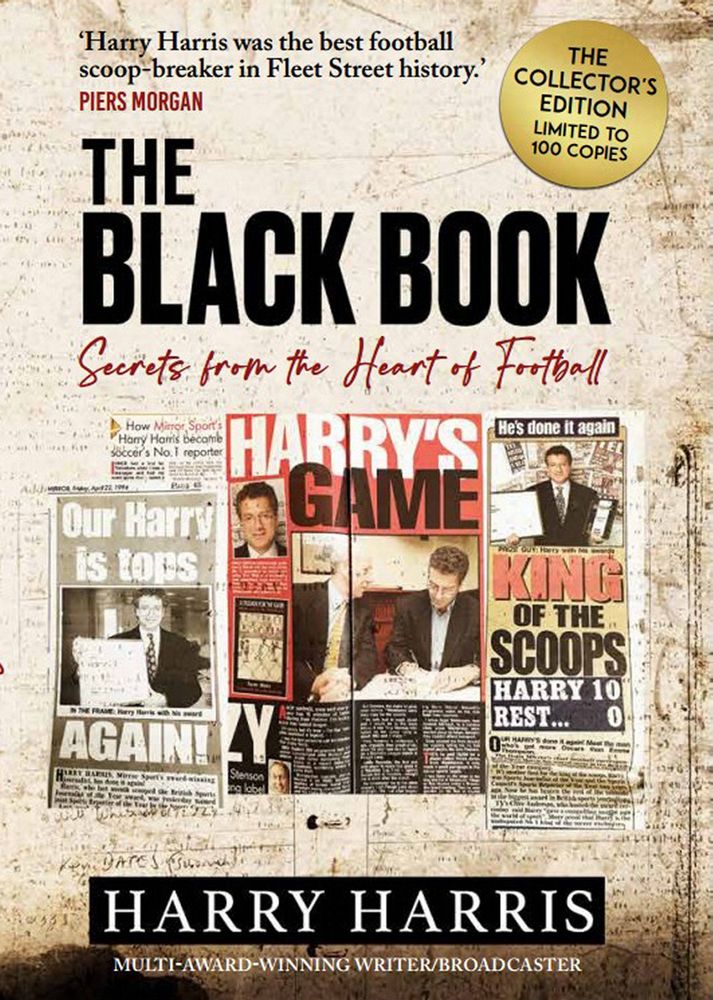
Harry Harris is author of "The Black Book: Secrets from the Heart of Football" from Legacy 11 Books - which is available here.