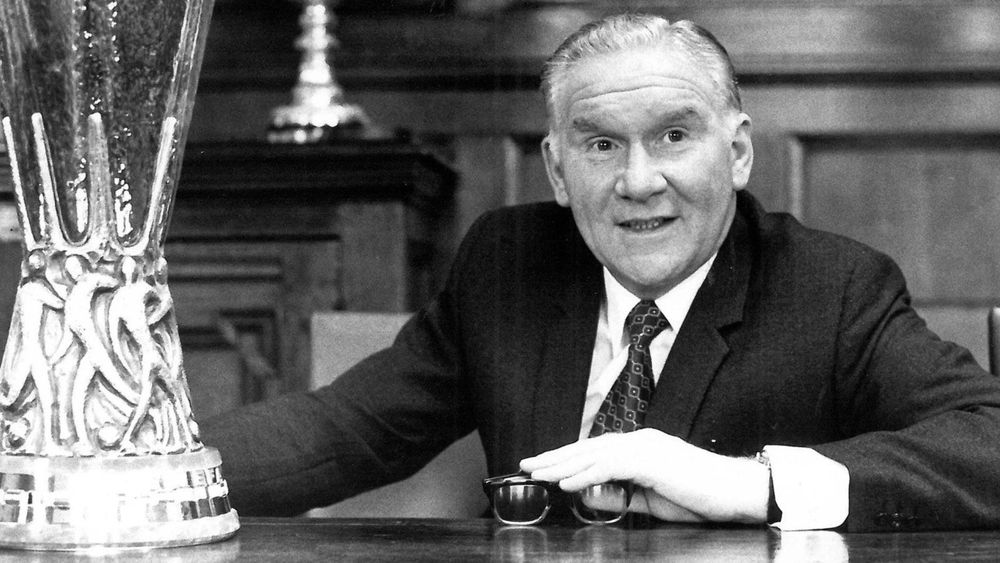
During that time, he developed an unusually close relationship with Bill Nicholson, the man whose playing and managerial achievements helped shape the identity of Tottenham Hotspur.
Nicholson's contribution to Spurs was extraordinary. He made 341 appearances for the club, scoring six goals, and was part of the teams that won the Second Division title in 1949–50 and the First Division championship in 1950–51. As manager, he delivered eight major trophies in 16 years, including the historic League and FA Cup Double of 1960–61 and Britain's first European trophy at club level.
For Harris, however, Nicholson's importance went beyond the honours and the records. He knew the man behind them, spending time with him every Monday for seven years and eventually persuading him to tell the story of his life.
A mother's determination and a trial at Tottenham
Harris's connection with Nicholson began when he was a young goalkeeper hoping to make his way in football. His mother was determined to get him an opportunity at Tottenham and wrote directly to the club's manager, Bill Nicholson. Nicholson replied, and her persistence helped secure her son a trial.
"She did. Yeah. Well, that's worth reading. So it didn't rest with my mum in the end. East End, you know, she got what she wanted. She was the Alex Ferguson of mums," Harris tells Football Presse.
Harris is candid about his prospects of becoming a professional footballer. He knew he was not a particularly gifted goalkeeper, and the trial brought that home. Tottenham were more interested in two older players, Dennis Rove and Terry Brisley, but Harris was still proud to have earned the opportunity.
"Well, I got the trial, but Spurs were very keen on two players that played in the team with me rather than being interested in me. But I was a year younger, but I was still in my school team and eventually captained my school team as a goalkeeper.
"But in that trial, the older players, Dennis Rove and Terry Brisley, were the ones that the scouts were particularly keen on. And I never heard from anyone ever again."
The trial did not lead to a playing career, but it gave Harris an early connection with Tottenham and Nicholson. His mother's determination was part of a wider story of the sacrifices she made to give her son opportunities, even when money was scarce.
"I was only 14 and we had no money to speak of, nothing to speak of, and yet she managed to purchase a World Cup season ticket for me. So I watched every single England game. I watched a France game at White Hart Lane, and I had a ticket for the final."
The player who helped establish Tottenham's foundations
Nicholson's story at Tottenham was already remarkable before he became manager. Arriving from Scarborough in 1936, he joined the groundstaff, progressed through the club's nursery system and signed professional forms in 1938. His playing career was interrupted by the Second World War, but he returned to become an important member of Arthur Rowe's side.
He made 341 appearances for Spurs between 1938 and 1954, scoring six goals. A half-back known for his tackling, positional discipline and straightforward distribution, Nicholson was part of the team that won promotion from the Second Division in 1949–50 before securing Tottenham's first-ever First Division championship the following season.
That achievement is central to his place in the club's history. Nicholson had helped Tottenham reach the top flight and win its first league championship as a player before going on to lead the club through its most successful era as manager. He also won an England cap against Portugal in 1951, scoring with his first touch of the match.
Harris believes modern supporters should understand the significance of Nicholson's contribution across both parts of his career, and the footballing principles he helped establish.
"I think every Spurs fan appreciates the fact that he is and always will be the number one most iconic manager in the club's history. He was a player in the '50s and won the Championship there as a player.
"And the Double team, it's not just winning trophies, but he set the standard through the push and run in the '50s and then the Double team in the '60-'61 season and '62 and '63 beyond that, as a forever philosophy of how Spurs believed the game should be played."
Seven years of Mondays with Bill Nicholson
Harris's opportunity to get to know Nicholson properly came through his journalism career. After his first local newspaper folded, he joined the *Tottenham Weekly Herald*. One of its branch offices was in Tottenham, just 500 yards from White Hart Lane, and he spent the next seven years covering every Spurs match.
"I started on one local paper and ended up on another one. First one folded, and I ended up on the Tottenham Weekly Herald. And one of their branch offices was in Tottenham, and that was 500 yards from the ground.
"And for seven years, I covered every single Spurs game. My predecessor introduced me to Bill Nicholson, who asked me what I would like as the new local journalist on the weekly paper. And I said, 'I'd like to come and see you every Monday for an update on the news, first team, reserves, and all this sort of stuff.'
"And he looked at me, he looked at my predecessor, and he said, 'I had him once a year, not every Monday.'
"But he gave in, didn't he? He just said, 'Come and see me next Monday and let's see how we go.' And from that point, I saw him every single Monday for seven years."
It was an extraordinary level of access for a young local journalist. Nicholson had initially been taken aback by the request, but the arrangement became a regular part of Harris's working life. Those Monday meetings gave him an insight into the first team, the reserves and the decisions being made at the club.
Their relationship also developed because Harris was prepared to express his own opinions. He was a Spurs supporter, but he did not simply agree with everything Nicholson said. Harris believes the manager appreciated that honesty.
"We got on very well, you know, but I was a Spurs fan, which must have helped. I don't think he's seen many Spurs fans turn up in his office as journalists at a particular point in time.
"And we just got on, you know, and I had opinions and he liked me to express them. He liked people that weren't just coming there saying, 'Yes, whatever you're saying to me is right.' So we just clicked."
The manager who delivered Tottenham's greatest era
Nicholson took over as Tottenham manager in October 1958, having previously served as a player, coach and assistant manager. He remained in charge until 1974, winning eight major trophies and establishing a record that continues to define the club's history.
The 1960–61 season brought the League and FA Cup Double, with Tottenham becoming the first club in the 20th century to achieve the feat. Nicholson's team retained the FA Cup in 1962 and, a year later, became the first British club to win a European trophy by lifting the European Cup Winners' Cup.
Further FA Cup success followed in 1967, before the League Cup was won in 1971 and 1973. Tottenham completed the European collection with the UEFA Cup in 1972.
For Harris, the significance of Nicholson's managerial record lies not only in the trophies but in the footballing identity he established. The push-and-run approach of the early 1950s had helped shape Tottenham's reputation, and Nicholson carried that ambition into the teams that won the Double and conquered Europe.
"There are many managers that have come and have adhered to that philosophy and played really exciting football. But there have been managers that are well out of their depth coming to Spurs and bringing players that are not up to the standard of playing that class of football.
"But one needs to look at the good times and the great players that have passed through the door at Spurs, and they should have achieved far more with such great players."
Harris also has great respect for Keith Burkinshaw, who brought Nicholson back to Tottenham in an advisory capacity after his managerial retirement. Burkinshaw had originally brought Nicholson into the club as a coach, and Harris considers the decision to bring him back a wise one.
"I thought very highly of him because Keith Burkinshaw originally brought Bill Nicholson to Tottenham as a coach, and Keith Burkinshaw brought him back in, you know, for his wisdom, and that was a smart move by Keith Burkinshaw.
"But Keith Burkinshaw was a good coach, excellent coach. And the players related very, very much to him. They called him the Colonel and they believed in his leadership."
Persuading a reluctant legend to tell his story
Harris's relationship with Nicholson continued after the manager left the dugout. He eventually persuaded him to write his life story, although Nicholson was initially reluctant to do so.
"And there are many, many Bill Nicholson stories. And eventually, when he retired, I persuaded him to write his life story. He was very reluctant to do so, but I ended up around there at his house with his wife, having cups of tea and talking to him endlessly about his life and career."
Those visits gave Harris another opportunity to hear about Nicholson's life beyond the dugout. After seven years of Monday meetings, the relationship had become much more than a journalist's regular appointment with a football manager. Harris had come to know a man whose life and career were inseparable from Tottenham.
There will never be another Bill Nicholson
Harris is careful not to suggest that Nicholson was the only great manager in British football. He speaks warmly of Brian Clough and recognises the achievements of Bob Paisley and Bill Shankly, while also acknowledging the influence of more recent figures such as Jürgen Klopp and Pep Guardiola.
But Nicholson occupies a special place in his own experience, and in Tottenham's history.
"There's no one that's going to hang around for that amount of years or win that amount of trophies. So he's right up there, if not the number one manager of all time.
"I did see Brian Clough in action and I love Brian Clough. Bob Paisley, Bill Shankly, they're some great managers. And of course, in modern times, we've had Jürgen Klopp and Pep Guardiola. So there's a lot to choose from who could reach that pinnacle as the number one manager in British football.
"I'm very close to Bill Nicholson and there's not going to be another Bill Nicholson."
That is the judgement of a journalist who saw Nicholson not only as the manager responsible for Tottenham's greatest era, but as a man whose influence extended into the everyday life of the club. Harris had watched him as a supporter, met him as a young reporter and eventually sat with him at home, listening to the stories of his career.
Nicholson's 341 appearances as a player, his part in the club's first league championship, and the eight major trophies he won as manager tell the historical story. Harris's memories explain why the name continues to mean so much to Tottenham.
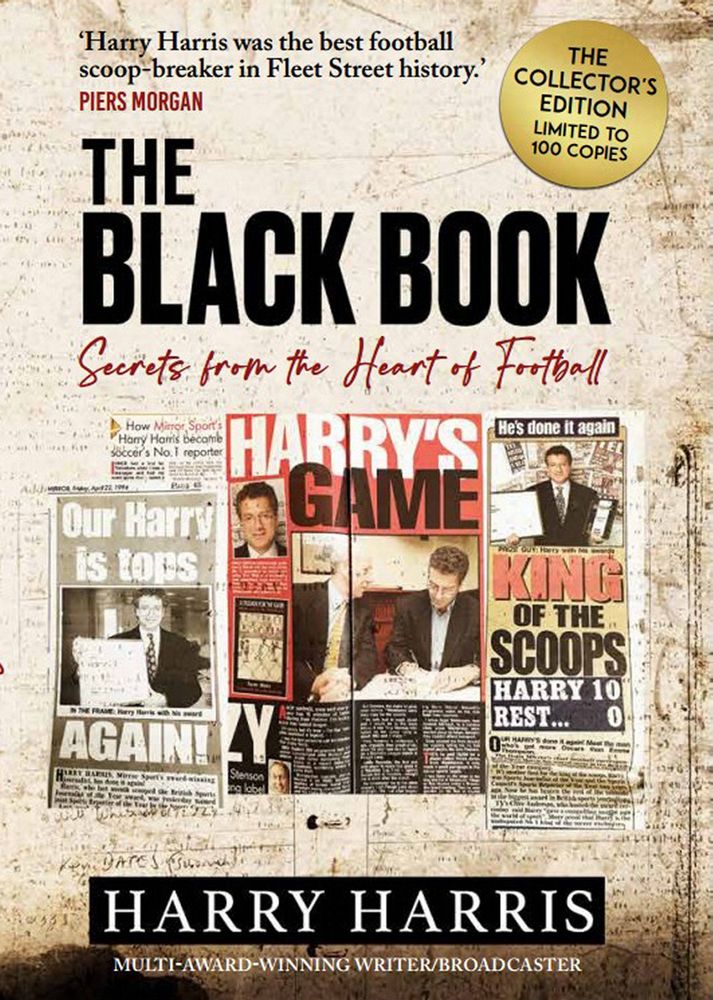
Harry Harris is author of "The Black Book: Secrets from the Heart of Football" from Legacy 11 Books - which is available here.