In between, he had become a Premier League champion with Blackburn Rovers, England’s leading striker and one of the most coveted players in world football. But for Newcastle supporters, his return carried a significance that went beyond his goalscoring record or the £15 million world-record transfer fee.
Gary Sherrard, Newcastle historian and author of "The Wilderness Years" and "Miles Away", understands why Shearer became the embodiment of the relationship between the club and its supporters. The connection stretches back generations, to the local heroes who gave the region something to call its own.
He told Football Presse, “There's been some big names before that. Hughie Gallagher in the '20s was probably the biggest before that, but the difference with Jackie Milburn was he's from Ashington, which is a pit village about 10 miles north of Newcastle. So he's really one of the region's own.
“And there's nothing people like more than having their local heroes. 'Wor Jackie' was the term of affection used for Jackie Milburn. He was the start of that real number nine hero that has continued ever since.”
Shearer, born in Gosforth on 13 August 1970, fitted that tradition. But Newcastle had an opportunity to recruit him long before his return, and failed to take it.
The boy Newcastle let go
Shearer grew up playing local football, including at Cramlington Juniors, before moving to Wallsend Boys Club, one of the North East’s most productive sources of young talent.
Newcastle gave him a trial as a teenager but did not sign him. Southampton’s scouts recognised his potential, and he moved south to join their youth system.
Sherrard sees Shearer’s journey as part of a wider pattern in which Newcastle-born players found opportunities elsewhere because the local club could not accommodate every promising youngster.
“Alan Shearer started at Cramlington Juniors before he went to Wallsend Boys Club. And one of the scouts who watched Wallsend was attached to Southampton and took him there.
“There were enough scouts around the North East who knew there would be some good players at all of those boys' club levels to make the grade, or in their regional teams if they were playing for East Northumberland or South Northumberland or North Tyneside Boys.
“And Newcastle was criticised year after year for the one that got away.”
The irony became apparent on 9 April 1988. Making his First Division debut for Southampton against Arsenal, the 17-year-old Shearer scored a hat-trick in a 4-2 victory. It was an extraordinary introduction to senior football and an early indication of what Newcastle had overlooked.
The teenager went on to establish himself at Southampton before moving to Blackburn Rovers in 1992. Under Kenny Dalglish, he became one of the Premier League’s outstanding forwards, scoring 34 league goals in Blackburn’s title-winning 1994-95 campaign.
By the summer of 1996, Shearer was England’s leading striker after scoring five goals at Euro 96. Manchester United wanted him, and his future was the subject of intense speculation.
Newcastle, however, had something no other club could offer: the opportunity to return home.
Why Kevin Keegan mattered
Newcastle had finished second in the Premier League in 1995-96 under Keegan, coming agonisingly close to the title. The manager wanted to take the team to the next level, and signing Shearer would be a statement of intent.
The move was confirmed on 30 July 1996. At £15 million, it broke the world transfer record, but Sherrard believes the fee was not the decisive factor in Shearer’s choice. He could have commanded an enormous sum wherever he went.
“I think the question would have been, it would have taken a lot more thought for Alan Shearer to come back to Newcastle with almost any other manager.
“And perhaps it might have been something he did in the later years of his career, after a spell at Manchester United. But for someone of Alan Shearer's age to witness the impact that Kevin Keegan made as a player on that club, on his hometown club, I completely understand why he said, 'I've got to be part of this.'
“And the world-record fee, it would have been a world-record fee if he went somewhere else, so there's no extra burden there. He was going to have to handle that wherever he went. And to do it at your hometown club is absolutely magnificent.”
Keegan had arrived at Newcastle as a player in 1982, helping to revive the club before returning as manager in 1992. By 1996, he had become central to the club’s identity and its supporters’ belief that Newcastle could compete with the best.
Sherrard believes Keegan understood exactly what Shearer represented to the city. The manager was not merely signing an elite striker; he was bringing home a player who embodied the club’s connection with its own people.
“He would have got a fantastic reception if he'd become a Manchester United player as well, but that extra bit about all of those people in that crowd wanting to be Alan Shearer because he was one of them — and Kevin Keegan knew that completely.
“He was thinking, 'Anybody I can bring in, I'm going to bring in Alan Shearer, and let's see everybody else cope with what we're doing here.' It was a statement. Kevin loved a statement, didn't he?”
A city welcomes its own
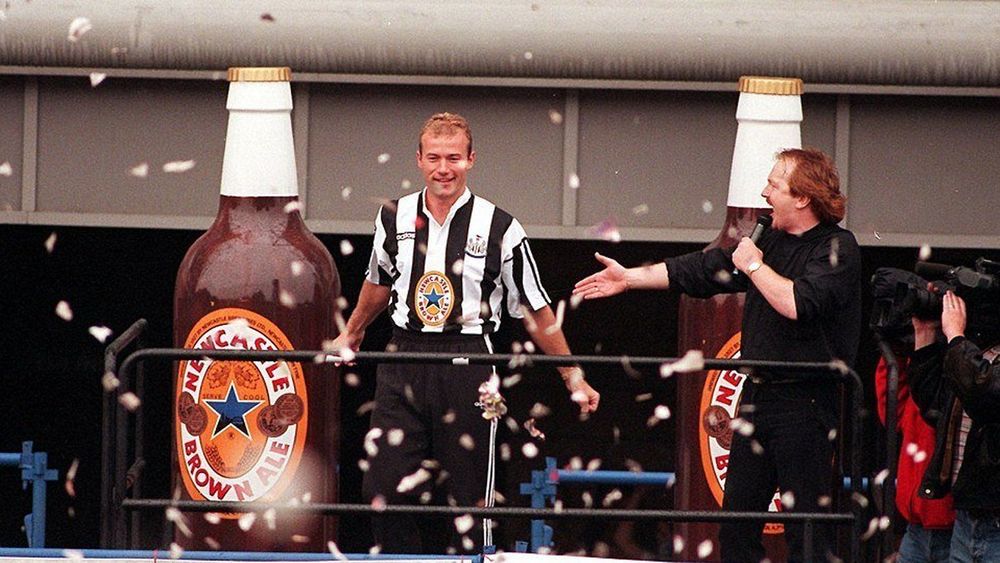
Shearer’s unveiling on 6 August 1996 was one of the defining images of Newcastle’s modern history. Thousands gathered at St James’ Park to see their hometown hero pull on the black-and-white shirt, with the excitement reflecting the scale of the club’s ambitions.
Sherrard remembers the scene as evidence that this was about far more than a football transfer.
“We saw what it was like that day when he was on the steps being unveiled. There was an attendance there that most clubs would die for on a Saturday. And they came to see a bloke who was trying on the shirt and still had his watch on.
“I remember the watch in the picture. I always think it looks a bit odd when a footballer's in kit but still has his watch on his wrist. And I remember that.”
The detail captures the intimacy of the occasion. Shearer was one of the most famous footballers in the country, but the image was still of a local lad coming home.
Sherrard believes the welcome must have reassured Shearer that he had made the right decision. The response was immediate, overwhelming and unmistakably personal.
“And that's probably when, on day one, Alan Shearer thought, 'You know what? I've made the right decision here.'”
Shearer would spend a decade at Newcastle, scoring a club-record 206 goals and becoming captain. The Premier League title that Keegan and his team had chased remained elusive, but the striker’s place in the club’s history was never in doubt.
For Sherrard, the significance of that homecoming lies in the bond between a player and the people who saw him as one of their own. Newcastle had once failed to recognise Shearer’s potential. Fourteen years later, the club paid a world-record fee to bring him back, and a city turned out to welcome him.
The boy who had been rejected at a trial returned as a global star. Keegan understood that signing him would mean something extraordinary to the supporters, and Shearer understood that playing for Newcastle offered something no other destination could match.
It was a transfer that made footballing sense, but its meaning ran much deeper. Newcastle had brought one of its own home.
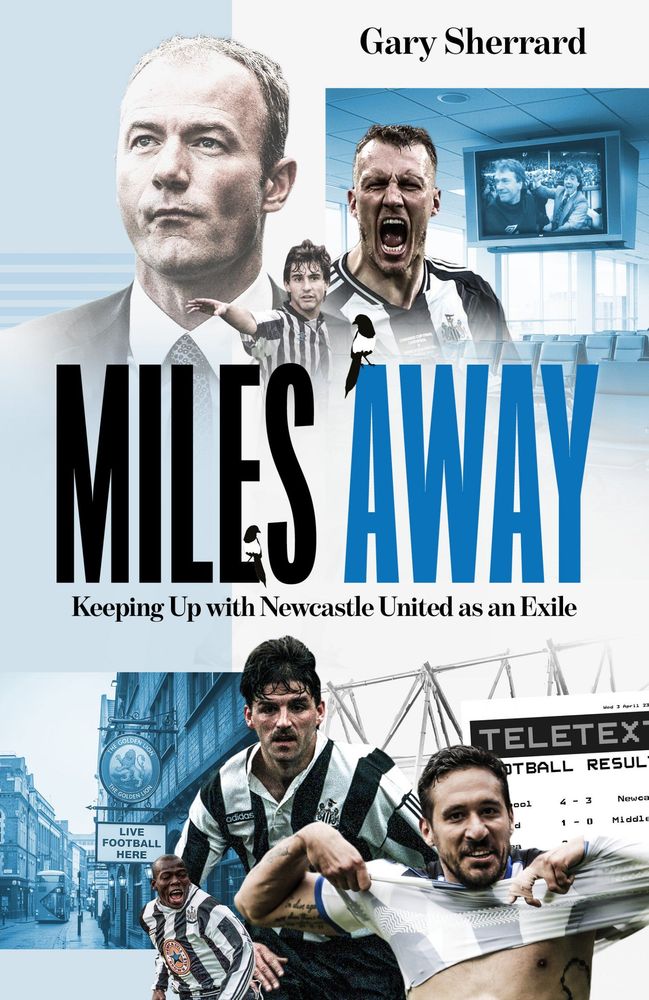
Gary Sherrard is author of "Miles Away: Keeping Up with Newcastle United as an Exile" from Pitch Publishing - which is available here.