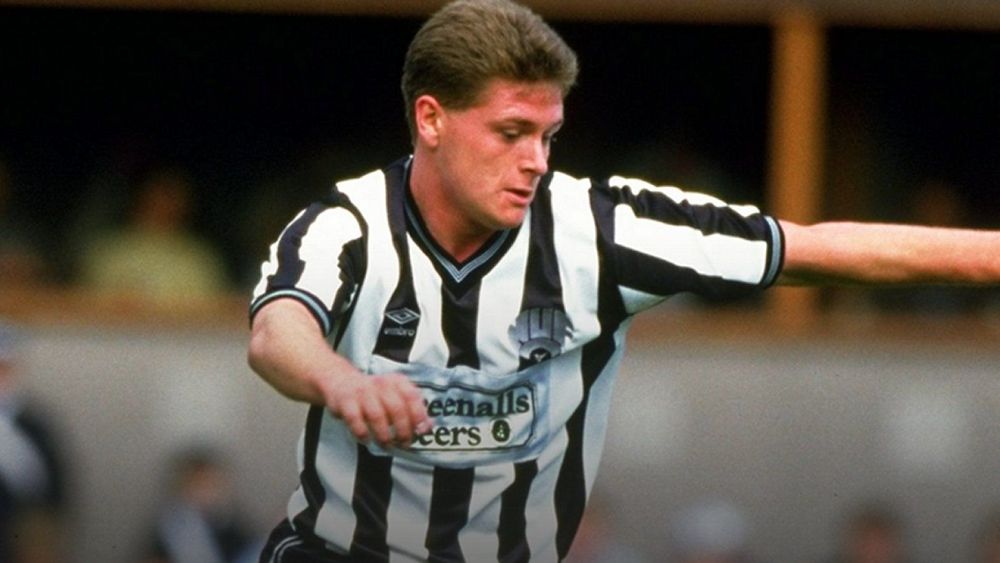
Within three years, he had become one of English football’s most coveted young players. Yet his departure for Tottenham Hotspur in July 1988, following the sales of Chris Waddle and Peter Beardsley, left Newcastle supporters wondering what might have been.
For Gary Sherrard, the Newcastle historian and author, Gascoigne’s story is inseparable from the excitement of watching a local teenager develop into an exceptional footballer.
“The FA Youth Cup team that he was in did get quite a bit of coverage in the local media because the FA Youth Cup hadn't been won by the club since the early '60s," Sherrard told Football Presse.
“There were four, five, six of those guys who came through, some of them for a few games, but others who made a decent impression. Gascoigne was always the icing on the cake of that team.
“He got into the first team, and I think he played two games in his first season. Even then, people were talking about how this lad was a bit special. But there was always a question mark: was he going to be special in men's football, or was he a show-off in youth football? Those two games gave him a little bit of a flavour.”
Gascoigne’s senior debut came towards the end of the 1984-85 season. Under Jack Charlton, he had his first taste of senior football before establishing himself under Willie McFaul the following campaign.
Sherrard remembers how quickly the teenager began to command the respect of experienced professionals.
“The following season, when he came in, he really bossed the older blokes around in the team. You could see that straight away.
“For individual skills, there are a lot of people who say they haven't seen an Englishman with the individual skills of Paul Gascoigne. But even at that stage, you could look at him and say he was a proper team player as well as having amazing individual skills.
“And just that arrogance of youth. I think nothing was going to stop him. Why should I respect somebody just because he's played 200 games more than I have? I'll show him how to play the game. And that was that.”
Gascoigne’s talent was exceptional, but his local origins made the experience particularly meaningful for Newcastle supporters. He was not simply another promising youngster recruited from elsewhere. He was a Tyneside lad who had come through the local football system and was making his mark at the club they loved.
“Being homegrown as well was just enormous. He was carried along with the crowd, and the crowd were carried along with him. That's one of the reasons it hurt so much when he left.”
The golden generation Newcastle could not keep
Gascoigne’s departure was the final blow in a sequence of sales that had already cost Newcastle two outstanding players.
Waddle left for Tottenham in 1985, followed by Beardsley’s move to Liverpool in 1987. Gascoigne joined Waddle at White Hart Lane in 1988, with Tottenham paying a British-record fee of around £2 million.
The departures came during a period of financial pressure and managerial instability. Newcastle received substantial transfer fees, but the subsequent recruitment failed to produce a team capable of building on the talent that had been sold.
Sherrard sees the sequence as one of the defining missed opportunities in the club’s history.
“Unfortunately for Newcastle, it was the sale of Waddle, then Beardsley, then Gascoigne that financed any real impact in the transfer market. And there weren't great impacts in the transfer market.
“There was a summer when Newcastle spent really good money on four players: Dave Beasant, Andy Thorn, John Hendrie and John Robertson. None of them lasted more than about 35 games. Hendrie was the only one who was there for the full season, in fact.
“That's a bad example for a manager saying, 'You've never given me any money,' and then, when we do get some money, those players don't really make an impact.
“It's not a club that had a great record in the transfer market for a long while.”
The frustration was not simply that Newcastle had lost three talented players. It was that the club had possessed the foundations of a team that might have developed into something special, only to see its key components depart in successive seasons.
Sherrard believes the question of what might have happened under a different managerial approach is worth asking.
What if Newcastle had built around Waddle, Beardsley and Gascoigne?
Arthur Cox had helped establish Newcastle in the First Division and had worked with players whose technical ability offered the possibility of an exciting attacking side. After Kevin Keegan’s departure as a player in 1984, however, the club changed direction.
Jack Charlton became manager and sought to make the team more direct. Sherrard understands the intention but questions whether that approach made the best use of the players available.
“It would have been amazing, wouldn't it, if he'd had the next step after Keegan had left as a player.
“Jack Charlton became manager and he signed two very lanky centre-forwards. That meant moving Beardsley and Waddle out wide or deeper. They were the two best strikers around at that stage, so it wasn't a great mix.
“You could see he was trying to be direct. He was trying to get the team on the front foot by playing direct. But if I was a player in that team, my first thought would be, where's Peter Beardsley? Because he's getting this pass. Or, where's Chris Waddle? He's getting this pass.
“I wouldn't have thought about lumping it long for people to chase after when you've got that much ability in your team.”
The point is not that Newcastle were guaranteed success had Cox stayed or the club retained its best players. Football rarely offers such certainty. Rather, Sherrard believes the combination of Waddle, Beardsley and Gascoigne represented a remarkable concentration of talent that Newcastle failed to build around.
“If one manager believes in one particular style of play and the players have been used to something else, you don't want to waste the attributes you've got from unique talents like Waddle, Beardsley and, hot on their heels, Paul Gascoigne.
“You obviously want to get the ball to him as quickly as you can.”
Waddle and Beardsley had already demonstrated their quality at Newcastle, while Gascoigne was emerging as a player capable of taking the team to another level. Instead, all three were gone by the summer of 1988.
The club’s subsequent struggles made the loss more painful. Newcastle were relegated from the First Division in 1989, one season after Gascoigne’s departure.
A World Cup star, but always a Tyneside lad
Gascoigne’s move to Tottenham gave him a bigger platform. His performances in London helped him establish himself as an England international, and by the 1990 World Cup in Italy he had become one of the tournament’s defining figures.
His performances in the knockout stages, and his tears after receiving a booking in the semi-final against West Germany that would have ruled him out of the final, made him a national icon.
Sherrard remembers how Gascoigne forced his way into England’s plans shortly before the tournament.
“For him to have that run into Italia '90, just a few weeks before the squad was announced, he wasn't really a nailed-on starter.
“He had that run in the warm-up games, against Czechoslovakia and in the other warm-up games, when you think, you can't leave this bloke out. I don't care how many caps the opposition have got who could have that place; you can't leave him out.
“And he went to prove it in Italy that summer.”
For Newcastle supporters, watching Gascoigne succeed elsewhere brought mixed emotions. They wanted him to flourish, but his achievements also underlined what the club had lost.
Sherrard’s own memories are rooted in those early appearances at St James’ Park, before the international fame and the wider mythology surrounding Gazza.
“I didn't see his debut. I remember the fact that I hadn't seen his debut, but I saw the second and third games, and then as he established himself, you're thinking, it's not just that we've got a good team; we're building a good team around local prospects.
“We're all on the terrace thinking we should be in that team as well. So when you see people who were just like you, who were born on Tyneside and making the grade and then going on beyond, that was amazing.”
That connection has endured, despite the difficulties that marked Gascoigne’s life after his playing peak. For Sherrard, his standing among Newcastle supporters cannot be reduced to the circumstances of his departure or what followed in later years.
“There's a definite warmth for Paul, no matter what's happened in his life since. He's a Tyneside lad, born and bred, and there are an awful lot of people, of the same generation and younger generations, who idolised him when he was a player.
“They begrudgingly wanted him to do well at Tottenham and everywhere else after that. But for those fans who saw some of that, that's a very special time to have shared in.”
Was there ever another Gazza?
Newcastle has produced other talented local players, but few have combined Gascoigne’s natural ability, personality and wider cultural impact. When asked whether anyone has come close since, Sherrard identifies Lee Clark as the homegrown player who most nearly assumed that mantle.
Clark emerged during Newcastle’s difficult years before the club’s revival under Kevin Keegan. He did not achieve Gascoigne’s international profile, but Sherrard believes his contribution deserves greater recognition.
“The one who would have assumed the mantle, if you like, would have been Lee Clark because Lee Clark, again, a Tyneside-born guy, came into a team that wasn't doing particularly well.
“I think Lee feels himself that it was probably easier to leave him out than to leave out a big signing at times. But in the process of writing the book, I'd rewatched quite a few games, and there are spells in those when you go, you've got to remind yourself that Lee Clark was a 20-year-old getting in front of the midfield, charging into the box and scoring some very valuable goals.
“He just had stamina and the will to keep playing that separated him from others.”
Clark’s timing was unfortunate. As Newcastle’s finances improved, the club increasingly recruited established and expensive players, making competition for places more difficult for a young midfielder who had come through the ranks.
“He was a little bit unfortunate as well that it was just the point when Newcastle would willingly spend an awful lot of money on players, and there's only a certain number of places in a team to go.
“Perhaps Lee, in another era, if he was a couple of years older, would have held them off because he'd been more established and more of a senior player.
“But he was the homegrown one who got closest and had a natural talent, a natural ability, and also a team ethic and something about him.”
Gascoigne’s story remains unique, but Clark’s illustrates the difficulty of sustaining a pathway from local football into Newcastle’s first team. Both were products of the region’s football culture, and both represented the possibility that a local youngster could become central to the club’s identity.
For Sherrard, that is why Gascoigne remains so special. Supporters witnessed the beginnings of his career, recognised his extraordinary ability and watched him become a star on the world stage. His departure in 1988 deprived Newcastle of a player who might have helped shape a different future, but it did not sever the connection with the city that had produced him.
The warmth remains because, before Gazza became an England icon, he was one of their own.
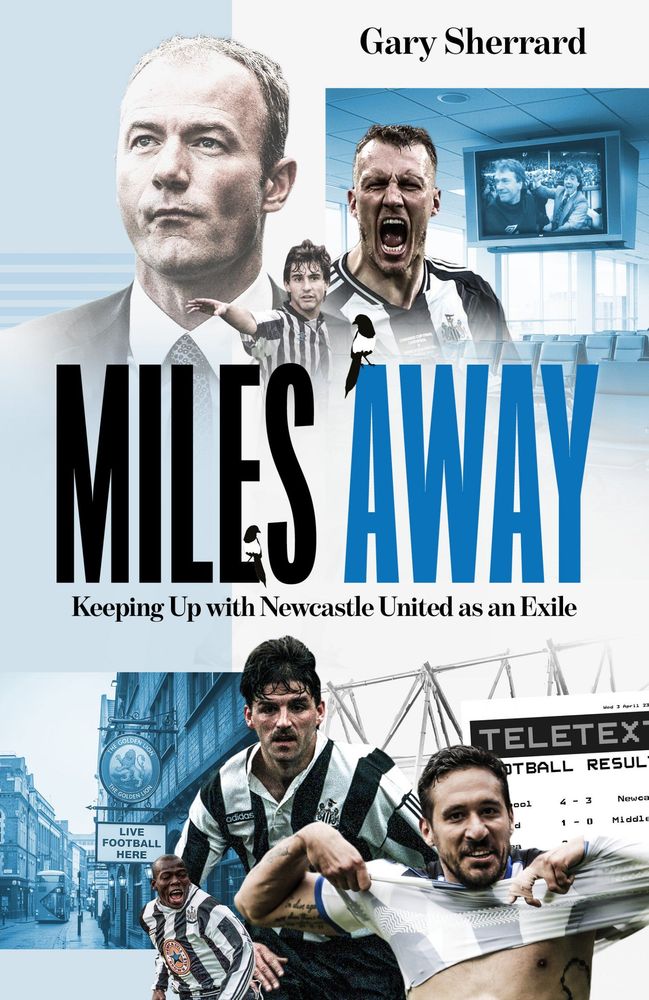
Gary Sherrard is author of "Miles Away: Keeping Up with Newcastle United as an Exile" from Pitch Publishing - which is available here.