
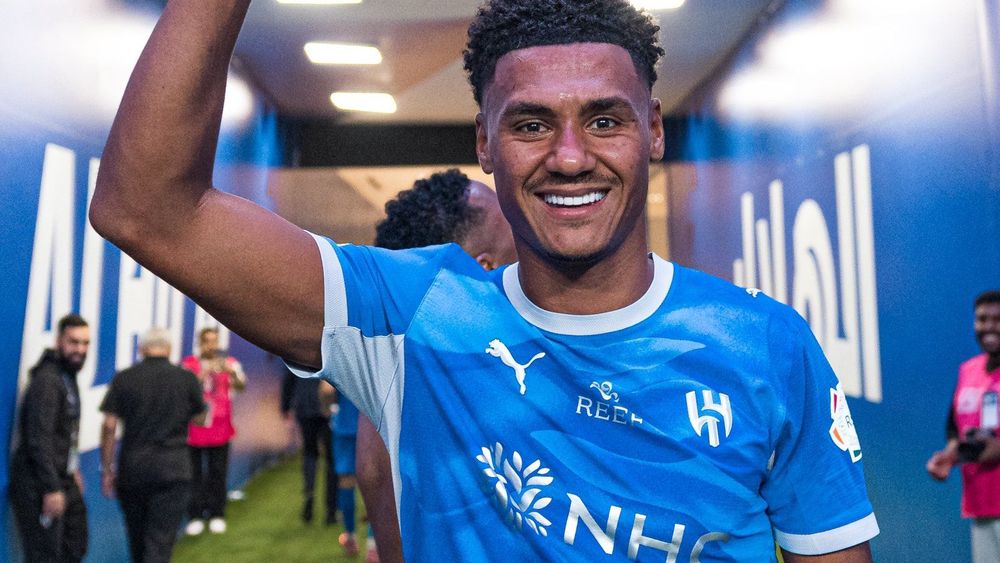
The League Two club stand to receive close to £2m in solidarity payments from Watkins' switch from Aston Villa to the Saudi Pro League, the latest instalment in a career that has already earned Exeter significant sums, including roughly £1.8m in profit from his original 2017 sale to Brentford and a further £4m from a sell-on clause triggered when he joined Villa for £28m in 2020.
Watkins came through Exeter's academy from the age of 11, and the windfall arrives at a useful moment for a club that has just been relegated to League Two and, by its own admission, would have posted a loss of more than £4.5m last year without transfer income of this kind.
Taylor, though, revealed that Watkins' path to the top of the game was never guaranteed.
"It was in the balance of whether Ollie would have a football career, let alone one at League Two, Championship, Premier League and then international level," the Exeter boss told The Sun. "If he'd have been released at 18, 19 years of age, I don't know if he'd have had a career. That's how fine the margins are."
A lack of a settled position hampered his early development, with the club shipping him out on loan to non-league Weston-super-Mare to gain experience, and coaches debating whether to send him out again or release him altogether.
"Ollie didn't have a position on the pitch. He played in every position," Taylor said. "He'd never been an out-and-out No9. There were times in that off-season where questions were being asked as to would it be another loan? Would he be released? What would it really look like for Ollie? He probably outperformed our expectations in that breakthrough season."
The turning point came when Watkins returned for pre-season having transformed his physique, adding half a stone of lean muscle that gave him the athleticism to compete physically for the first time.
"He came back like a thoroughbred horse. It was incredible. All of a sudden, he'd out-jump and out-run defenders," Taylor said. "Certainly when he was younger, Ollie relied a lot on confidence. Then he'd score in training or a pre-season game. And then the manager Paul Tisdale could see him leading the line as a centre-forward."
A breakthrough performance against local rivals Plymouth proved the catalyst for a run of form that transformed his career.
"It was that game where he announced himself on the first-team stage," Taylor said. "Then for the next 12 months, he was almost unplayable. He became the main man. Once these young players get that prestige and responsibility, you can see them growing naturally. Suddenly he wasn't a skinny 18-year-old anymore. He was a 20-year-old man who could outrun and outfight a lot of opponents and also had a fantastic skill set."