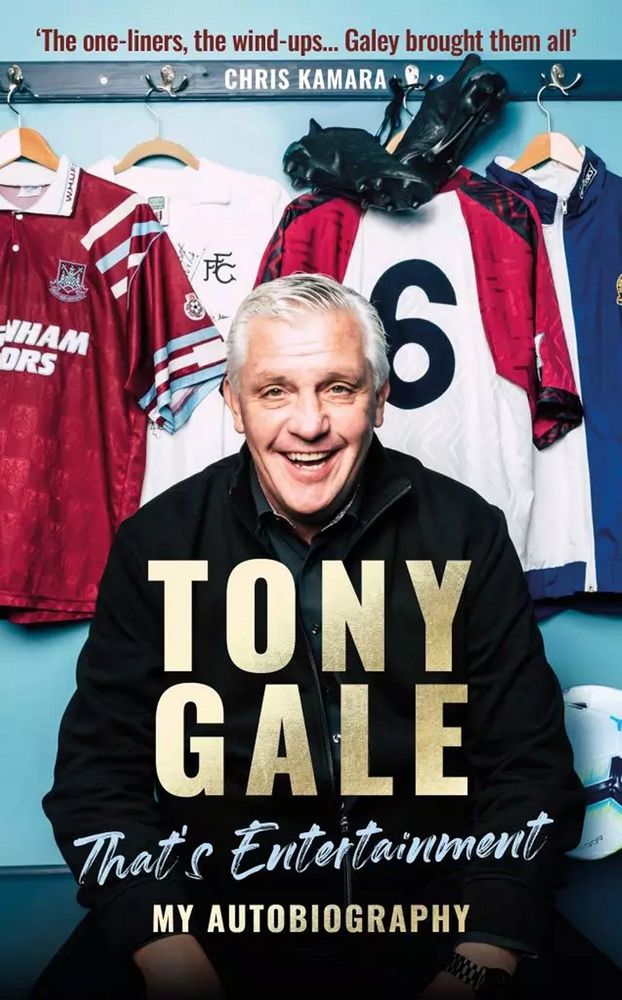
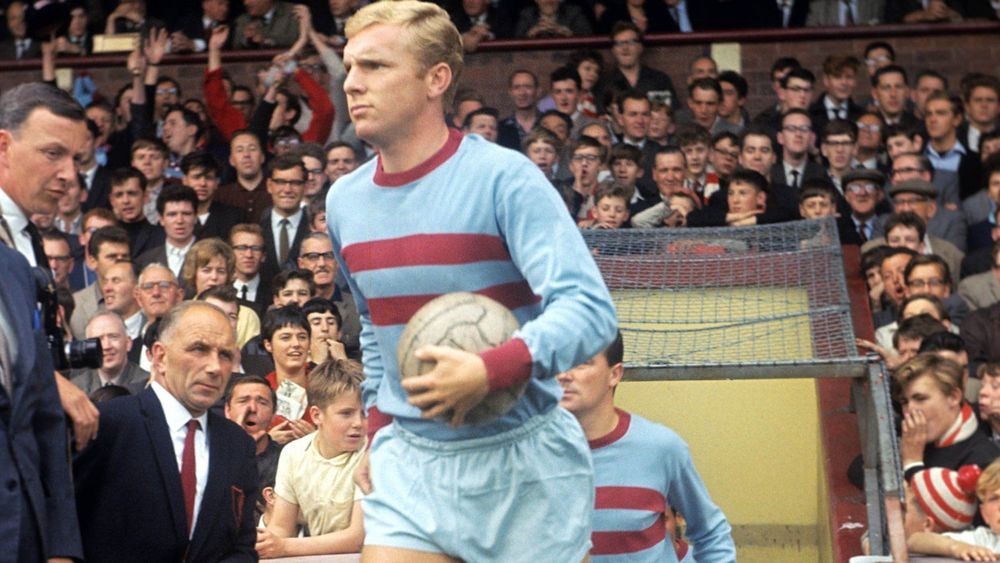
Years later, the former West Ham defender still cannot understand why a footballing giant like Bobby Moore was not given a position worthy of his extraordinary standing in the game.
There are few experiences in football quite like being 16 years old and having Bobby Moore drive you home in his yellow Jaguar. For Tony Gale, it was an introduction to one of the most celebrated figures the English game has ever produced, but also the beginning of a relationship that would shape his understanding of football and the people who made it special.
Gale spent 12 years at Fulham, having joined the club as a schoolboy, before going on to become a West Ham United regular for a decade. He later played for Blackburn Rovers, winning the Premier League title in 1995, and built a long career in broadcasting. But some of his most treasured memories belong to those formative years at Craven Cottage, when he was learning his trade in the company of Moore, George Best and Rodney Marsh.
The teenager travelling home with footballing royalty
“Bobby Moore was footballing royalty. He was just footballing royalty," Gale tells Football Presse.
“And I realised after he'd gone what they were trying to do with me, because they were grooming me to take over from Bobby, the No 6 shirt, defending alongside the centre-back.
“And they used to put me in the car with him because I was en route to his way home. So I used to get in his car and you can understand, Jacob, can't you? I'm in a car, a yellow Jaguar, with England's World Cup 1966 captain, and I'm 16, 17 years of age.
“And I was just dying to stop at traffic lights and people recognise him and see me alongside him. This is me alongside Bobby Moore.”
It was an extraordinary privilege for a teenager who was still finding his feet in professional football. Moore was not simply another senior player in the dressing room. He was the man who had captained England to its only World Cup triumph, led West Ham to domestic and European honours and established himself as one of the finest defenders of his generation.
Yet Gale's recollection is wonderfully ordinary in its details. Moore would drop him near the council estate where he lived, on a street called Looper Street. Gale's friends, many of whom had already left school, regularly gathered there.
The young defender knew exactly what he was doing when he asked to be dropped off in front of them.
“He used to drop me off where I lived on a council estate. And outside that council estate, there was a street, Looper Street.
“So my friends who'd left school would all hang about there in the daytime, if they hadn't got any work or anything. They'd all meet up there and they'd just be sitting around.
“And I used to make him drop me there. And then as I got out the car after not speaking a word for 40 minutes, I'll go, 'See you later, Bob, same time tomorrow.'
“And all they would do, 'Was that just Bobby Moore? Was that Bobby Moore dropping you off there?'
“Yeah, yeah, he drops me off every day.
“He didn't really, but never mind.”
Behind the humour is a fascinating glimpse of the relationship between an established footballing great and a young player who was being prepared to follow him. Gale was not being handed a formal education in the art of defending. He was learning through proximity, observation and the privilege of sharing a dressing room with people who had already experienced the highest levels of the game.
It was a theme Gale returned to when discussing the senior players at Fulham.
“They were mentors without knowing it. That's how life was then. It wasn't, 'Oh look, study this, study that' with them. You just had to be in there, in their company to learn. Look and learn.”
For Gale, that experience was particularly valuable because Moore's influence extended beyond the football pitch. The former England captain had already experienced the adulation that came with winning the World Cup, but his later career took him away from the centre of the national football conversation.
Why West Ham never gave Moore a greater role
Moore left West Ham in 1974 after 16 years with the club, joining Fulham and playing in the 1975 FA Cup final against his former employers. He subsequently moved into football management and broadcasting, but Gale believes that English football missed an opportunity to give him a position that properly reflected his standing.
Asked why West Ham took so long to reconnect with their greatest player, particularly when the club maintained a close relationship with another celebrated former captain, Trevor Brooking, Gale struggled to find a satisfactory explanation.
“One of life's mysteries, wasn't it, really? Whether or not they thought, the hierarchy at West Ham, that he was too big for them, I don't know.
“But there wasn't those kind of roles then, Jacob. If you weren't going to be a manager, there wasn't a director of football or an ambassador of the football club, was there? There wasn't those kind of roles.”
Gale is careful to acknowledge the different footballing landscape in which Moore finished his playing career. The modern idea of a former club captain moving into an ambassadorial or senior executive position was not nearly as established. But he does not believe that should have prevented West Ham from finding a way to keep their most distinguished figure involved.
In his view, the answer should have been considerably more ambitious than simply finding Moore a job around the club.
“Without a doubt, I think it should have gone higher than that. I think it should have gone like Franz Beckenbauer was made manager of Germany. He had coaches alongside him, virtually ran the side, but he was that figurehead, wasn't he?
“Beckenbauer won World Cups as a player, a great player as well, one of the world's best, same as Bobby.
“I always thought that that was the role we should have had, and England should have looked after him a bit better than that.”
It is a revealing comparison. Gale was not suggesting that Moore needed to be given a ceremonial title simply because of his past achievements. He believed the former defender possessed the stature and authority to occupy a meaningful position within the game, much as Beckenbauer became a central figure in German football.
A broadcasting career Moore genuinely enjoyed
There was also a personal understanding of what Moore enjoyed doing after his playing days.
Gale himself eventually moved into broadcasting, working in football commentary and analysis, and discovered that Moore had already established himself in that world. Indeed, Gale would later replace him on Capital Gold.
“He did work and he was kind of content in his work. And he worked on the radio with who I later replaced him on radio, funny enough, on Capital Gold.
“He worked with Jonathan Pearce and he worked with Pearcey for years and years. He really loved his work, and he was quite content in life as well.
“He was then with his second wife, Stephanie, and he really enjoyed his life on the road with Jonathan, going to England games, covering internationals, covering tournaments, and also doing First Division football.”
That recollection is important because Gale is not portraying Moore as somebody who was necessarily unhappy with his life after football. He remembers a man who enjoyed his broadcasting work, travelled to matches and tournaments, and remained connected to the game he loved.
But being content with a career is not the same as believing that a person has been given the recognition they deserve.
Moore's achievements were extraordinary by any measure. He captained England to the 1966 World Cup, won the FA Cup and European Cup Winners' Cup with West Ham, and made 108 appearances for his country. He remains the only England captain to have lifted the World Cup.
Gale's point is that such achievements should have carried greater weight when the game considered what Moore could contribute beyond his playing career. West Ham had a figure who could have represented the club at the highest level, while England had a World Cup-winning captain whose experience and authority could have been put to far greater use.
The teenager who once sat silently in the passenger seat of Moore's Jaguar had grown into a senior professional, a Premier League champion and a respected voice in football. Yet the memory of those journeys remained vivid.
For Gale, the greatness of Bobby Moore was never in question. The more difficult question was why English football did not do more with it.
Tony Gale's book "That’s Entertainment" is from Reach Sport - which is available here.