But there was one destination that carried a particular significance.
“I thought I was playing for the biggest club in the world. That was my aim from a child, to play for Liverpool or Man United, but don't tell the Man U fans I said that,” Speedie joked, when speaking with Football Presse.
The opportunity finally arrived after his departure from Chelsea and a spell at Coventry City. What Speedie did not know was that Liverpool had attempted to sign him twice while he was still at Stamford Bridge. Both approaches had been rejected by Chelsea chairman Ken Bates.
Speedie had enjoyed a reasonably good relationship with Bates, despite the chairman's formidable public reputation.
“He transformed the club. Chelsea is what it is today because of Ken Bates. I believe so.
“He was honest, brutally honest. Brutally honest at times, and not a lot of people liked him, but I got on okay. I called him Captain Birdseye.”
There was nevertheless a surprise waiting for Speedie when he eventually sat down with Kenny Dalglish at Liverpool. The manager revealed that this was actually the third attempt to bring him to Anfield.
“Kenny Dalglish said to me, my first meeting, 'Third time lucky.' And I said, 'What do you mean?'
“He says, 'Well, we tried to buy you twice at Chelsea when you were playing for Chelsea, and Ken Bates wouldn't let you go'."
On finally landing that dream move to Anfield, Speedie was adamant about the emotions.
“Oh, pride. I was very proud to be wanted by a football club of Liverpool status at that time. So I must have been doing something right.”
Bates subsequently apologised when he was at Leeds, although Speedie was not particularly interested in holding a grudge.
“That's football, you know, there's a lot of things go on behind the scenes that you're not aware of. But he apologized.”
By January 1991, Speedie was ready for a new challenge. Coventry had dismissed John Sillett, the manager under whom he had enjoyed his football, and Speedie decided that he wanted to leave.
“I loved it at Coventry. I loved it everywhere. I just love playing football, except Southend. You get out of bed in the morning, what you got to do? You got to go training for two hours. Great, a great way of life.”
The departure was particularly awkward because Terry Butcher was inheriting the Coventry squad following Sillett's dismissal.
“I felt sorry for Terry Butcher because he was inheriting that team. And I'm the first person to visit him in his office was me asking for a move. So it wasn't a great start for him.”
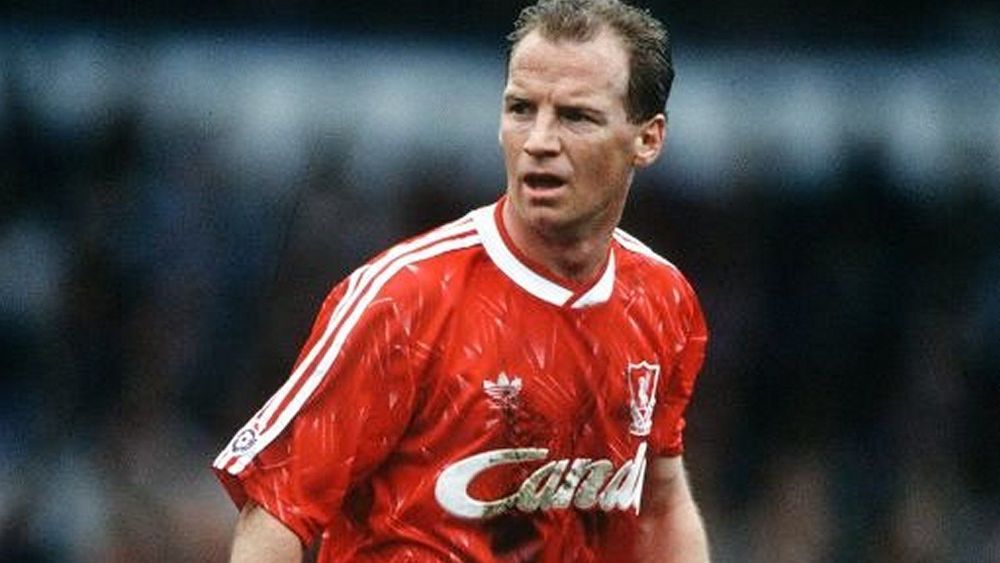
Liverpool, however, was hardly a difficult destination to accept. Speedie had finally reached the club he had dreamed about as a boy, and his introduction could scarcely have been better.
He made his debut against Manchester United at Old Trafford, scoring in a 1-1 draw. Six days later, he scored twice against Everton at Anfield as Liverpool won, collecting the man-of-the-match award.
It was the kind of beginning that promised so much.
But the circumstances around his arrival were changing rapidly. Dalglish, the manager who had brought him to Anfield, resigned shortly afterwards. Speedie was suddenly without the man who had twice tried to sign him and finally made his Liverpool ambition possible.
The arrival of Graeme Souness would prove particularly difficult.
Their relationship had already been uncomfortable during their time together with Scotland, and Speedie has never attempted to disguise his feelings about his former teammate and manager.
“We played together with Scotland. He's very – what's the word – nasty. Wasn't a good teammate for me.
“Oh, and I know that... It's not just me. I'm not on my own.”
There is no attempt at reconciliation in Speedie's recollection. He compares the situation with Roy Keane's relationship with Sir Alex Ferguson, suggesting that an apology would be necessary before the past could be put aside.
“I'm a bit like Roy Keane. You know, he's got the same problems with Ferguson. And he'll be all right with him if Ferguson apologizes, but there's no chance of that.
“There's no chance of Graeme Souness apologizing to anybody because he thinks he's right all the time.”
Speedie is equally unimpressed with Souness's time in charge at Liverpool.
“He didn't get much right in his tenure as Liverpool manager.”
The difficulties were not confined to Souness. Speedie also reveals that he did not get on with Ronnie Moran, who briefly took charge following Dalglish's departure. Yet he is careful not to exaggerate that particular disagreement.
“It wasn't a long-lasting thing. It was irrelevant really.”
His assessment of his own standing at Liverpool is straightforward. He had been brought to the club by Dalglish, and he was not prepared to accept that his ability was somehow in question.
“Kenny Dalglish doesn't sign you if you're crap.”
Speedie's final Liverpool appearance remains one of the strangest endings to a football career. It came against Tottenham at Anfield, with Souness selecting him in midfield and giving him the responsibility of playing against Paul Gascoigne.
Liverpool won 2-0. Speedie scored, was named man of the match and received a bottle of champagne. It should have been a memorable conclusion to a successful afternoon.
Instead, it became his last appearance for the club.
“My last game for Liverpool was against Tottenham at Anfield. Souness played me in midfield, yeah, I was up against Paul Gascoigne. We won 2-0, I scored, got man of the match and magnum of champagne - but then never played for Liverpool again.”
There is an almost unbelievable finality to that recollection. A player who had waited so long to represent Liverpool had delivered another important performance, yet would never wear the shirt again.
His affection for the club itself was never in doubt. He speaks warmly about the quality of the squad, particularly Peter Beardsley and Ian Rush.
“They were great, great guys, fantastic players. That sums them up really. It was a great squad of players.”
And there was eventually another opportunity to work with Dalglish. Speedie had been sold to Blackburn Rovers before his former Liverpool manager arrived at Ewood Park. When they were reunited, Speedie wasted little time raising the question that had stayed with him.
“I interrogated him when he arrived saying, 'Why the f*** did you leave me at Liverpool?'”
Dalglish explained that he had needed to take a break from football altogether following Hillsborough. Speedie understood the explanation.
“He explained he had to get and take a break away from football altogether. Because of the Hillsborough disaster. I can understand that as well. I think he still carries it around with him now, probably.”
For Speedie, the Liverpool story was ultimately a mixture of extraordinary pride and considerable frustration. The childhood ambition had been fulfilled, the club had wanted him for years, and his first appearances had given supporters plenty of reasons to take to him.
But the manager who had made the move possible was gone, and the relationship with his successor was never going to work.
The final image is perhaps the most fitting. Speedie leaving the Anfield dressing room after scoring against Tottenham, collecting the man-of-the-match recognition and enjoying a bottle of champagne, unaware that he had just played his last game for Liverpool.
He had finally made it to the club he had dreamed about as a boy. The dream itself, however, had proved considerably shorter than he could ever have imagined.
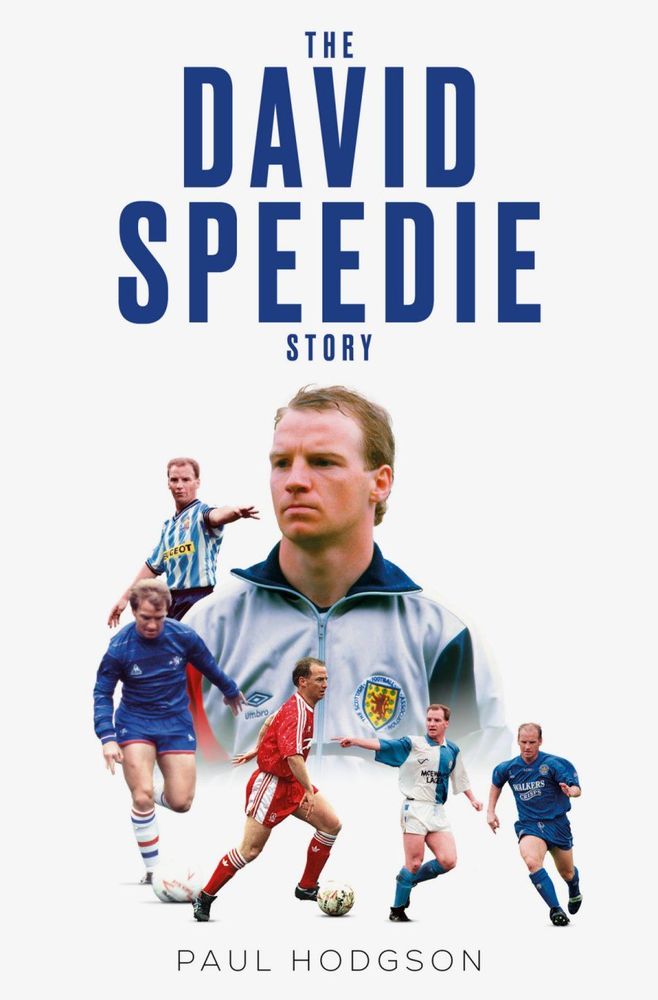
The David Speedie Story by David Speedie and Paul Hodgson is available now.