It was the product of years spent rebuilding the club from the ground up.
Speaking to Football Presse, the former Ipswich chairman reflected on the painstaking work that transformed the Tractor Boys from a struggling First Division side into one of the Premier League's surprise packages, culminating in a remarkable fifth-place finish and UEFA Cup qualification after promotion.
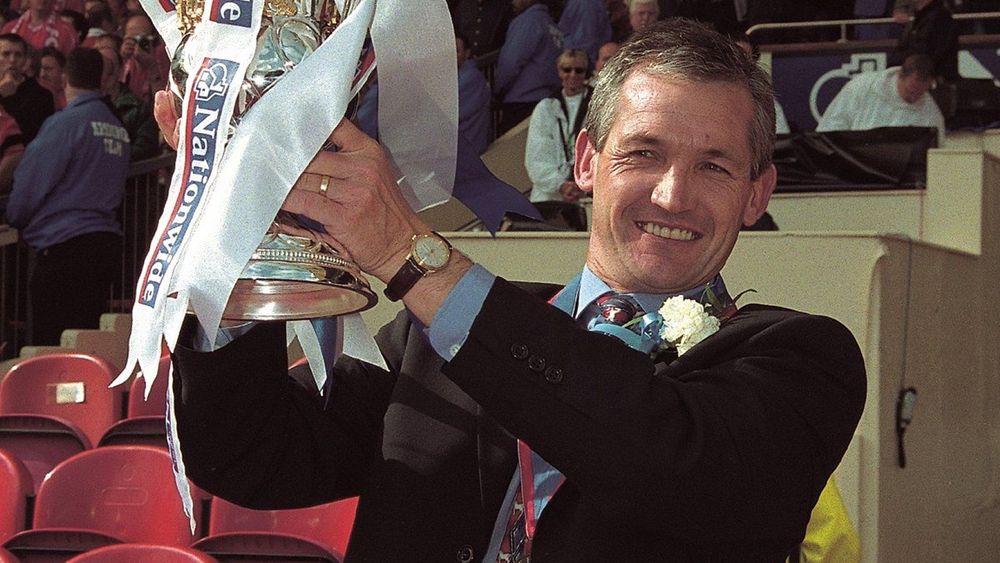
For Sheepshanks, the foundations were laid long before George Burley's side celebrated at Wembley in the 2000 Division One play-off final.
"My big role was really how to professionalise the way the club ran," he explained. "We had to move on from being a football club to becoming a professional business, on and off the field."
Rather than interfere with football matters, Sheepshanks was determined to create an environment in which the manager and players could thrive.
"We were the first club to get ISO accreditation. We were the second club ever to be accredited with Investors in People. That's really my role.
"The playing side, whether we played 4-4-2 or 4-3-3, that's down to the manager, nothing to do with me."
That clear separation of responsibilities became one of the defining characteristics of his chairmanship.
"I've always been very clear - directors direct and managers manage. I never went near the dressing room on a match day because it's the manager's domain."
The relationship with Burley was built on trust. Rather than dictate decisions, Sheepshanks saw himself as someone who challenged ideas without imposing them.
"I would talk to the manager about things. I'd ask questions to help clarify his thinking. But I would never say, 'I wouldn't play him.'
"I think that's a really bad thing when it gets to that level."
The appointment of Burley also carried deeper significance. Having watched the full-back become a legend under Sir Bobby Robson during Ipswich's golden years, Sheepshanks later found himself working alongside one of his childhood heroes.
"Ten or fifteen years earlier I'd been in the stands watching George Burley play, revering him as a hero.
"He still is a hero to me."
Burley, in turn, carried forward much of the culture established by Robson.
"He was steeped in Ipswich and the culture of the club. I would say he tried to play very much like Bobby Robson would have done."
Promotion, however, was far from straightforward. Ipswich narrowly missed out in the 1999 play-offs before regrouping for another challenge, with recruitment proving crucial.
Sheepshanks believes few players embodied Burley's philosophy better than captain Matt Holland.
"Matt Holland was George Burley on the pitch. He epitomised everything George stood for. He was a role model captain.
"First out on the training pitch, last in. A tremendous worker."
The leadership within the dressing room extended well beyond the captain.
"One of the reasons Ipswich got promoted was that we had a lot of leaders on the pitch. Matt was a leader, but so were Tony Mowbray, Mark Venus and John McGreal.
"There were lots of leaders."
Sheepshanks also singles out Marcus Stewart as one of the transformative signings of his chairmanship.
"I've often said Matt Holland was our best signing.
"But it's easy to say Marcus Stewart because he's right up there as well."
Signed in February 2000, Stewart proved the missing piece in Burley's side, firing Ipswich to promotion before scoring 19 Premier League goals the following season as the club stunned English football by finishing fifth.
The achievement remains one of the finest in the club's history.
"We never looked back. We only got through the play-offs, but the following season we finished fifth in the Premier League."
For Sheepshanks, another source of pride was seeing academy graduates establish themselves at the highest level.
"We had a great history of youth development. Kieran Dyer, Titus Bramble, Darren Bent, Darren Ambrose.
"It's a source of great pride.
"You look at it and think, they came through our school."
Although player sales were sometimes unavoidable because of the club's financial reality, Sheepshanks insists every major decision was made with Ipswich's long-term future in mind.
"It was a different world.
"We had to scrape for every penny."
That reality contrasted sharply with today's financial landscape, but it also made Ipswich's achievements under Burley all the more remarkable. After surviving comfortably in their first Premier League season and qualifying for Europe, expectations naturally rose.
Instead, the 2001-02 campaign ended in relegation. Sheepshanks still believes one departure had a greater impact than many appreciated.
"If Richard Wright had stayed that season, I don't think we'd have been relegated."
The England goalkeeper departed for Arsenal following Ipswich's remarkable fifth-place finish, leaving Burley to reshape one of the strongest defences in the division.
"I can't blame an individual for leaving. You can't deny a player the chance to improve themselves.
"But the defence was never quite the same when Richard had gone."
Relegation was a bitter disappointment, particularly after the heights reached only 12 months earlier.
Yet even amid the setback, Sheepshanks preferred to focus on the relationships built during one of the club's greatest modern eras.
"Sacking a manager is one of the hardest things you ever have to do when you really respect them.
"George Burley, Joe Royle and Jim Magilton - I would say all three of them consider ourselves great friends.
"That's very nice, with a real bond."
Looking back, Sheepshanks sees the promotion team as more than a successful football side.
It was a reflection of a club united behind shared values, where strong leadership, trust and continual improvement mattered as much as talent.
Those same principles would later underpin his work with the Football Association and the creation of St George's Park, but their roots lay in the rebuilding of Ipswich Town.
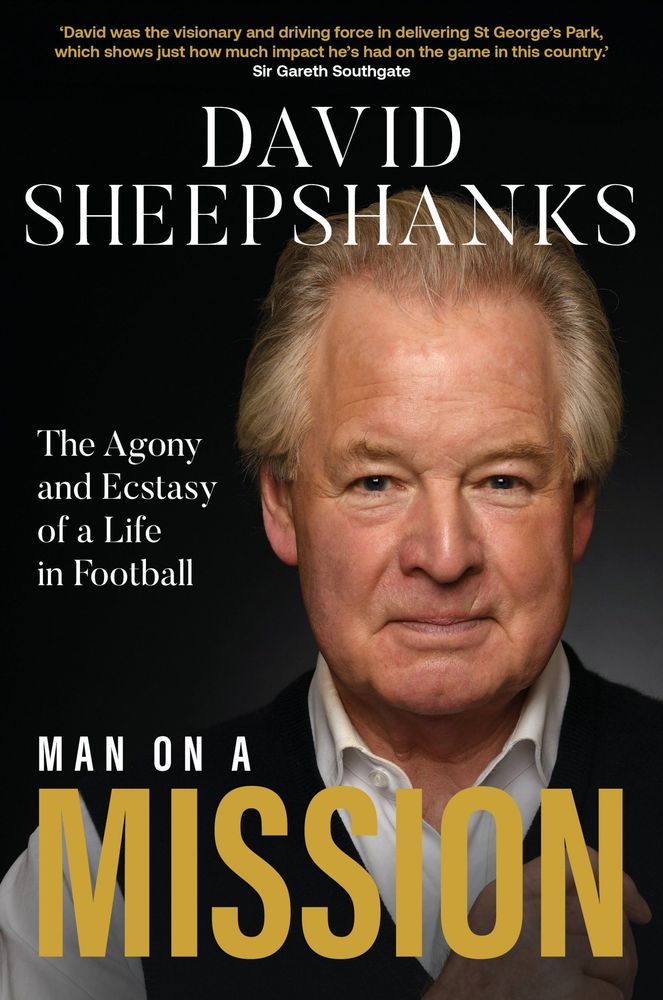
Keep following our 5-part series with David Sheepshanks this week as part of the promotion for his new book, 'Man on a Mission'. Available here.