When David Moyes left for Everton in 2002, Rathbone was reluctant to follow him. He wanted to stay at Preston.
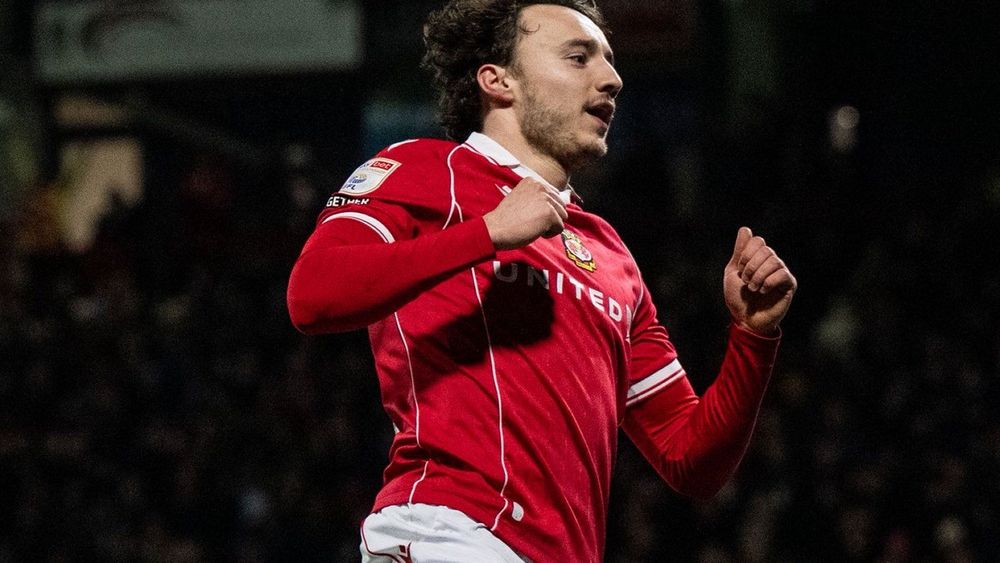
That attachment remains clear when he discusses the club today, its place in the Championship and what might be possible with the kind of investment that has accelerated Wrexham’s rise, a club where his son Oliver now plays.
From player to physio at Deepdale
Rathbone arrived at Preston as a player in 1987 after leaving Blackburn Rovers. He spent four years at the club, making more than 100 appearances before his career moved in a different direction. He later returned as a physiotherapist, spending seven years there and becoming part of the staff that helped deliver successive promotions.
His playing career at Preston brought its own milestones, including promotion and a play-off campaign. But it was his second spell, working under managers Gary Peters and then Moyes, that established his reputation in football medicine.
“I qualified as a physio and then I did 7 years at Preston, 8 years at Everton, 5 years with the England teams, a couple of years at Man U, so that's more normal,” Rathbone tells Football Presse.
Preston was where Rathbone developed the working relationship with Moyes that would eventually take both men to Merseyside. But when the opportunity came, leaving was not an easy decision.
Why he did not want to leave Preston
Rathbone was still working at Preston when Moyes told him in April 2002 that he was going to Everton. The manager wanted him to make the move too, but Rathbone was comfortable at Deepdale and close to home.
“So, so I'm still at Preston, right? I come back from training one day and it's April 2002, and Moyes, he goes, Baz, have you got a minute? I go up to his office, I goes, what is it, Dave? He goes I'm going to Everton.
“I said, when? He said, now. I said, no. So he went, he got in his car and he, he left. He left the clubs to sort it out, you know, like, you know, so he wanted me to go. He wanted me to go there. I didn't want to go.
“I wanted to stay at Preston in that comfortable Championship area, 7 miles from home, no pressure on me, always trying to avoid pressure.”
Moyes was persistent. Rathbone recalled how the manager kept calling him during the summer, asking him to join Everton. Eventually, he agreed to visit Moyes at home, initially intending to ask for terms that would make the move impossible.
“Anyway, I went to Dave's house and Dave said, look, come to my house. It was, it was preseason 2002, so he kept them up last 4 games. He's phoning me, phoning me every single day. I don't want to go. I don't want to go. I want to stay at Preston.
“So I think, right, I'll go to his house. And to avoid turning down this once-in-a-lifetime opportunity, so I don't hate myself, if I ask for so much money they can't do it, then everyone's fine. They've said no, I've asked, I would have come, but you've said no, you can't. So I'm in the clear, you're in the clear.”
The conversation did not go quite as Rathbone had planned. Moyes explained that he needed him at Everton and spoke about a young player coming through who he believed would become the best of his generation.
“He goes, Baz, I need you over there. I don't think I can do it without you. He said, we're not great. We only just stayed up last season. He says, but we've got a player coming through. He's 16 years of age and he's going to be the best player of his generation.
“I said, can you tell that at 16? He goes, not normally, but with this kid you can because he's been in with the first team and he's a level above the first team already.”
That player was Wayne Rooney. Moyes’ pitch, and the chance to test himself in the Premier League, eventually persuaded Rathbone to leave the club he had been so reluctant to abandon.
The promotions and the Preston years
Rathbone’s contribution to Preston was not confined to his relationship with Moyes. His return as physio coincided with a period of significant progress. Under Peters, Preston won the Third Division title in 1996; under Moyes, they secured the Second Division championship in 2000.
The training-ground environment was part of that progress. Rathbone remembers the early days of the club's work at Moor Park and Myerscough College before Preston acquired its own facility at Springfields.
The first day there remains particularly vivid. It was a modest beginning, but one that became symbolic of the standards Rathbone and Moyes wanted to establish.
“When I'd worked under David Moyes at Preston, we had started off training on Moor Park or up at Myerscough College. Then we got our own training ground at Springfields and on the first day when we pushed the gates open, David and myself started to pull some weeds up off the driveway for a bit of a laugh.
“It became a feeling we had that if there were no weeds on the path, we were doing well and being successful.”
That memory also helps explain why Preston remains important to him. Rathbone was part of the club's development on and off the pitch, from the days of makeshift training arrangements to a period in which promotion became a regular achievement.
Preston's potential and the Wrexham comparison
Rathbone sees Preston as a club with a clear place in the modern game, but he is realistic about the financial demands of moving beyond the Championship. He believes sustained Championship football is a worthwhile position for a club of Preston's size, while acknowledging that the right season can create an opportunity to go further.
“Preston are doing great. Preston's a town of 130,000, a city of 130,000 people. So I think for them to be comfortable in the Championship, it's a great place to be.
“The days of the, the Tom Finney, the '50s, '60s, '70s, and Blackpool had Stanley Matthews and Rovers had Tom Finney, players were kind of confined to the club contractually and that. And because everybody earned the same money, there's no point that your great players go going elsewhere.
“So the local plumber Tom Finney played for Preston, and Stanley Matthews Blackpool, and Dougie Brian Douglas of Blackburn, that played for his hometown team and that, you know, that's obviously gone.
“So it's very difficult to recreate that for teams like Preston who haven't got loads of money at the moment.”
He does not believe that means Preston cannot have ambitions beyond simply remaining in the division. Rathbone points to the unpredictability of a Championship season, where injuries, results and the finer margins can create an opening.
“I think if Preston North End could maintain Championship status, I think it's good. I think that's where they are.
“And what will happen is every year you'll have that incredible run of injuries, rub of the green, bounce of the ball, decisions, and now you can get 5th, 6th and get in the playoffs.
“And clubs like Blackpool, Huddersfield, Wigan, Preston, they can get in the Premier League now, you know, so I think they're doing okay.”
The comparison with Wrexham is especially interesting for Rathbone because of his son Oliver's involvement with the Welsh club. He believes Wrexham's rise has been driven by more than the money invested in the team. Its identity, established support and existing infrastructure gave the project a foundation.
“Wrexham had all the ingredients to take off. It was a very, very old club in its own town with a big support, a traditional die-hard support. It had that fabulous Welshness about it, so that individuality.
“It has a really nice ground, a lot of acreage around it, and good facilities and that, like, you know. So it was a good place to invest. So they had a chance by investing there.”
Rathbone contrasts that with Salford City, where he has worked on three occasions. He likes the club, but believes building a comparable support base is a different challenge.
“Salford, lovely club again. There's not really the fan base, you know, and it's very hard to suddenly create a fan base.”
For Wrexham, the investment has gathered momentum because supporters have returned and the club has been able to build on an established identity. Rathbone also acknowledges the effect of the television documentary in bringing wider attention to the club.
“I think Wrexham now, the ground's obviously getting redone, could probably now in the Championship get— I went to Stoke last Saturday. I think there was 5,000 or 6,000 Wrexham fans. I think for home games now they'll be getting 18,000 to 20,000.
“So the money they put into Wrexham, it gathered momentum quite quickly. Yeah. And the fans started coming back, and obviously the TV documentary helped as well.”
His final distinction is between investing in a club with a history and trying to create a following from scratch.
“Wrexham were pushing a team that in the '80s were in the Championship anyway, that they were pushing them back to where they belong really, where Salford was a whole new deal and that within—with a kind of a very young and not massive fan base.”
For Rathbone, Preston's challenge is different, but its place in the game remains clear. He knows what the club has achieved, having experienced its progress first as a player and then as a physio. He also knows how close he came to staying there rather than following Moyes to Everton.
The affection is evident in the way he talks about Deepdale and the club's potential. Preston may not have Wrexham's current financial backing, but Rathbone believes there is still a route for clubs of its size to reach the Premier League.
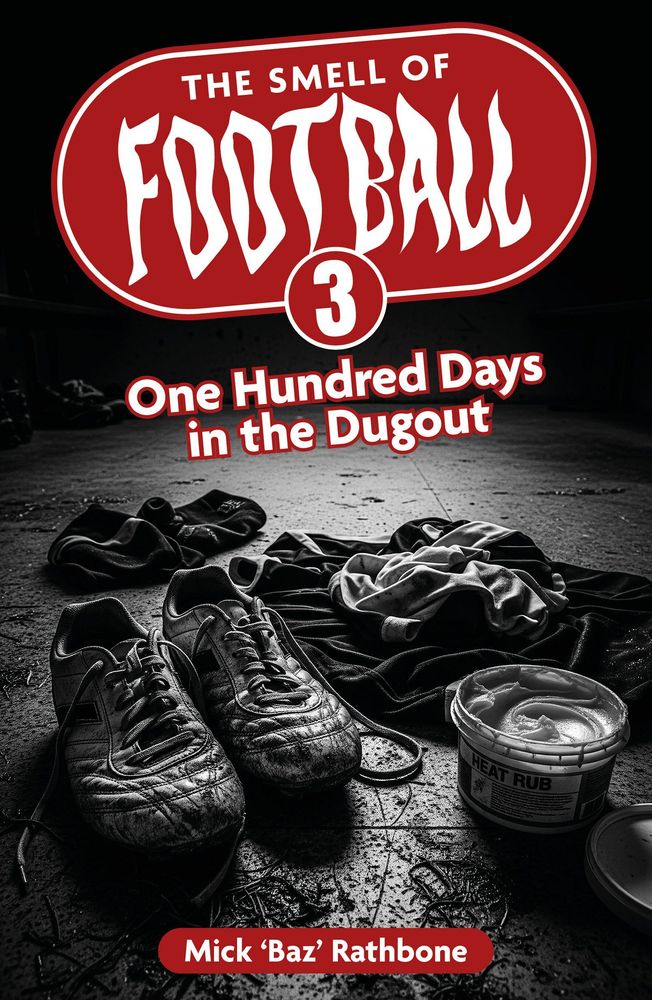
Mick Rathbone is author of "The Smell of Football III: One Hundred Days in the Dug Out" from Pitch Publishing - which is available here.