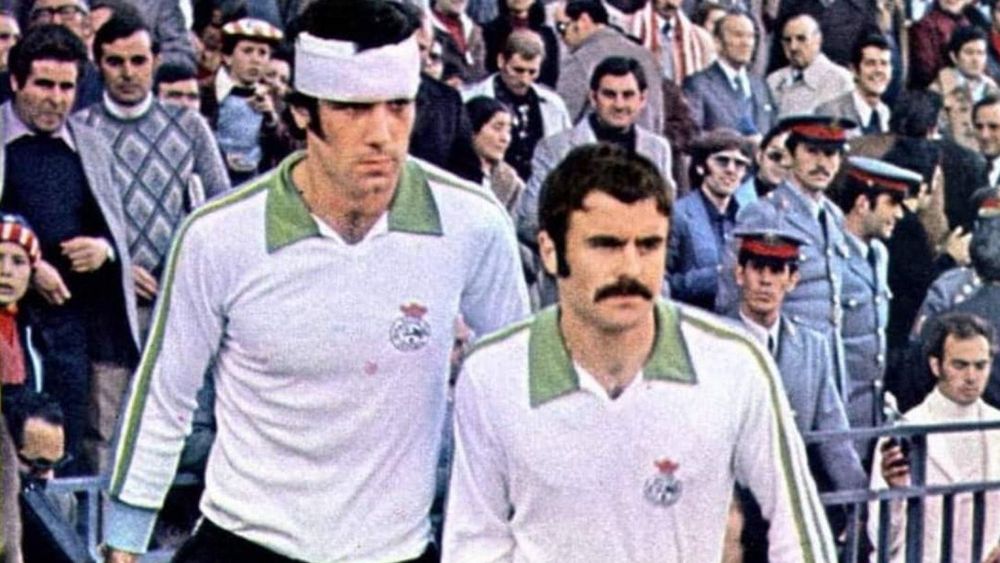
There was no grand gesture from Sergio Manzanera and Aitor Aguirre.
The two Racing Santander players simply tied black armbands around their arms before a match in September 1975.
But their quiet protest carried enormous significance.
Spain was still living under Francisco Franco's dictatorship and, that weekend, the country had carried out its final executions. Manzanera and Aguirre were opposed to the regime and decided they could not simply ignore what had happened.
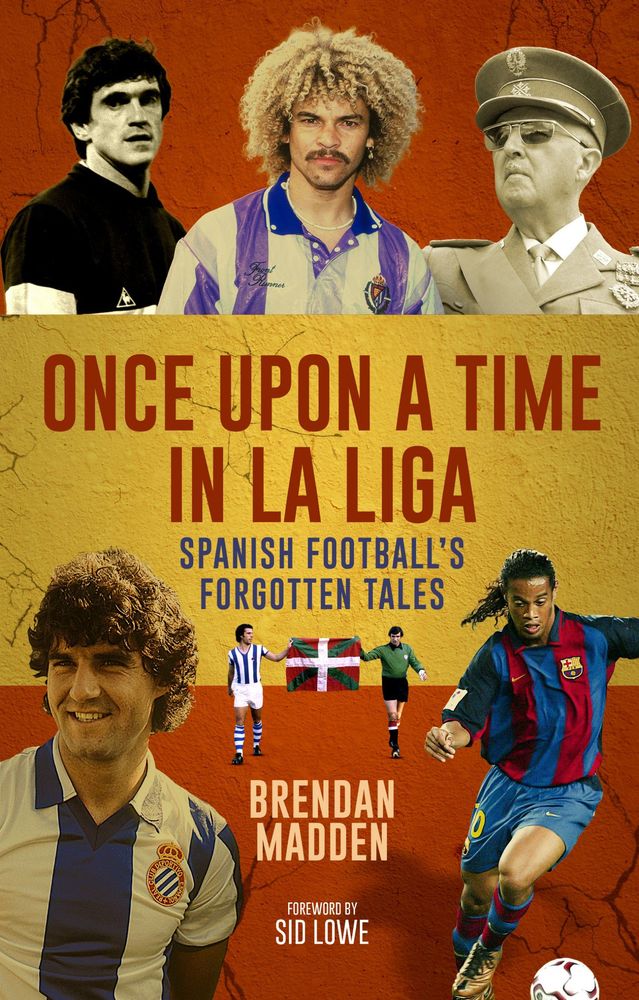
Half a century later, their story has become one of the most personal chapters in Brendan Madden's "Once Upon a Time in La Liga".
The author had initially discovered the story while researching newspaper archives, but it was tracking down the two men themselves that transformed it from an historical curiosity into something much more powerful.
"The reason that kind of, that story meant a lot to me is because I actually managed to track down the two guys."
The story begins with the two players deciding to wear black armbands in protest at the executions.
The following day, Racing faced Elche at home and the pair were involved in the opening goal.
For a moment, they believed their protest had gone unnoticed.
"They go into halftime and there's armed police there basically giving them the ultimatum to take them off."
The consequences were serious.
The players faced prosecution and heavy fines, while also receiving death threats from right-wing groups.
Yet Madden was fascinated by what happened afterwards, because the story was not simply about politics.
It was also about friendship.
"This is 50 years ago. I think they'd only sort of met that summer, but Sergio had already just signed for Racing that summer," Madden tells Football Presse.
"Aitor was already there, but they instantly clicked, you know, and then they did this thing together."
That bond remained intact for decades.
Madden eventually tracked down Manzanera, who had become a dentist in Valencia. Finding him required an unusual route.
"I found his dental practice."
On the practice's website was a WhatsApp facility for contacting the surgery.
Madden decided to use it.
"I went on there and say, sorry, this has nothing to do with my teeth. I just really like to speak to you."
The approach eventually worked, although arranging the interview took patience.
Madden exchanged messages with Manzanera before suggesting a Zoom call. When communication went quiet, he realised another approach might be better.
"I could sense that he probably didn't want to do Zoom. So I sort of said, look, I'll come over and see you."
Manzanera agreed.
But Madden also needed to find Aguirre, the other player at the centre of the protest.
That presented a different challenge.
"He doesn't have email. He doesn't do WhatsApp. He goes, you just got to call him."
Aguirre lived north of Bilbao, so Madden arranged to visit him during the same trip.
The result was an extraordinary weekend in which a modern-day author sat down with two footballers whose actions had taken place five decades earlier.
"It's that same weekend. I spent a really good, nice Friday afternoon with Sergio in Valencia, and on the Saturday I flew up and saw Aitor."
The contrast between the two men amused Madden.
Manzanera, the former footballer who became a dentist, was relatively sophisticated and reserved. Aguirre was considerably more direct.
"Aitor is very like Sergio's kind of quite a suave, sort of sophisticated guy, ex-dentist. Aitor, sorry, is very much more straightforward.
"He's like straight talking. So you ring him up, he's like, who are you? What do you want? And who are you again?"
But beneath those differences, Madden found two men who remained connected by an event that had happened when they were young footballers.
"Two really, really incredible guys."
That is what makes the story more than an account of political dissent.
Madden believes the friendship created by the protest is one of the most affecting aspects of the chapter.
"There's also that theme of friendship as well with them.
"They did this thing together. And this thing that sort of, a bond between them that 50 years later still exists."
The timing of Madden's research has also given the story renewed relevance.
The 50th anniversary of Franco's death falls in November 2025, while the final executions under his regime took place in September 1975.
Manzanera and Aguirre were therefore being asked to remember an episode from their lives at precisely the moment Spain was again reflecting on the final years of Francoism.
Madden contacted Manzanera on the anniversary itself.
"I texted Sergio on Sunday morning, actually, and I just said, happy 50th anniversary of the black armbands."
Manzanera responded by sending Madden contemporary articles from the local press.
The protest had not been forgotten.
For Madden, that is part of the reason football history matters.
The game does not exist separately from the society around it. Players can become witnesses to political change, and sometimes they can become participants in it.
The two Racing players did not set out to create a historical moment.
They simply decided that they could not remain silent.
Fifty years later, their black armbands had become something else: evidence of what two footballers were prepared to risk for their beliefs, and a reminder of a friendship that survived long after the dictatorship itself disappeared.
"Two really, really incredible guys."
Their story, Madden believes, deserves to be remembered not only because of what happened on the pitch, but because of what happened between two people afterwards.
Brendan Madden is the author of "Once Upon a Time in La Liga" from Pitch Publishing - which is available here.