He arrived at Loftus Road as a young player who had already been told, in effect, that he was too small for the traditional demands of English football. What followed was a period of discovery under Jim Smith, the experienced manager who saw something different in Parker’s pace, courage and reading of the game.
For Parker, QPR was not simply a stepping stone to Manchester United. It was where he learned to defend, to compete against bigger opponents and to understand football through the players around him.
He recalled to Football Presse, “The thing about it though is that I thoroughly enjoyed my time at Rangers. I absolutely loved the football club. I loved the people there. It was a great place to play football and I was very fortunate to have some really good players around me.
“I was playing alongside people like Alan McDonald, who was a great player and a great character, and there were so many experienced players around the club. Jim Smith was the manager, and he had his own way of doing things, but he was very good at getting people to believe in what they could do.
“I think that was important for me because I wasn't the biggest defender. I had to find other ways of playing. I had to use my pace, my anticipation and my willingness to compete. QPR gave me the opportunity to do that.”
Before QPR, Parker had spent time at Fulham, where he encountered Ted Drake, the former Arsenal centre-forward and manager who had become involved in scouting and developing young players. Drake’s advice was simple and reflected an older football culture, one in which players were expected to enjoy their lives away from the game before returning to work.
“I remember Ted Drake saying to us when we were young players, ‘When you're offseason, don't do anything.’ That was his advice. He said, ‘Whatever you do in the offseason isn't going to make pre-season any easier.’
“He was basically saying go away, enjoy yourself, have your summer, and then when you come back, we'll do the work. That was the way it was. You didn't have personal trainers following you around everywhere and you weren't worrying about every single thing you were eating or doing.
“You came back and you worked. You got yourself fit and you played football. There was a different attitude towards it, but it was also about enjoying being a footballer.”
At QPR, Parker’s development took a decisive turn when Smith moved him into central defence. The decision was significant because English football still placed enormous value on physical presence at the back. Parker was quick and intelligent, but he was not built like the traditional centre-half.
Smith, however, saw that the young defender’s qualities could be used differently.
“Jim Smith made his mind up. He just made his mind up he was gonna do it and I was gonna go in there. That was it. There wasn't really a debate about it.
“He saw something in me that perhaps other people didn't see. I had the pace to recover, I could read the game and I wasn't frightened of anybody. I think that was probably the biggest thing. I wasn't going to stand there and think, ‘He's bigger than me, so I'm not going to challenge him.’
“I was happy to jump with a Mick Harford, a Graham Sharpe, and a John Fashanu. It didn't bother me. I was willing to go toe-to-toe. Sometimes I had to drop off a little bit and then nip in front of them, which got them annoyed, but that's part of defending.
“You can't always defend in the way somebody else wants you to defend. You have to find a way that suits you. I knew I wasn't going to beat everybody by being stronger than them, so I had to beat them by getting there first.”
Those opponents represented a particular era of English football. Mick Harford was a powerful centre-forward who made his living through physical contests; Graham Sharp was a prolific Everton striker; and John Fashanu was one of the most imposing forwards in the country.
Parker’s willingness to face them became central to his identity as a defender. He was not trying to imitate a bigger player. He was learning how to survive as himself.
That education was strengthened by his partnership with Alan McDonald, the Northern Ireland international who spent the overwhelming majority of his career at QPR. McDonald was a natural defender, uncompromising but technically better than his appearance suggested, and Parker regarded him as one of the finest players he ever played alongside.
“Alan was brilliant for me. People looked at him and thought he was just a big centre-back who was going to head everything and kick everything, but he was a very good footballer as well.
“He had that ability to read what was happening and he had a real understanding of defending. He was strong, he was brave, and he gave everything he had. He and Steve Bruce were two identical in the manner in which they played and they played with their hearts.
“They were the sort of players you wanted beside you because you knew exactly what you were going to get. They would put their bodies on the line and they wouldn't hide from anything. Alan was a great character, but more importantly he was a great defender.
“I learned a lot from him because we complemented each other. We weren't trying to be the same player. We understood what the other one was doing.”
The wider QPR dressing room provided another kind of education. Parker was surrounded by players who had experienced different clubs, different managers and different levels of football. Ray Wilkins, the England international midfielder who had played for Chelsea, Manchester United and AC Milan, was among the most influential personalities.
Parker remembers Wilkins not only for his ability, but for the certainty with which he played.
“Ray Wilkins was probably the poshest man in the world. He had impeccable manners, but he was also very arrogant in the sense that he knew how good he was. He knew what he was going to do before he got the ball.
“You'd watch him and think, ‘How does he know that's going to happen?’ But he did. He always seemed to have that picture in his head. Sometimes you want to pin him down and beat the hell out of him because he was always right.
“But that's what made him such a good player. He had belief in himself. He wasn't frightened to make a decision and he wasn't frightened to take responsibility. When you're a young player, being around somebody like that makes you think about your own game differently.”
There were other important figures, too. Ossie Ardiles, the elegant World Cup-winning Argentina midfielder who had become a coach and player at Tottenham before joining QPR, brought a different understanding of the game. Peter Reid, the tough and influential former Everton midfielder, added experience and authority. Nigel Spackman, Mark Dennis, Colin Clarke and Mark Falco were among the other established professionals Parker encountered during his time at the club.
It was a football education built through daily contact rather than formal instruction.
“You had people around you who had played at the highest level and who had been through things. You didn't necessarily sit down and have a conversation about how to become a better footballer. You just watched them.
“You watched how they trained, how they prepared for games, how they reacted when things went wrong. You picked things up. That was the great thing about football then. You were learning all the time because there were so many characters and so many different types of players.
“I think that's why QPR was so important to me. I wasn't just learning from one manager or one coach. I was learning from everybody around me.”
Smith’s tactical ideas also helped shape Parker’s development. QPR became associated with a back three and wing-backs at a time when most English sides relied almost exclusively on 4-4-2. Parker’s ability to move between positions made him particularly valuable.
He could defend one-on-one, cover space and move into wider areas without looking uncomfortable. The system demanded intelligence as much as physical ability.
“I enjoyed the freedom of it. You had responsibilities, obviously, but you also had to understand what was happening around you. You couldn't just stand in one position and wait for somebody to tell you what to do.
“You had to read the game. If somebody went wide, you had to be able to go with them. If somebody came inside, you had to understand whether you followed them or whether somebody else took over.
“That suited me because I liked defending. I liked being involved. I liked having to think about what was happening rather than just being told to do one thing for 90 minutes.”
By the time Parker left QPR for Manchester United, he had developed into a defender who could operate at the highest level without needing to resemble the traditional English centre-half. The pace, courage and anticipation that had initially been questioned had become his greatest strengths.
Manchester United would bring trophies, international recognition and a different scale of expectation. But the foundations had been laid at Loftus Road.
“I think QPR gave me everything I needed to go on and play for Manchester United. I had to learn how to compete, I had to learn how to defend against different types of players, and I had to learn how to deal with pressure.
“I was very fortunate because I had good people around me. Jim Smith believed in me, Alan McDonald helped me, and there were all these experienced players who gave you something without necessarily realising they were doing it.
“When I look back, I don't just think about the football. I think about the people. That was the education. You played with good players, you listened to them, you watched them, and you tried to take something from everybody.
“That's what QPR was for me. It was where I became a defender.”
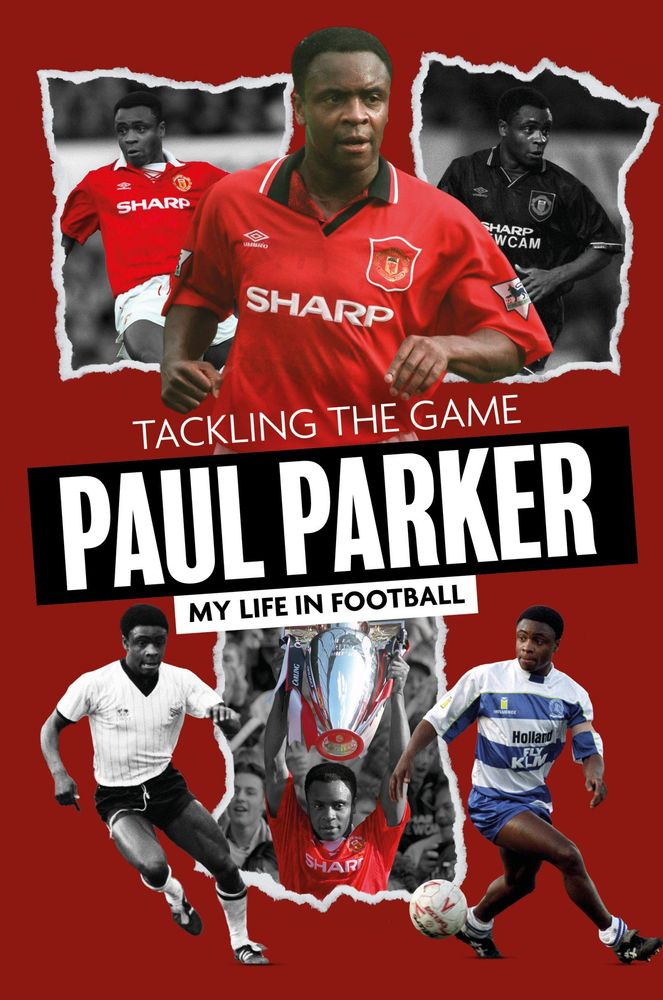
Paul Parker's book "Tackling the Game: My Life in Football" is from Pitch Publishing - which is available here.