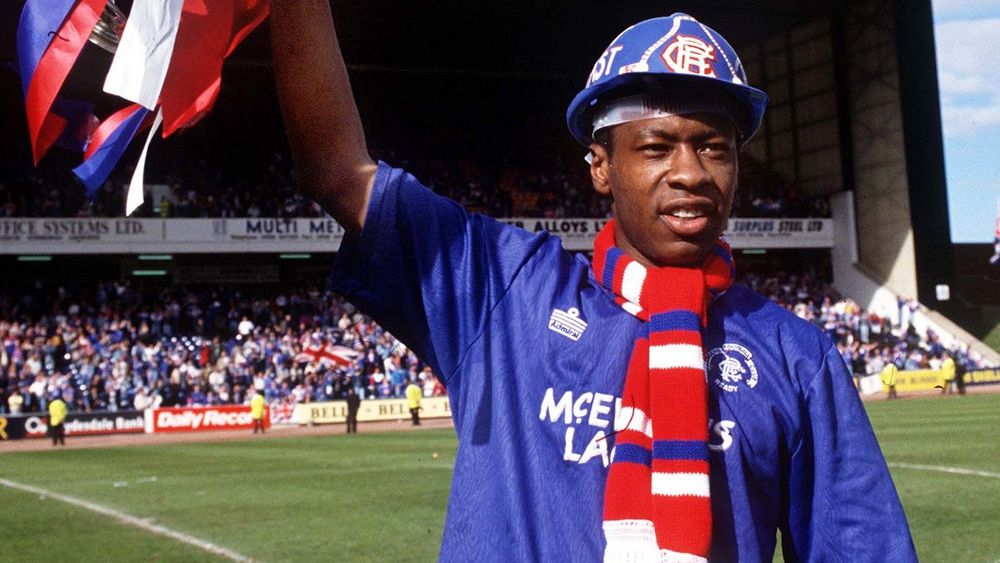
At Rangers, the winger experienced racism and intimidation that could make him question whether football was worth the trouble. Yet his memories of that period remain bound up with the club he loved, the teammates who stood beside him and the extraordinary football he played.
“I had a pig’s leg," Walters recalled to Football Presse. "I’ve had darts. All kinds of stuff. Luckily, none of them actually connected with me, but yeah, I’ve had, you name it, they’ve thrown it. But as I say, luckily nothing hit me.”
Walters can still identify the matches associated with some of those incidents. The pig’s leg came during a visit to Celtic, while he remembers darts being thrown in a game against Heart of Midlothian. Another incident left a different impression altogether.
“Believe it or not, we played Stoke City once, and I saw an actual knife. I’m assuming it was thrown at me because it was just lying there, but I was obviously playing, so I didn’t see it get thrown. But there was a knife lying on the side of the track.”
The sight was enough to make him question his career.
“So they’re the things that have made me think, ‘Oh, hold a minute. Is it worth me playing this football?’ But as I said, luckily I didn’t get any damage, if you like. I kind of put it to the back of my mind and just kept on playing football.”
The abuse was not confined to objects thrown from the crowd. Walters had arrived at Rangers in December 1987, becoming one of the first Black players to represent the club, and the hostility followed him through his time in Scotland. He says he received literature allegedly from the Ku Klux Klan warning him not to play for Rangers.
The situation changed when Graeme Souness signed Mo Johnston in 1989. Johnston had previously played for Celtic, and his move to Rangers provoked a furious backlash.
“I remember saying to him at the time, ‘Thank goodness they’ve signed Mo because he’s took the pressure right off me. Now I could just go in and not get abused.’”
It was a revealing response from Walters, who had spent months dealing with hostility that had become part of the routine of playing for Rangers. Johnston, however, faced threats of a particularly serious nature.
“He got a bullet put in the post, apparently. I just got literature from the Ku Klux Klan, allegedly. The Ku Klux Klan told me, you know, ‘Don’t play for Glasgow Rangers,’ and so on and so forth.”
Walters says Johnston’s security arrangements reflected the level of danger he faced.
“They had to search his car, the bottom of his car, make sure there were no explosives under his car because people had threatened to blow his car up and things like that. But unlike me, Mo had two minders with him most of the time he was in at Ibrox. So he was lucky like that. I didn’t have any minders with me.”
Walters does not pretend the experiences left him untouched. Looking back, he recognises that he had pushed much of the abuse to the back of his mind, only for memories to return decades later when he took part in a documentary about Andrew Watson, the pioneering Black footballer who played in Scotland.
“I remember saying to myself, ‘If it didn’t bother me, I wouldn’t remember.’ So it must have bothered me. But I’d suppressed it.”
He says his family and Rangers helped him through a difficult period, and he believes he has forgiven those responsible for the abuse. That does not mean the memories have disappeared, or that the racism should be treated as a minor footnote to his career.
Yet Walters is equally clear about what Rangers gave him. The club was a place of success, outstanding teammates and a powerful sense of belonging. His years in Scotland brought some of the finest football of his career, and the dressing room spirit remains one of his strongest memories.
“Yeah, arguably, yes,” he said when asked whether Rangers had seen the best of him. “We won everything possible bar the European Cup. Some great times and some great games, and it was a magic time to be at Glasgow Rangers, not only outside the club, but inside the club.”
For Walters, the bond between teammates was forged through what they achieved together, rather than simply what they did away from the pitch.
“The camaraderie with the other players was second to none. People say you get a lot of camaraderie and team spirit by what you do off the field. But in my opinion, you get your camaraderie and your team spirit on the field when you’re winning things and you’re helping each other.”
He remembers a group who would stand together when one of their own was in trouble.
“If anything happened, any skirmishes happened, we’d all be there to back up the other player. So it was great times, yeah, absolutely.”
That is the contradiction at the heart of Walters’ Rangers story. He remembers the pig’s leg, the darts, the knife and the threats. He also remembers the football, the victories and the teammates who made him feel part of something special. The abuse was real, and it mattered. But it never became the only thing he had to say about Rangers.
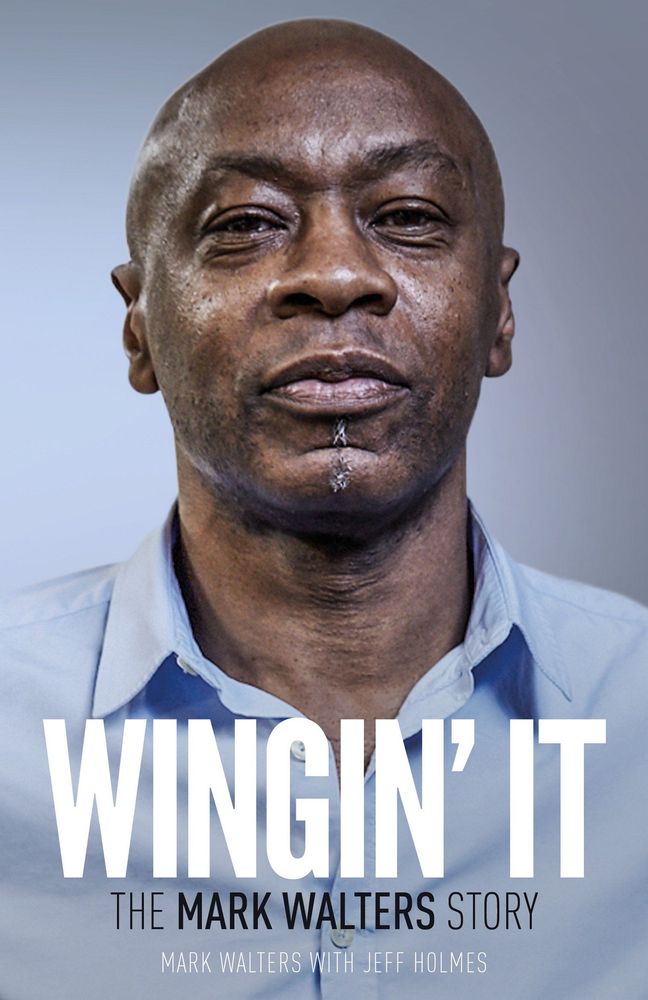
Mark Walters' book "Wingin' It: The Mark Walters Story" is from Pitch Publishing - which is available here.