
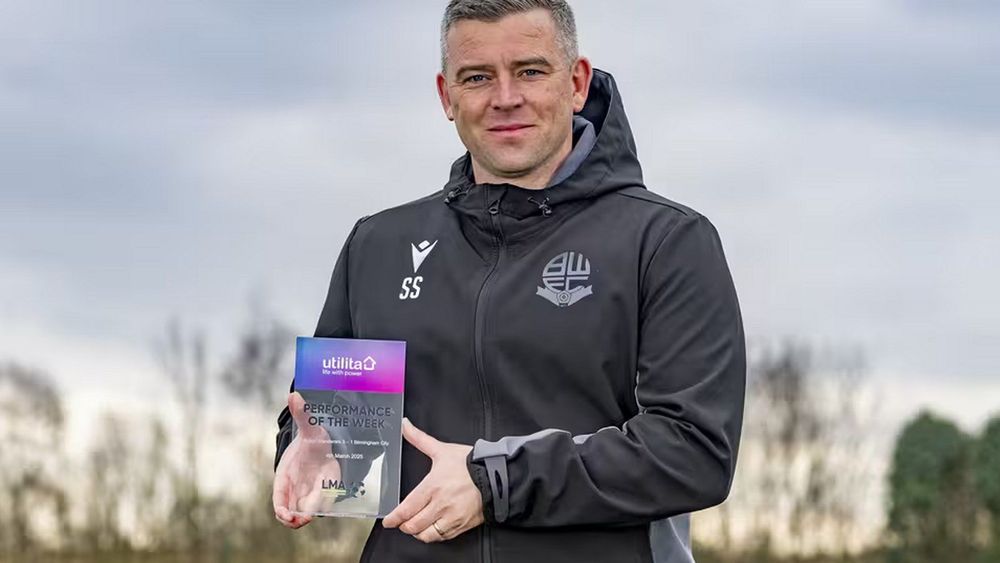
The Finn insists Steven Schumacher's immediate priority should be establishing stability rather than chasing another Premier League promotion.
Bolton's return to the second tier represents an important step for a club with a proud history in the top flight, but Jääskeläinen believes there is still considerable work to do before they can realistically contemplate another return to the big time.
The former Finland international, who played a pivotal role in Bolton's rise under Sam Allardyce, is encouraged by Schumacher's early work but believes defensive improvements will be essential if the club are to build something sustainable.
"It's definitely too early to talk about that [returning to the Premier League]," Jääskeläinen told Football Presse on behalf of kasinopartio.com. "He's [Schumacher] done a great job so far with Bolton, getting back to the Championship, and I think you just need to bring some stability to a football club.
"I think he's shown already that we can compete against the best, but it's consistency that we need. We need to get better as a team. Twenty-six goals conceded from 13 games, I think it's clear what kind of improvements we need in the team.
"We all kind of dream about Bolton coming back, but I think we need to be a little bit more patient, make sure we stay up in the Championship, and start building a team for the future."
Defensive improvements the priority for Schumacher
While Bolton have demonstrated an ability to cause problems going forward, Jääskeläinen believes their defensive vulnerability has prevented them from establishing themselves as a more consistent Championship outfit.
He is particularly conscious of the difference between competing against the division's strongest sides and sustaining that level across an entire campaign.
"Bolton's problem this season definitely hasn't been scoring goals, it's been the other side, and I think if they find a balance between attacking and defending, it will be much better for the team.
"In games like the one against Middlesbrough at home, you could definitely see that going straight up, or fighting for promotion, is too far. Middlesbrough are well ahead of Bolton at the moment, which is understandable because they've been there for a long time.
"I think Schumacher's only aim this season is to keep the team up. I think they will be working in training on how they can stop leaking goals, because when they do that, they have goals in them. They have a decent striker, and a good left winger in Gale who can provide those goals, but you need to know as well when you need to sit a little bit deeper and defend a little bit better."
One player who could prove important to Bolton's longer-term ambitions is goalkeeper Gavin Bazunu.
Jääskeläinen is convinced the Republic of Ireland international has the potential to become an important figure at the club, believing his quality and experience at a higher level make him an exciting prospect for the future.
"I think Bazunu is the clear number one. I think he got an injury after the Middlesbrough game, so he's been out injured, but he's the one who can have a very, very bright future in the longer term.
"I think Bolton are very excited about him and very happy they've got him between the sticks. I'm hoping it will be more of a long-term process for him, and a project for Bolton, that he gets back to his best, because at his best we know he's capable of playing in the Premier League. Hopefully he will be a key member of the team for the next four or five years."
Allardyce's Bolton blueprint still offers lessons
Having experienced Bolton's remarkable transformation under Allardyce, Jääskeläinen believes the current squad could learn plenty from the organisation and preparation that made his former team so successful.
Bolton progressed from the Championship to establish themselves among the Premier League's leading sides, finishing in the top eight for four consecutive seasons.
For the Finnish goalkeeper, that achievement was built on much more than individual ability. It was the collective preparation, attention to detail and professionalism introduced by Allardyce that made the difference.
"We were extremely organised and were well prepared for the games and we were well coached. Everybody knew their roles on the field and what we needed to do, and we had some talent who could win football matches.
"The biggest thing was that Sam [Allardyce] was very, very organised. He would make sure that, whoever was in the starting XI, everybody was working towards making sure the players who played were in the best possible shape. The science he brought to the football club was fantastic. The way they looked after the players was something else, and I think we could clearly see that on the field.
"He did an unbelievable job, and it was a great journey for me, from the Championship to the Premier League, and then we finished in the top eight four years on the bounce. They are great memories."
Another important part of Allardyce's management was his determination to protect his players from outside distractions.
Jääskeläinen remembers how the manager controlled the information entering the dressing room, deliberately shielding his squad from criticism in newspapers and ensuring their attention remained on football.
"When I played under Sam, he always wanted to block out all the noise from outside, especially from our own fans or from the newspapers. I remember he used to take out all the articles about Bolton, so when we got the newspapers in the changing room, there weren't any stories about Bolton.
"He wanted to block out as much noise as possible, because that's never been helpful. It is a very, very difficult distraction from the player's point of view. I don't know how these players are dealing with that with social media.
"I remember when I started, I made a decision very early in my career to stop reading stories about me, because when I read something negative, it just had a negative effect on me. I knew I'd tried my best and worked as hard as I could, and then you read stories saying, 'Oh, he's not good enough, he's not doing this right.' I decided a long time ago that I wouldn't read any stories about myself.
"The only thing that mattered to me was the manager and how happy the manager was with me, or how unhappy he was."