
The former Venezia FC, Torino, Udinese and AS Roma forward played in Serie A during an era when Poggi believes the Italian top flight was the strongest league in the world.
“It's another sport almost,” Poggi told Football Presse.
“That was Serie A. It was the championship where every player in the world wanted to come. It was a very difficult championship, and for this reason I am very happy and proud to have played in those years.
“Now Italian football is totally different. Not only because there are less strong players, but because, from my point of view, there isn't management from the federation and those who run it that is adequate to the level Serie A should have.”
For Poggi, the decline cannot simply be explained by a lack of talent.
He believes the responsibility begins with the opportunities given to young Italian players.
“The Italian player lacks only the opportunity,” he said.
“The opportunity can be given by a coach who has courage and makes him play. Because there are many, many good young Italian players.”
Poggi accepts that some clubs have invested heavily in their academies, but believes the effort needs to become far more widespread.
“There are some clubs that invest a lot in youth development, but not all of them,” he said.
“It would be interesting if all the clubs had this desire to invest in the youth sector.”
That issue, in Poggi's view, feeds directly into Italy's national-team problems.
The Azzurri have now missed three consecutive World Cups, and while the federation has changed direction again, Poggi does not believe another change of coach alone can solve the problem.
“It is an organisational problem,” he said.
“There isn't a cultural problem because football in Italy remains almost a religion.
“It can certainly be a generational problem, but if it is a generational problem, the responsibility is still with the leaders of Italian football, because it means they haven't invested correctly in the youth sectors.
“It is definitely an organisational problem because when a federation like Italy, which has won four World Cups, cannot qualify for three consecutive World Cups, it is obvious that mistakes have been made not only by the players but also by those at the top.”
The national team has since undergone another dramatic reset.
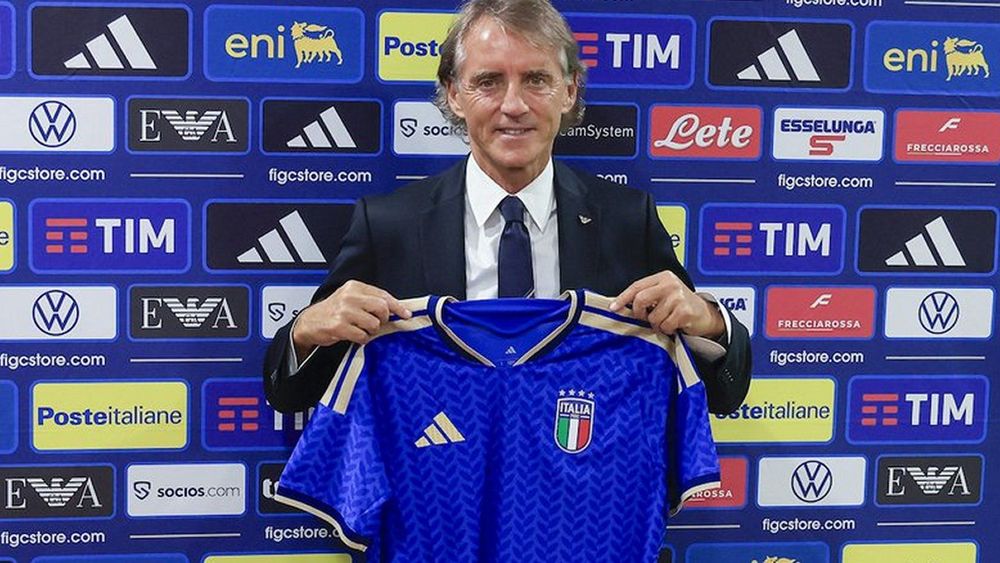
Roberto Mancini is back as head coach, having previously led Italy to Euro 2020, while Claudio Ranieri has taken over as FIGC technical director and president of Club Italia. The new structure also includes Gianfranco Zola as coordinator for youth projects.
Poggi does not believe Mancini was the right choice.
“I don't agree with the choice of Mancini, even though he is an excellent coach,” he said.
“Simply because after he left the national team, from my moral and ethical point of view, it wasn't right to call him back.
“But the federation and Malagò have taken responsibility for that, so it is right that it is this way.”
He has a much warmer assessment of Ranieri.
“Ranieri is certainly an excellent person, with great experience and great stature.”
But Poggi's strongest comments concern the extraordinary events surrounding Paolo Maldini and Leonardo.
The pair were appointed to lead the technical side of the FIGC project in July, only to leave after 16 days when the process for selecting the new coach broke down.
Poggi believes Maldini represented something rare in Italian football.
“I consider Maldini the cleanest and most important person in Italian football of the last 15, 20 years,” he said.
“He is an extremely intelligent person, but he wants to work and wants to work in the correct way.”
When Maldini and Leonardo resigned, Poggi immediately suspected that the former Milan captain had not been allowed to implement the changes he wanted.
“My first thought was that they wouldn't let him work because of a change that he wanted.”
Maldini and Leonardo had backed Andrea Pirlo for the national-team job, although Pirlo's proposed appointment subsequently collapsed and Mancini returned instead. Contemporary reporting confirmed that Maldini and Leonardo had pushed Pirlo's candidacy before their departures.
Would Pirlo have been ready?
“I don't know,” Poggi said.
But he insists the identity of the coach was never the biggest issue.
“The real problem, in my opinion, wasn't only the national-team coach, which was only one of the problems.
“The biggest problems in the federation, in Club Italia, are that the people who didn't allow Italy to qualify for the last three World Cups are the same people who are still there.
“Usually, when you make a change, you have to change everything, not only the national-team coach.”
That is the heart of Poggi's argument.
Italy does not need another isolated solution. It needs to rebuild the pathway from youth football to Serie A and ultimately the national team.
And for Poggi, that means giving Italian players the one thing he believes they are missing.
“Opportunity.”
It is a simple answer to a problem he believes Italian football has spent too long making complicated.