The former Norwich forward remembers a young Bellamy who was prepared to challenge teammates, demand higher standards and influence the people around him, despite being one of the youngest members of the squad.
Speaking to Football Presse, McVeigh described the Welshman as one of the finest examples of natural leadership he encountered during his playing career. His recollections also provide an interesting comparison with Paul Lambert, whose extraordinary standards transformed Norwich after he arrived in 2009.
A 17-year-old who commanded the dressing room
“When I met Craig Bellamy, he was a 17-year-old player at Norwich City when I just joined as a 21-year-old on my first day. And this is, for me, the best example of leadership.
“He was 17, so he really shouldn't have been the kind of senior member of the team, or he shouldn't have been the person in the team that was directing training, that was influencing, that was setting the standards, that was making sure people didn't slip below them.
“Almost like your kind of Roy Keane and Peter Schmeichel and those kind of guys who just — it has to be at this level, and if you don't operate at this level, you know, this is not acceptable. And I went in and I saw Craig Bellamy do that as a 17-year-old kid.”
It was the confidence with which Bellamy approached his teammates that particularly surprised McVeigh. He had encountered plenty of talented footballers, but the willingness to challenge established professionals was something different.
“And I remember thinking, because we're roughly the same size, you know, kind of 1 metre 67, 68, and I remember thinking I would never have that confidence or belief in myself to be able to shout at the younger, same-age, older players, with senior players who'd played, you know, hundreds of games in the Premier League who were in our squad at the time.
“I couldn't believe that he was doing this. But the more I saw him, the more I played with him, and it was only within three months, he then got signed to the Premier League in a £6 million move in, you know, the year 2000. So it was a lot of money at the time for a 17-year-old kid.”
Bellamy eventually established himself among the Premier League's most recognisable forwards, representing Newcastle United, Liverpool, Manchester City and several other clubs during a career that also brought him 78 Wales caps and 19 international goals.
For McVeigh, however, the qualities that would later make Bellamy a prominent figure in Welsh football were already apparent in those early days.
Making everybody perform to his standards
“And I was just thinking, this is incredible. This young kid from Wales was making sure that everyone had to perform at his standard. And if they didn't, he'd let them know.
“And whether you think then that's another conversation about leadership, did the leadership qualities that he had, were they helpful? Did they make people want to do more? Or did they actually go, oh, I don't care about you, I'm gonna do whatever I want?
“But actually, from my perspective, I thought that was amazing because I thought his ability and confidence to lead and want others to do better for themselves, I thought it was incredible.”
McVeigh's observation is particularly interesting because he recognises that this type of leadership can be difficult to navigate. A player who constantly demands more can create friction, especially when challenging older professionals with established reputations.
Yet he saw something constructive in Bellamy's approach. It was not simply about being the loudest person in the room or imposing authority for its own sake. McVeigh believed the motivation behind it was a genuine desire to make those around him better.
Paul Lambert took Norwich's standards to another level
McVeigh would encounter another striking example of leadership when Paul Lambert arrived at Norwich in August 2009.
The Canaries had dismissed Bryan Gunn following a disappointing start to the League One campaign and were sitting in the bottom three. Lambert, who had won the Champions League with Borussia Dortmund as a player, arrived with an immediate message for his new squad.
“And the best example I've ever seen of leadership as a coach was he walked into the dressing room at the time. And he looked all of us in the eye. So he didn't say anything for about 30, 40 seconds, just looked us all in the eye.
“And we were in the bottom three of the league. And obviously he has a really strong Glaswegian accent. You think my accent's strong and you might not be able to understand me? You should try speaking to Paul Lambert. That's a whole other conversation.
“And he just looked at us all almost with contempt, or just aggressively looking at us, and just going, ‘What are you doing at the bottom of the table with the quality within this room? We're gonna win this league.’
“And he walked out.”
It was an extraordinary opening statement from a manager meeting his players for the first time. McVeigh remembers the brevity of the message as much as its content. Lambert had made his expectations clear without delivering a lengthy motivational speech.
The real test, however, came when the players stepped onto the training pitch.
“You know, I talk about Craig Bellamy, the standard. See, our standards in training, it was even higher. I've never seen standards of training so high throughout my entire career.
“He just would not accept one degree less than what he wanted every single day.”
McVeigh experienced those demands personally, including an occasion when an apparently harmless pre-training run earned him a considerable fine.
“I was coming in earlier sometimes, 'cause sometimes I'd be in the team, sometimes I wouldn't, 'cause it was my last year of playing. So I wasn't always, you know, a starting member of the squad.
“And I would go and do like a jog around the training ground just to keep myself in shape because I wasn't doing as much running in training. And I had my headphones in as I'm jogging around.
“Anyway, as he saw me the first time, he came out of the canteen, kind of clocked me. The second lap I was coming back, he stopped me and he's like — he called me over because I had my headphones in. I took them out. I was like, ‘What's up, boss?’ And he went, ‘What are you doing with those headphones?’
“I'm like, ‘I'm just doing a run.’ He goes, ‘What do you think this is, holiday park? Fifty quid on my desk before training.’
“It's the most expensive run I've ever gone on.”
For McVeigh, the incident was about much more than a fine. Lambert was making sure that the standards expected during a match were also reflected in the smallest details of everyday preparation.
“Anyway, it was that standard of — you think I'm doing well, I'm doing extra training, I'm running, but actually it was nothing to do with that. It was the fact that if you're going to train, you need to do a — you don't go out onto the pitch on Saturday with your headphones in, so why would you do it at training?
“So that little tiny thing where he just wouldn't let anything slip, and suddenly that quality and that standard that he set.”
From the bottom three to back-to-back promotions
Lambert's approach quickly produced results. McVeigh started the manager's first 10 matches before losing his place, but the team's collective progress was remarkable.
“As soon as he came in, we drew our first game. I was in the team. I was in the team for the first 10 games. We won about six or seven, drew a couple, and on the 10th game, he dropped me out of the team and brought someone else in.
“And we went on a 30-odd game unbeaten run for the rest of the season, and we won the league. And then he went on a back-to-back promotion into the Premier League.”
Norwich subsequently won promotion from League One in 2009-10 before finishing second in the Championship the following season, returning to the Premier League after a six-year absence.
McVeigh was particularly impressed by what Lambert achieved with a squad that had been competing in the third tier just months earlier.
“He effectively took a team that was almost like a third-tier team with the likes of Grant Holt and Russell Martin and Wes Hoolahan and Fraser Forster and all these people and went on a back-to-back promotion campaign and stayed in the Premier League for three years.
“And I just think that was just a perfect example of the standards that a leader sets that I saw in football that's just so relevant with the work that I do today in the corporate world.”
The leadership qualities behind Wales' head coach
There is an interesting connection between McVeigh's recollections and Bellamy's current position as Wales head coach. Appointed in July 2024, Bellamy has now experienced the demands of leading an international side, including promotion to Nations League A and the disappointment of missing out on the 2026 World Cup.
His leadership is now being judged on results, performances and the development of a national team, rather than the standards he demanded as a teenager at Norwich.
McVeigh's testimony nevertheless offers a glimpse into the personality he encountered long before Bellamy entered management.
The comparison with Lambert is equally revealing. Both men demanded high standards, although one was a young forward influencing his teammates while the other was an experienced coach establishing an entire club's culture.
For McVeigh, the underlying principle was the same: leadership means refusing to accept that people around you cannot achieve more.
Bellamy displayed that instinct as a teenager. Lambert demonstrated how a manager could turn those expectations into a collective identity, taking Norwich from the bottom three to consecutive promotions and the Premier League.
The Welshman now has the responsibility of applying his own leadership philosophy to his country. McVeigh had seen the foundations of it long before the rest of football began looking at Bellamy as a manager.
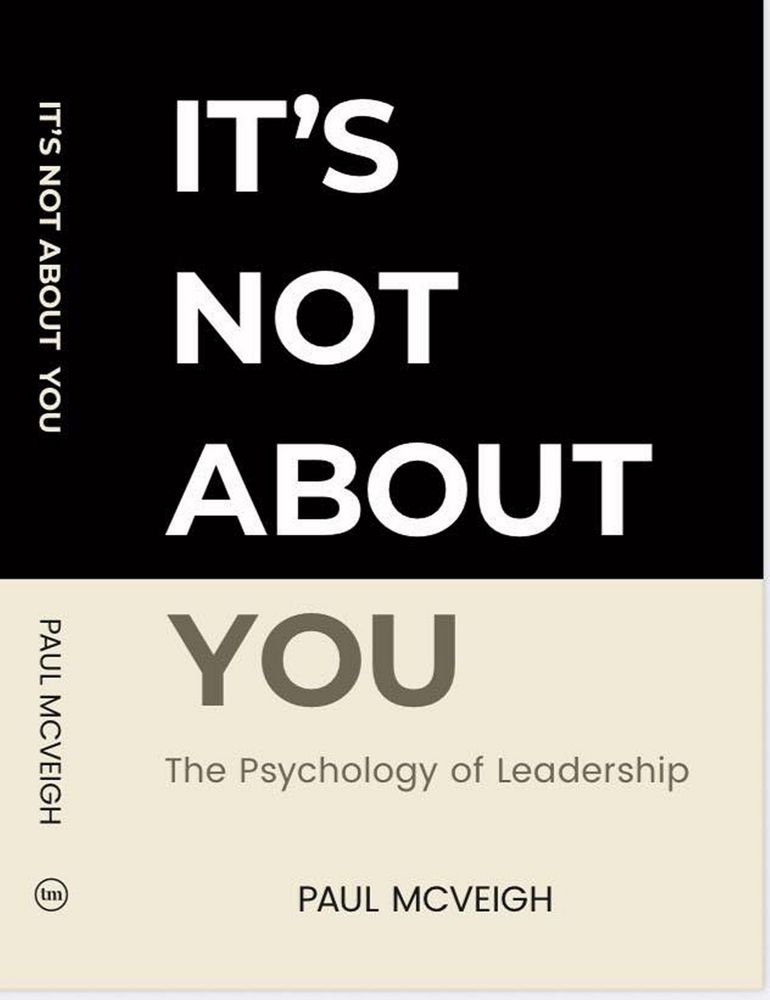
Paul McVeigh is author of "It's Not About You: The Psychology of Leadership" - which is available here.