
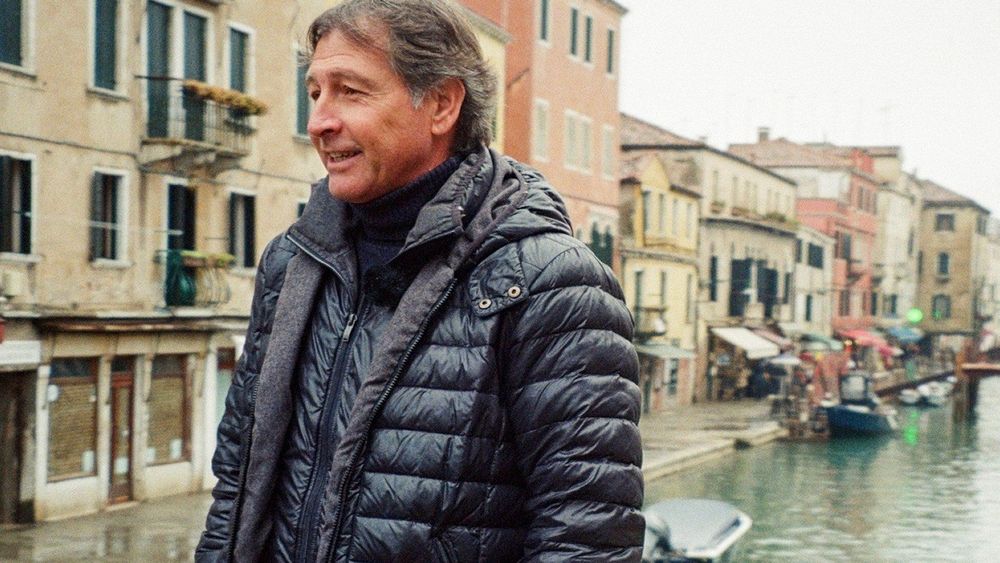
Under Alberto Zaccheroni, the three helped turn a talented provincial side into one of Serie A's most ambitious teams of the late 1990s. Udinese finished fifth in 1996-97 before going even further the following season, finishing third behind Juventus and Inter.
Poggi does not describe the partnership simply in terms of individual quality.
He told Football Presse, “I had an excellent understanding with them on the pitch and a good relationship outside as well, so much so that we still speak to each other today.
“We were all three with completely different characteristics from one another, and that was important. The coach gave us the opportunity to emerge, to make ourselves known and to bring out all our characteristics.”
That was one of Zaccheroni's great strengths.
Rather than asking his attacking players to become versions of one another, he found a way of making their differences work together. The result was a front three that could hurt opponents in different ways, while giving Udinese an attacking identity that became increasingly difficult to contain.
Bierhoff brought the imposing presence in the centre, Amoroso offered pace and unpredictability, while Poggi could link the attack, move into space and contribute goals himself.
In 1996-97, Poggi and Bierhoff both scored 13 Serie A goals as Udinese finished fifth. The following season Bierhoff became Serie A's leading scorer with 27 goals as Udinese claimed third place and qualified for Europe again.
For Poggi, though, the significance of what they achieved is also connected to the quality of the league they were competing in.
“It has changed. It is almost another sport.
“That was the league where every player in the world wanted to come. It was an extremely difficult league, and for this reason I am very happy and proud to have played in those years.”
That makes Udinese's achievements look even more striking.
They were not climbing the table in a weak Serie A. They were doing it while competing against clubs packed with established international players and facing a level of weekly competition that Poggi remembers as exceptionally demanding.
And at the centre of that rise was Zaccheroni.
“Zaccheroni was undoubtedly the most important coach of my career. I had him for two years at Venezia when I was still a boy, and then three years in Udine.
“He taught me the game of football in the true sense of the word. Zaccheroni wasn't just a coach, but a master of football.”
Poggi's admiration goes beyond the personal influence Zaccheroni had on him.
He believes what the coach achieved in Udine was actually more difficult than the Scudetto he later won with Milan.
“Even though he then won the Scudetto with Milan, I believe the achievement he made with Udinese was undoubtedly the most difficult and important of his career.
“At Udinese, he achieved extraordinary results.”
Zaccheroni's 3-4-3 became one of the defining tactical systems of that period, giving Udinese a structure in which their attacking players could play aggressively without simply becoming three isolated forwards. The club's first European qualification came in 1996-97, while the following season brought third place in Serie A.
The evolution was not simply tactical. It was also about giving players permission to express what made them different.
That is why Poggi sees the three-man attack as a product of Zaccheroni's coaching as much as the individual talent within it.
“We were all three with completely different characteristics from one another, and the coach gave us the opportunity to emerge, to make ourselves known and to bring out all our characteristics.”
The timing was important too.
Poggi had joined Udinese in 1994 at 23 and remained for six years, while Bierhoff and Amoroso developed into major attacking figures alongside him. Together they helped take a club from the provinces into the upper reaches of a Serie A that Poggi remembers as the destination for the world's best players.
And the trio were not merely effective domestically.
They also carried that attacking identity into Europe, where Udinese's rise gave Poggi and his teammates the opportunity to measure themselves against some of the biggest clubs and players on the continent.
For Poggi, however, the lasting memory is not one particular goal or result.
It is the combination of three very different forwards and a coach who understood that their differences could become an advantage.
“I had an excellent understanding with them on the pitch and a good relationship outside as well, so much so that we still speak to each other today.”
That relationship survived long after the goals and European nights had disappeared.
So did the influence of Zaccheroni.
Poggi's career would take him to Roma, Torino and elsewhere, while Bierhoff went on to win the Scudetto with Milan and Amoroso became one of Europe's most feared attacking players.
But their most distinctive collective story belongs to Udinese.
A provincial club, three contrasting forwards and a coach prepared to build around what each could do.
In a Serie A that Poggi remembers as almost the world's football capital, they did not merely survive.
They made Udinese matter.