
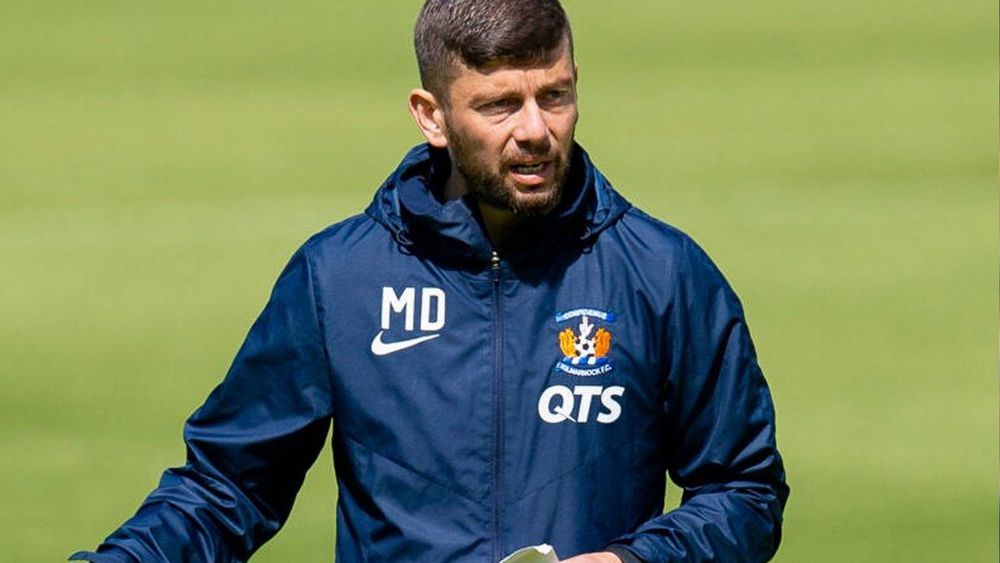
He was an Atalanta academy player who reached Serie A as a teenager, a Milan youngster suddenly sharing a dressing room with Paolo Maldini, Andriy Shevchenko and Gennaro Gattuso, a Celtic midfielder who won a Scottish title and played Champions League football, and a veteran who eventually accumulated 314 Serie A appearances. He retired in 2018 and quickly turned towards coaching.
Now 45, Donati is looking for his next managerial opportunity after his brief spell at Sampdoria ended in October 2025. Sampdoria appointed him in July that year, describing him as a coach with experience of Italian and international football and a clear football identity, before ending his tenure after nine competitive matches.
For Donati, though, the story is not about a succession of jobs. It is about what he has learned from each one.
“The important thing is to let them pass quickly, both the good ones and the bad ones. Especially the bad ones, but also the good ones.
“Because in the end there is always something new to do the next day,” Donati tells Football Presse.
That attitude is rooted in his playing career.
He came through at Atalanta before moving to AC Milan in 2001. He would later return to Bergamo and play for Parma, Torino, Sampdoria, Messina, Bari, Palermo and Hellas Verona before moving to Scotland, where he represented Celtic and Hamilton Academical. Across his career he made 314 Serie A appearances and 72 in the Scottish Premiership.
But the Milan experience remains one of the defining moments.
“The beginning was very beautiful because I arrived in Serie A straight away when I was young, then I went to Milan straight away.
“I thought I had touched the sky, but instead I didn't remain focused, I didn't stay on the ball, because I thought it was done.
“Then I dropped a little, and then there was the climb back up again.”
Donati was only 20 and suddenly found himself surrounded by players he had grown up watching.
“I was 20 years old, and it was a little strange for me to train with players like Maldini, Shevchenko, Gattuso and so many others.
“It was something really huge, and perhaps from a mental point of view I wasn't ready to deal with a situation like that, to deal with 80,000 people at San Siro.
“That held me back a little, it blocked me a little.”
It was a difficult lesson, but one that eventually became part of his coaching philosophy.
“You have to learn from everything, from the good things but especially from the bad things, how to deal with them, how to improve them, how to face them the next time they happen.”
His education as a coach has also been shaped by the managers he encountered as a player, particularly Carlo Ancelotti, Gian Piero Gasperini and Gian Piero Ventura.
“Every coach has their own characteristics, their own way of doing things, both on and off the pitch.
“Nowadays football isn't just tactics or just training. Football is managing the whole situation 360 degrees, everything on the pitch, off the pitch, psychologically.”
Donati says Gasperini and Ventura were particularly important in helping him understand the reasons behind tactical decisions.
“They were the ones who made me understand why and how things were done.”
His memory of Gasperini's Palermo side is revealing. The results were poor, but Donati still believes the football was good.
“With Gasperini at Palermo, things didn't go well from the point of view of results, but we played incredible football, beautiful football, football that, according to my own ideas as well, was right.”
It is a belief that has followed him into management: good football and good results are not always allowed enough time to become the same thing.
“Unfortunately in football, sometimes that doesn't mean it has to lead to results as well. In today's world, results are too important and there is very little time to achieve things.”
“You have to try to get to them immediately, because otherwise they sack you.”
Donati's own managerial career has given him both sides of that argument.
He began in Scotland as a technical coach at Kilmarnock before returning to Italy with Sambenedettese. At Legnago Salus, he found his strongest early platform, taking the club back to Serie C after winning the 2022/23 Serie D title. Legnago then finished sixth in Serie C in 2023/24 and reached the promotion play-offs.
That led to the move abroad he had been building towards.
Athens Kallithea appointed Donati in June 2024, giving him his first opportunity to manage in Greece's top flight. He left in December after 14 league matches, but the experience reinforced his belief that the way a team plays can matter even when the results are not yet there.
“The experience in Greece was very positive. We played beautiful football.
“Even the Greece national-team coach came to congratulate me because they had never seen football like that.”
But again, there was a problem.
“We hadn't won games.
“Receiving compliments without winning games was very interesting.”
That experience explains why Donati remains attracted to football outside Italy.
“That's also why I would like to return abroad, because perhaps outside Italy football is appreciated a little more, in a different way.”
His Sampdoria opportunity was different. It was a return to a club he had represented as a player, and the appointment was part of a wider attempt to rebuild the club around a younger, more modern football structure.
It lasted only three months.
Sampdoria dismissed Donati on 18 October 2025.
As of today, he remains without a club. His latest official managerial position is therefore still Sampdoria, but the ambition expressed to Football Presse is unmistakable.
“My plan is to return to coaching as soon as possible, because it's the thing I like doing most, so I hope it happens again soon.”
In the meantime, he says he has been watching plenty of Serie A and Serie B football, doing what coaches do when they are between jobs: observing, thinking and looking for the next idea.
And perhaps that is the most revealing thing about Donati.
He does not speak like a coach who believes his best opportunity has already passed. He speaks like someone who sees every setback as part of the education.
“Whatever happens, you have to think about facing the next day and trying to do better.”
For a midfielder who once discovered that reaching Milan was not the same as making it, that philosophy has travelled a long way.
The next chapter of Massimo Donati's coaching career has yet to be written. But he is still waiting for the next day.