The former Portman Road chief presided over the club's promotion to the Premier League in 2000, but the foundations of that success extended beyond the players recruited by George Burley.
Ipswich Town had a proud tradition of developing their own, something Sheepshanks was particularly keen to recognise when discussing the emergence of Kieron Dyer, Titus Bramble and Darren Bent.
He told Football Presse, "Fantastic, because, you know, we had a great history of youth development. And in Bobby Robson's day, George Burley, Alan Brazil, Eric Gates, I mean, I can, you know, go on, Steve McCall, loads of them all came through the academy, through – it wasn't called an academy then, through the youth system.
"And then in our day, you know, we did the same. So you picked out, you know, Kieron Dyer, Titus Bramble, there were loads of them. And then lesser well-known players like Ian Westlake and Darren Bent. And actually, I'm doing an interview with Darren Bent on TalkSport, I think, in a few days. Darren Ambrose is another one."
The names reflected a development tradition that had survived successive generations. For Sheepshanks, seeing players progress from the youth system into the first team and eventually establish themselves elsewhere was a source of considerable satisfaction.
"And you look at it and you think, well, they came through our, our school."
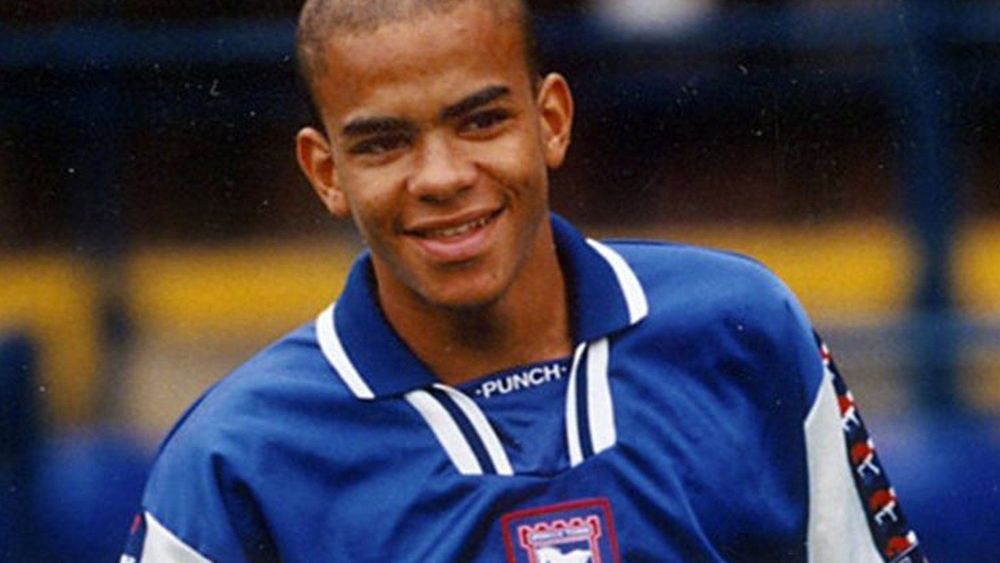
Dyer was perhaps the most striking example of that production line. An Ipswich-born midfielder who progressed through the club's youth ranks, he became an outstanding first-team player under Burley before attracting the attention of Newcastle United.
His departure, however, came at a particularly difficult moment. Ipswich had just suffered play-off disappointment against Bolton Wanderers in 1999, losing in the semi-finals, and another season in the First Division meant the club faced difficult decisions about retaining its most valuable players.
"That was a year later, that was '99. We lost in the play-offs to Bolton on the away goal rule. And Kieran left after we lost in the semi-finals in 1999, and he was already on the threshold of the England team.
"He was a phenomenal player. I mean, unbelievable player, Rolls-Royce of a player, homegrown through our academy.
"And I mean, he was, you know, he was obviously our favourite and he loved Ipswich and he came back and he still has a house here. And, you know, he still loves the club to this day."
Sheepshanks understood the emotional difficulty of losing a player who had developed within the club, particularly one who had become such an important figure for supporters. But Ipswich could not prevent a talented young footballer from taking the opportunity to move to the Premier League.
"This is one of these dilemmas you have when you're not promoted. You cannot get in the way of a player going to the Premier League. Because they are going to, you know, not just double, probably triple in those days, triple or quadruple the amount they earn.
"You know, and it's just different."
Newcastle United eventually paid £6.5 million for Dyer, a substantial fee for Ipswich at the time. Sheepshanks described the transaction as reluctant but recognised that it gave Burley the opportunity to reshape the squad.
"We sold him for £6.5 million actually. It was a lot of money. Yeah, that was a lot.
"So it was a very reluctant sale, but it was enough money in it for us to reorganise. And so out of the money we sold, we obviously had to put a bit in the bank, but we bought John McGreal from Tranmere, centre-half, Jermaine Wright from Crewe, Gary Croft from Grimsby, full-back."
Those additions strengthened the squad, but the most significant investment followed several months later. Ipswich had identified Marcus Stewart as another important piece of their promotion challenge, although Sheepshanks acknowledged that the club would not have been able to complete the deal without the money received for Dyer.
"And then obviously a few months later in February 2000, we bought Marcus Stewart, £2.5 million, £2.75 million in fact, including the bonus. And I mean, we would never have been able to afford that. So, you know, had it not been for the Kieran Dyer sale.
"So Kieran Dyer going, we bought four or five top players. And that was, that was just, you know, that was a game changer for us. And we became a very, very strong team."
The sale of a homegrown England international had therefore helped finance the construction of a team that would eventually return Ipswich to the top flight. It was an uncomfortable reality of operating without the financial resources of the Premier League's established clubs, but one Sheepshanks understood all too well.
The club's subsequent relegation in 2002 brought another painful reminder of the financial pressures involved in keeping talented players at Portman Road.
"It was a tragedy when we got relegated in, you know, '02."
Sheepshanks remembered how difficult it was to see players from that generation move elsewhere, including Matt Holland and Darren Bent, who would both subsequently represent Charlton Athletic.
"Seeing some of those guys go to – Matt Holland and Darren Bent and others go to play at Charlton was, you know, quite hard to swallow really. But that was the iniquity of the game in those days."
The careers of Ipswich's academy graduates continued long after their departures. Dyer himself returned to the club following his playing career, taking up coaching responsibilities within the youth system before moving into senior coaching at Ipswich and subsequently Chesterfield.
He is now Southend United's head coach, having taken his first managerial position in June 2026.
For Sheepshanks, the significance of Ipswich's youth development was never simply about producing players who could be sold for substantial fees. It was about seeing young footballers progress through the club, represent the first team and carry something of Ipswich with them wherever their careers took them.
Dyer's story captured both sides of that experience: the pride of developing a remarkable homegrown talent and the difficult financial decision to let him go.
Ultimately, the £6.5 million received from Newcastle helped provide the players who delivered the achievement Ipswich had pursued for so long.
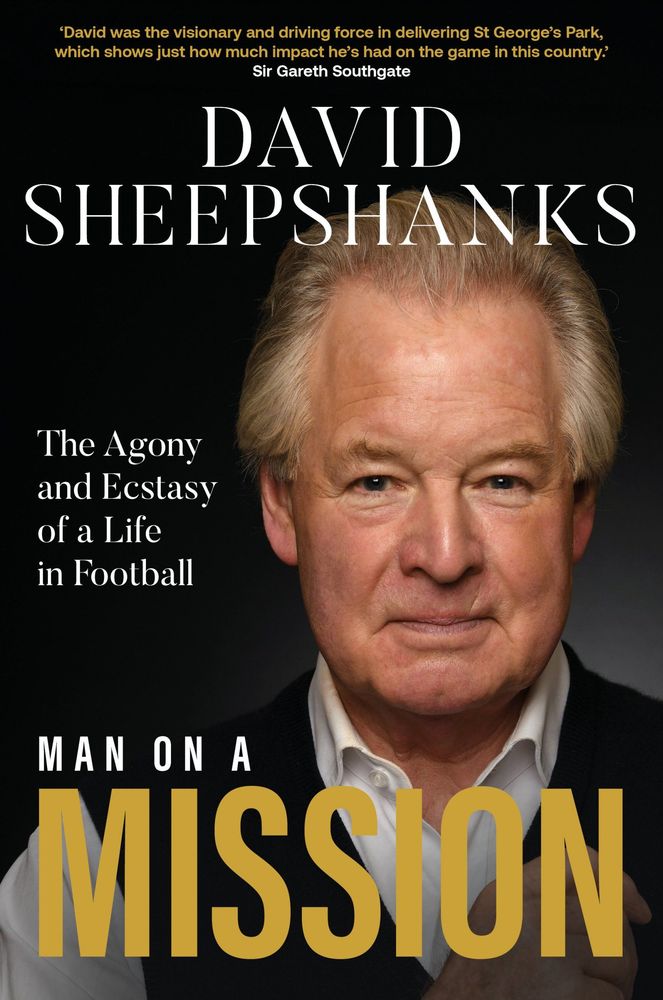
David Sheepshanks' new book, 'Man on a Mission', is from Pitch Publishing and is available here.