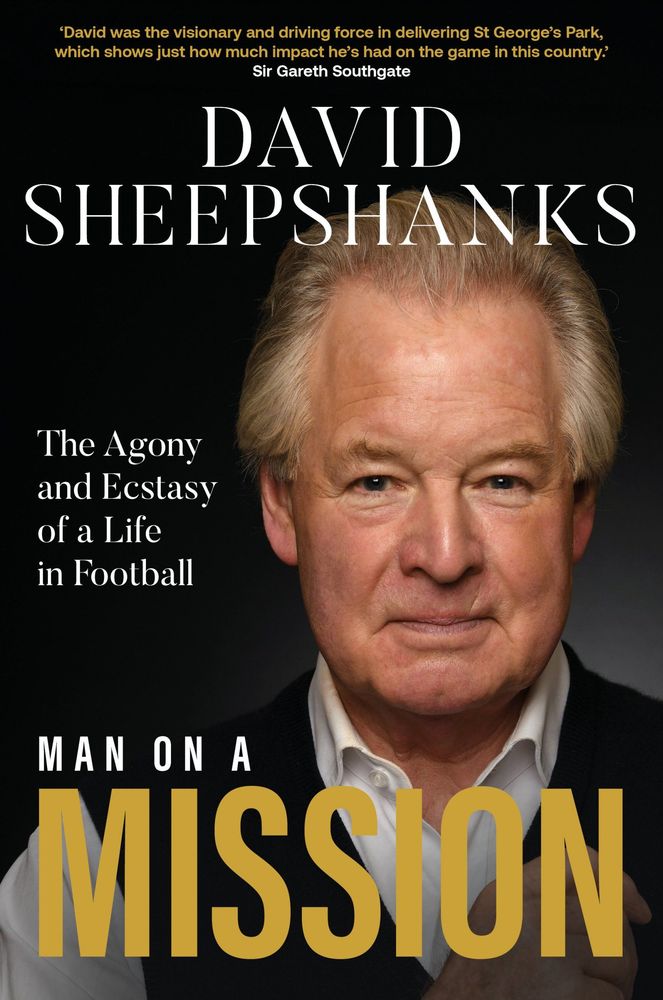
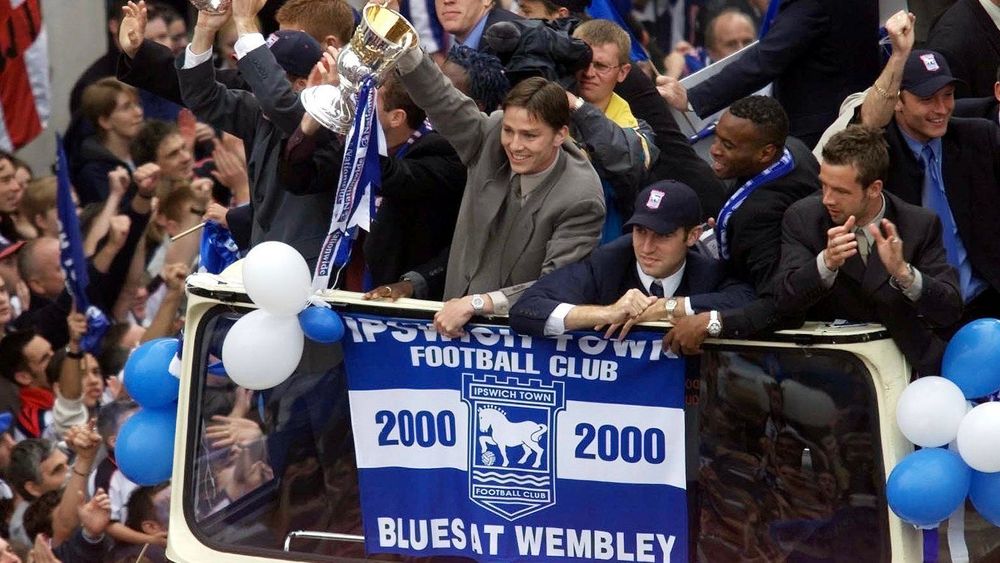
Having joined the club's board in 1987 before becoming chairman in 1995, he spent 14 years leading the club through one of the most memorable periods in its history. He experienced the four successive play-off campaigns, the eventual promotion at Wembley in 2000 and the extraordinary fifth-place finish in the Premier League the following season.
His subsequent work in football administration, including his involvement in the development of St George's Park, gave him another perspective on leadership and building successful teams. But when reflecting on Burley's Ipswich Town side, one player immediately comes to mind.
"I would say Matt Holland was George Burley on the pitch," Sheepshanks told Football Presse. "I mean, different, different players. Matt was an indefatigable midfielder. George was a right-back, and a very good one. But Matt epitomised everything George stood for.
"He was really a role model captain. First out on the training pitch, last in. Very hard worker. I mean, his dynamo was extraordinary. He was up and down, up and down, up and down the pitch, scored a lot of good goals."
For Sheepshanks, Holland's influence was central to the character of a team that eventually ended Ipswich's long wait for promotion. However, he was equally keen to stress that the midfielder was not the only leader in the dressing room. Burley had assembled a group of experienced players who could take responsibility on the pitch, creating a collective strength that was crucial to their success.
"One of the reasons Ipswich got promoted that time – I think it's very often the case with any good team – is that we had a lot of leaders on the pitch. Matt was a leader, but you also had Tony Mowbray, Mark Venus, John McGreal. There's some really, really strong characters on the field. And so there were lots of leaders.
"Matt was absolutely a wonderful, wonderful player, wonderful guy. Still involved with Ipswich. He's now on the board of Ipswich, and he's also a broadcaster. He's a brilliant guy."
Asked whether Holland was his greatest-ever signing, Sheepshanks revealed that he had previously made that assessment himself.
"I have said exactly that."
He was nevertheless quick to recognise the claims of Marcus Stewart, whose goals were instrumental in Ipswich's subsequent Premier League success. Another player he felt deserved greater recognition was David Johnson, the striker signed from Bury in 1997.
"Another one who goes under the radar a bit is David Johnson. The David Johnson who's Brennan Johnson's father.
"We signed him from Bury, and he'd been a young player, young Man United player. Hadn't quite made it at United, went to Bury, which was a bit of a step down. He was an unconventional – he was quite a short striker that scored goals.
"George spoke to Alex Ferguson about him, fellow Scots, and got a big thumbs up, and we signed David. That was back in '97. He was a big signing for us."
Johnson was one of several important additions as Burley gradually assembled the squad capable of winning promotion. Sheepshanks also recalled the significance of Jim Magilton, whose determination was particularly evident during the play-off semi-final against Bolton.
"Jim Magilton was a big signing. We won the play-off semi-final against Bolton thanks to Jim Magilton's sheer bloody-mindedness, determination. He scored a hat-trick that night and missed a penalty. He was just, over his dead body were we going to Wembley. Were they going to beat us?"
The collective determination of those players helped turn years of disappointment into the achievement that defined Burley's managerial reign. For Sheepshanks, however, the relationships created during that period have proved just as enduring as the results.
He singled out Holland's recent charity walk in support of Stewart, who is living with motor neurone disease, as another example of the character that made him such an important figure at Ipswich.
"Matt Holland has just done a charity walk for him. He's a wonderful man, and he's combating it with all the courage that you would expect. Just say a prayer for Marcus."
It is a fitting reflection of Sheepshanks' admiration for a former captain whose contribution went far beyond his performances on the pitch.
Holland represented the commitment, resilience and leadership that Burley demanded, and the former chairman has never been in doubt about his importance to the club's greatest modern team.
Keep following our 5-part series with David Sheepshanks this week as part of the promotion for his new book, 'Man on a Mission'. Available here.