The Liverpool Echo journalist had followed the club’s fortunes through decades of unsuccessful attempts to find a modern home, watching a ground that had once been among the finest in English football fall behind its rivals.
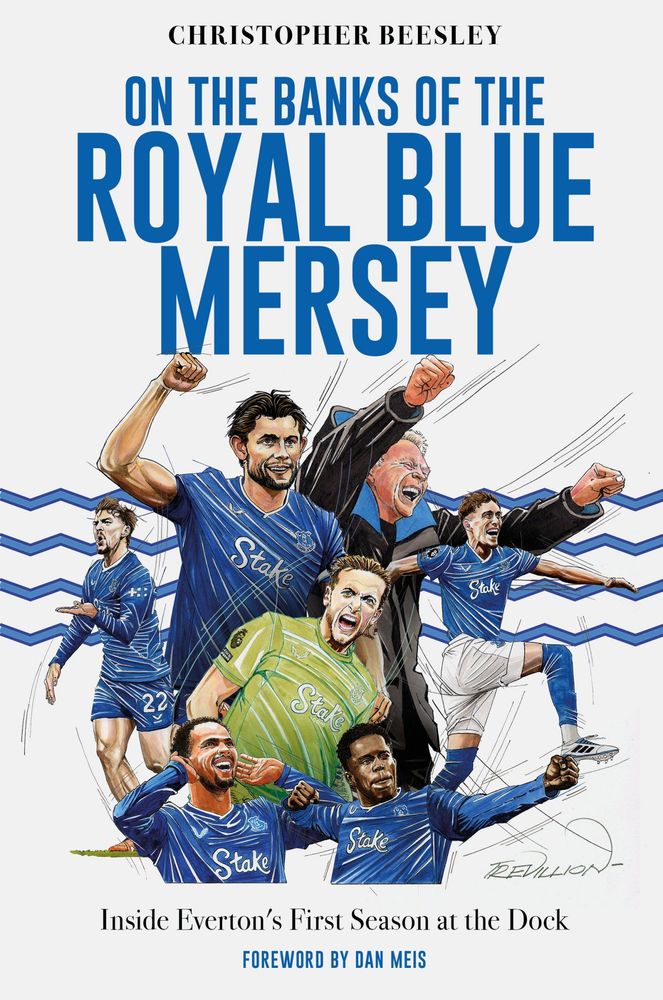
Yet when the move finally happened, it was not simply the end of an era. It was the beginning of something Everton had been waiting for, and Beesley’s new book, "On the Banks of the Royal Blue Mersey", chronicles the first season of that transition.
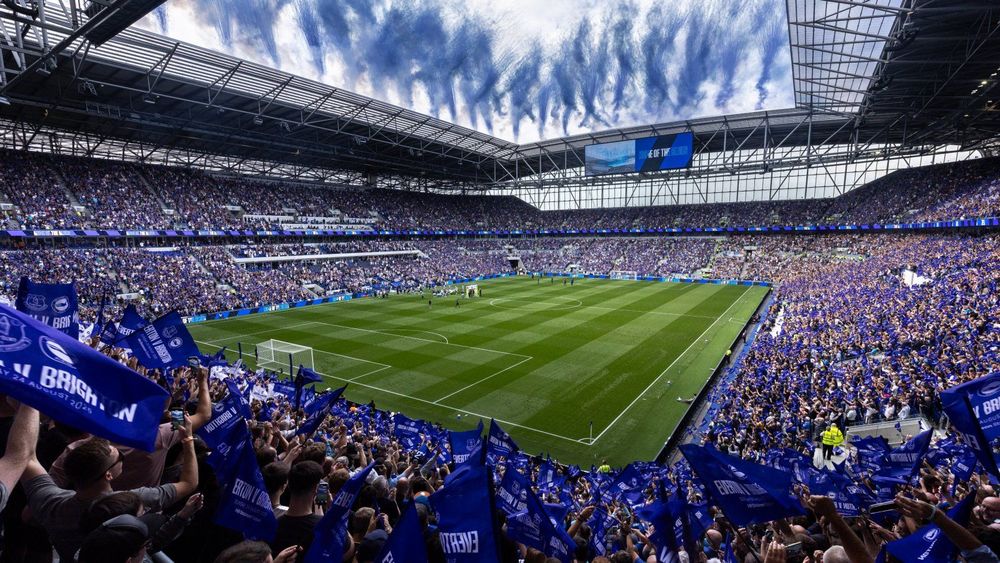
The story encompasses the history of Goodison Park, the excitement of the new waterfront stadium, the adjustment of a supporter base whose identity is inseparable from its surroundings, and the first occasions when Hill Dickinson Stadium began to feel like home.
Beesley understands why some Evertonians still miss their old ground. For him, however, the decision to move was necessary if the club was ever to recover its position among English football’s leading sides.
He told Football Presse, “I love Goodison Park, and like all Evertonians, it's all we've ever known. I know a lot of people feel differently from me, and a lot of people do miss it, but for me it was a very long goodbye, and it was long overdue.
“For most of its existence, Goodison Park was the best football ground in England. It was the pre-eminent ground, the first Football League ground to host an FA Cup final, and it staged five games at the 1966 World Cup, including the semi-final alongside Wembley.
“But it fell behind so many of its rivals. I think it's no coincidence that we're now in the longest trophyless period in Everton's entire history, 31 years and counting. Previously, they'd only ever gone 24 years without winning a trophy.
“For me, it's no coincidence that this period without silverware has corresponded with Goodison Park no longer being one of the best grounds in the country, certainly from a money-making point of view.”
The stadium's limitations had become increasingly difficult to ignore. During the Premier League's financial transformation, Everton were unable to generate matchday revenue on the scale of their competitors, while the ageing stands and restricted views offered a reminder of how far the ground had fallen behind modern developments.
The search for a replacement had stretched across decades. Beesley, now 47, had grown up hearing about proposals that never came to fruition, from ambitious plans in the 1990s to later schemes that would have taken Everton away from their traditional home in the north of Liverpool.
“I'm 47 now, and serious attempts to resolve the stadium issue have been going on since I was a teenager. That's about 30 years. So that's why I don't miss Goodison in the sense that, if you want Everton to try to get back among the elite of English football and restore those high standards, Goodison Park had to go.
“It had an incredible atmosphere. Many rival supporters would say that, on its day, it was the most intimidating ground in the Premier League. But what you have now is those same supporters, with even more of them, in a modern setting.
“The stands are steep, the supporters are close to the pitch, and it's intimidating. Hopefully, it brings the best of Goodison Park into a modern stadium. That's why I don't miss it in the same way. It will always be part of our lives, and it's all we ever knew as Evertonians, but the move was probably a bit too long in coming.”
A new dawn on the Mersey
The emotional significance of the move became clearer to Beesley as he watched the new stadium emerge from the waterfront.
Living in New Brighton, across the Mersey, he had been able to follow the construction from the opposite bank. What began as a distant building site gradually became a recognisable landmark, transforming the view across the river and offering a tangible reminder that Everton's future was finally taking shape.
When the day arrived to walk to the stadium for the friendly against Roma in August 2025, the experience felt like a new beginning.
“It was really like a new dawn, and it was a lovely summer's day. It was sunny.
“I live in a place called New Brighton, on the other bank of the Mersey, so when we look across, we can see all the big buildings in the city. I said to Dan Meis, the architect, that we're Brooklyn to Manhattan in terms of having that view on the other side.
“When I go for a jog along the waterfront, I could see the stadium being built. I used to tell people, 'That's where it's going to be,' when there was nothing there, just a row of huts with light blue roofs. Then, very soon, you could see the skeleton of the stadium coming up.
“When that day actually came, the roof shimmered in the light. With the barrel roof, when the sun's on it, it sparkles. The brickwork underneath blends in with the surrounding dock area. It looked great.”
For Beesley, the location is central to what makes Hill Dickinson Stadium special. Liverpool's maritime history, the city skyline and the view across the water combine to give the ground an identity distinct from the increasingly similar modern stadiums found elsewhere.
The setting also carries a sense of continuity. The stadium is new, but it remains firmly connected to the city Everton represent.
“It's an incredible view. It's the only view in the world where you can see three major football stadiums, because Goodison Park hasn't been demolished yet. You can see Anfield, Goodison Park and Hill Dickinson Stadium, as well as the major buildings of Liverpool, both cathedrals and the Royal Liver Building.
“For me, it hopefully represented that hope for the future, because it's probably been the toughest generation in Everton's history. The last 30 years have been a fallow period, and that has corresponded with the move to modern football and the Premier League.
“I think Everton will be hard-pressed to replicate some of the successes of the past, given the way football is now. But at least they have an opportunity. They've got a platform to look towards a more positive, brighter future.”
That opportunity is about more than the facilities. Everton have spent years trying to bridge the financial gap with their rivals, and the new stadium offers the possibility of greater matchday income, commercial growth and a stronger foundation for the football operation.
But Beesley believes the designers also understood that Everton could not simply reproduce the feel of a generic modern arena. The steep stands and proximity to the pitch were intended to preserve the intimidating atmosphere that made Goodison famous.
“The south stand was based on Borussia Dortmund's Yellow Wall, with the idea of calling it the Blue Wall. They wanted to have as many supporters as possible behind the goal, as steep and as close to the pitch as possible.
“At Goodison, you had so many restricted views because of the pillars. Some of the stands were almost 100 years old and hadn't changed much. Even in the press box, during the penalty shootout against Fiorentina in 2008, I had to choose whether to watch the penalty-taker or the goalkeeper because I couldn't see them both at the same time.
“At Hill Dickinson Stadium, wherever you are, it's an excellent seat. We're right at the top of the West Stand, on the back row of the entire stadium, but you don't feel far away because it's so steep. Even if you're in the corner, you have a great view.”
The night it finally felt like home
A new stadium can be admired for its architecture and location, but its identity is ultimately shaped by the people who fill it. For Everton, the first season was a process of building new memories while learning to leave behind the emotional attachments associated with Goodison Park.
The early home performances did not always make that transition easy. Everton had struggled on their own ground during their final season at Goodison, recording only five league home wins, their joint-lowest total in the club's history.
The opening months at Hill Dickinson Stadium brought excitement, but also frustration as supporters waited for a defining moment.
There was an important breakthrough in October, when Everton came from behind to defeat Crystal Palace 2-1, with Jack Grealish scoring the winner in stoppage time. Palace had won the FA Cup the previous season and arrived on an outstanding unbeaten run, making the comeback particularly significant.
Yet it was the victory over Chelsea in March that Beesley believes captured the atmosphere and emotional potential of Everton's new home.
“Everything came together that night. It was an evening kick-off, and it had been a lovely sunny day. People had been out drinking in the sunshine, and there was a real build-up to the game.
“Everton had also had their two points deductions, while Chelsea had been in the news over illegal payments to agents and were seen to have got off leniently. There was anger towards Chelsea among the Everton fanbase, and everything kind of came together.
“They had the coach welcome before kick-off, with the team bus arriving and fans out on the streets with their flares and cheering. It was a great performance and a great atmosphere.
“I think, for the first time, it felt like home in a proper way for the Evertonians. It's like moving into a new house: you're finding your surroundings and finding your feet. With a football stadium, the emotional attachment makes that even more important.
“That was the night when everything came together. It was bringing the best of Goodison Park, amplifying it because there were more than 13,000 additional spectators, and putting it in a modern setting. That was a big, pivotal moment.”
Everton won 3-0, with Beto scoring twice and Iliman Ndiaye adding the third goal. The result was a high point of their season, taking them within three points of the Champions League places, although their form subsequently deteriorated and they finished 13th.
The Chelsea victory did not immediately solve Everton's problems, but it demonstrated what the new stadium could become when the football, the occasion and the supporters aligned.
For Beesley, the significance lay in the feeling that the club had finally begun to transfer the best parts of its old home into its new one.
Unfortunately, Everton were unable to sustain that level for the remainder of the campaign. Nevertheless, the experience gave supporters a glimpse of what future evenings on the waterfront might look like.
Keeping Everton in the heart of Liverpool
The move to Hill Dickinson Stadium was also important because of where Everton ended up. Previous proposals had threatened to take the club away from its traditional surroundings, including plans for a new ground outside Liverpool's city boundaries.
For a club whose identity is so closely tied to its local community, that would have been a significant departure. Everton's new home is only around two miles from Goodison Park, keeping it in the north of the city and preserving its connection with the neighbourhoods that have supported the club for generations.
Beesley believes that proximity has helped supporters adjust quickly.
“Liverpool is a city where geography is incredibly important. Where you come from matters. People can say that if you come from a different street, you're not a proper Scouser. The fact that people use the word 'wool' or 'woollyback' for somebody who isn't from Liverpool tells you something about that.
“Everton could have ended up somewhere completely different. There were proposals in the past that might have taken them outside the city boundaries. To move away from Liverpool would have been a real public relations own goal.
“The fact that Hill Dickinson Stadium is still in the north of the city is important. Both Everton and Liverpool have their roots in that same area. People have embraced the new stadium and enjoyed the experience quickly, partly because it took so long to happen and should have been done years ago.”
The club also consulted supporters throughout the design process, allowing them to express their preferences and engage with architect Dan Meis. Beesley sees that dialogue as one of the reasons the stadium has retained something of Everton's traditional character.
The result is a ground designed to look forward without severing its ties to the past. The waterfront setting provides a new visual identity, while the steep stands and concentration of supporters behind the goal seek to reproduce the intensity of Goodison.
That balance is central to the story Beesley tells in *On the Banks of the Royal Blue Mersey*. The book is not simply a record of a stadium opening; it captures the end of a long wait, the emotions surrounding a historic departure and the uncertain beginnings of a new chapter.
Goodison Park will remain part of Everton's history, and for many supporters its memories will never be replaced. But Beesley believes the move was necessary if the club is to have a realistic chance of competing again at the highest level.
The new stadium cannot guarantee trophies, nor can it erase the disappointments of the past three decades. What it offers is the infrastructure, location and atmosphere to give Everton a better chance of building a more ambitious future.
For Beesley, the first walk along the Mersey waterfront captured that possibility. The sun shone on the roof, the Liverpool skyline stood behind the stadium, and a club that had spent decades waiting for a new home could finally begin to make it its own.
The challenge now is to turn that new dawn into something lasting.
Christopher Beesley is author of "On the Banks of the Royal Blue Mersey: The Inside Story of Everton's First Season at Bramley Moore Dock" from Pitch Publishing - which is available here.