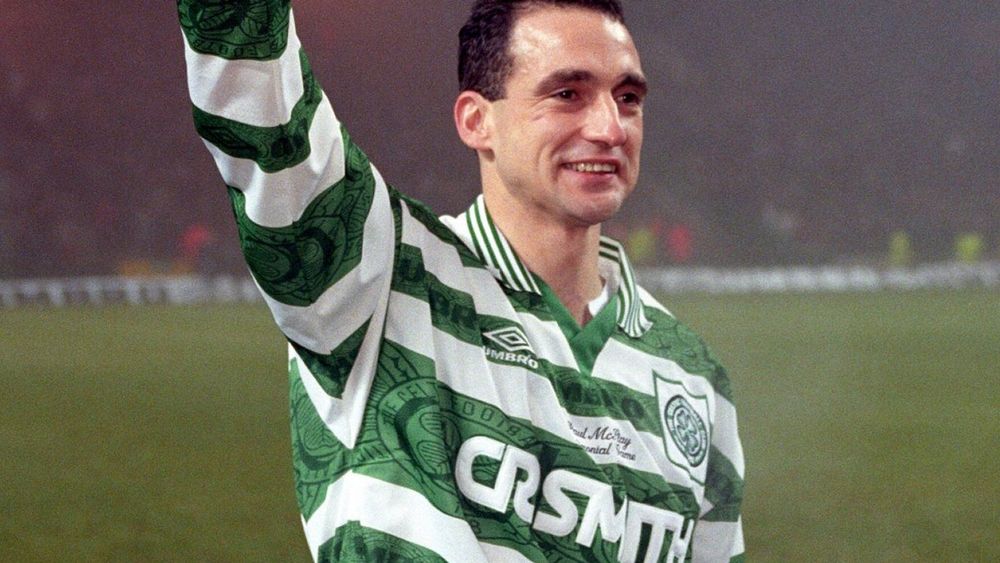
Paul McStay could have left Celtic.
Just as Brian McClair eventually did. Roy Aitken stayed for 15 years, while Charlie Nicholas became one of British football's most exciting young forwards before leaving for Arsenal.
For John Wight, those players represent something that has become increasingly difficult to find in modern football: a sense that playing for a club could mean more than simply building the most lucrative career possible.
"In those days, those players didn't just play for money, they played for the cause," Wight told Football Presse.
"These were great warriors of our cause. They saw them, they would have run through fire for their respective teams."
Few players illustrate that argument better than McStay.
The midfielder made his Celtic debut as an 17-year-old in January 1982 and remained at Parkhead until his retirement in 1997. He made 677 appearances in all competitions, including 515 league appearances, and won two league titles, four Scottish Cups and seven League Cups.
Wight remembers him as the outstanding Celtic midfielder of the 1980s.
"Fantastic," he said. "He came into the team in the late '80s, nicknamed the Maestro.
"He was unfortunate in many respects because he joined the team when Rangers were on the ascendancy under Graeme Souness."
McStay's loyalty was tested by interest from elsewhere, with Wight recalling that Manchester United were among the clubs interested.
"Great passer of the ball, great leader. One club player, you know, he had offers to go to different clubs. I think Manchester United came in for him."
For Wight, the decision to stay was inseparable from the culture of the time.
"He was of that era where some players were so attached to the cause of the club."
McStay would eventually become Celtic captain and remains one of the most enduring symbols of that generation. His 677 appearances place him among the club's most prolific players, while his 76 Scotland caps underline his standing beyond Parkhead.
But he was not alone.
Roy Aitken had already established himself at Celtic before the 1980s arrived and would remain at the club until 1990. He made his debut as a teenager in 1975 and eventually accumulated more than 670 appearances, becoming captain in 1987.
For supporters in the Jungle, he was simply "The Bear".
Wight lists Aitken alongside McStay when describing the players who represented Celtic's identity.
"Roy Aitken, you know, Davie Provan, you know, Danny McGrane, you know, Peter Grant.
"These were great warriors of our cause."
Aitken's career is an example of just how deeply the relationship between player and supporters could run. He spent 15 years at Celtic, won six league titles, five Scottish Cups and a League Cup, and became a central figure in the club's 1980s sides.
Then there was McClair, a player whose career would ultimately demonstrate both sides of Wight's argument.
"Fantastic player, underappreciated," Wight said.
"Obviously had a great career at Man United after Celtic. He came from Motherwell, which is like a provincial club, scored incredibly important goals."
McClair had joined Celtic from Motherwell and developed into one of the outstanding forwards in Scotland before moving to Manchester United in 1987. At Old Trafford he became one of Sir Alex Ferguson's most trusted players, eventually making 471 appearances and scoring 127 goals.
But Wight believes Celtic's financial limitations played a major role in McClair eventually leaving.
"Celtic in the '80s was a biscuit tin era, where they were very parsimonious with the money.
"They believed that being able to put on a Celtic jersey was in itself compensation.
"So they paid notoriously low wages to their players and managers.
"Obviously players like Brian McClair, they've got families, they've got ambitions, and so on. And he ventured into pastures new."
McClair's departure did not prevent him from becoming one of the most important Scottish players of his generation. His move to Manchester United came in 1987, and he became the first United player since George Best to score 20 league goals in a season.
Then there was Charlie Nicholas, perhaps the most glamorous example of the young Celtic star of the era.
"Charlie Nicholas, you know," Wight said when listing the players who embodied the club.
Nicholas had emerged as one of British football's biggest young talents at Celtic before joining Arsenal in 1983. He later returned to Scotland with Aberdeen before eventually returning to Celtic.
His departure was part of the same tension Wight identifies: Celtic had extraordinary talent but operated within financial constraints that made keeping every star increasingly difficult.
The contrast with Rangers was particularly striking.
When David Murray took control at Rangers in 1986, the arrival of Graeme Souness ushered in what became known as the Souness revolution, with Rangers exploiting England's European ban following the Heysel disaster to attract established English internationals to Ibrox.
Wight remembers the difference in mentality as much as the difference in money.
"You had the likes of Graham Roberts, Chris Woods in goal, Mark Hateley, Terry Butcher, Captain Marvel.
"They all played when they played Celtic. They really played the game in the way that the fans would have played if they had been good enough to be on the pitch in those days."
That is why Wight's memories of McStay, McClair, Aitken, Nicholas and their contemporaries are about more than nostalgia.
The players were products of a football culture in which club identity remained powerful, even as money was beginning to transform the sport.
"These were great warriors of our cause," Wight said.
"You don't get that today, certainly not to the same extent."
For Wight, that is the real loss.
The modern game may offer players better facilities, better pitches, better sports science and greater financial rewards. But the connection between a player and the shirt — the idea that loyalty itself could be part of a footballer's value — has become harder to find.
Paul McStay stayed at Celtic for his entire senior career. Roy Aitken spent 15 years there. Brian McClair eventually left for Manchester United and went on to become a major figure in Ferguson's rebuilding of the club.
Different careers, but together they tell the story of an era when footballers could still be defined as much by the cause they represented as the contracts they signed.
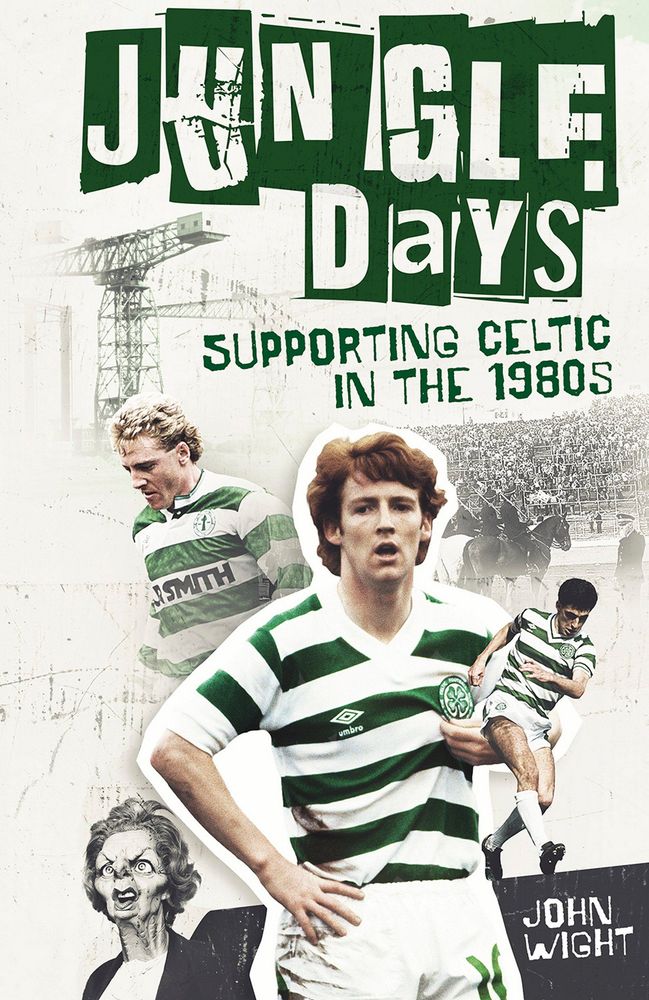
John Wight is the author of "Jungle Days: Supporting Celtic in the 1980s" from Pitch Publishing - which is available here.