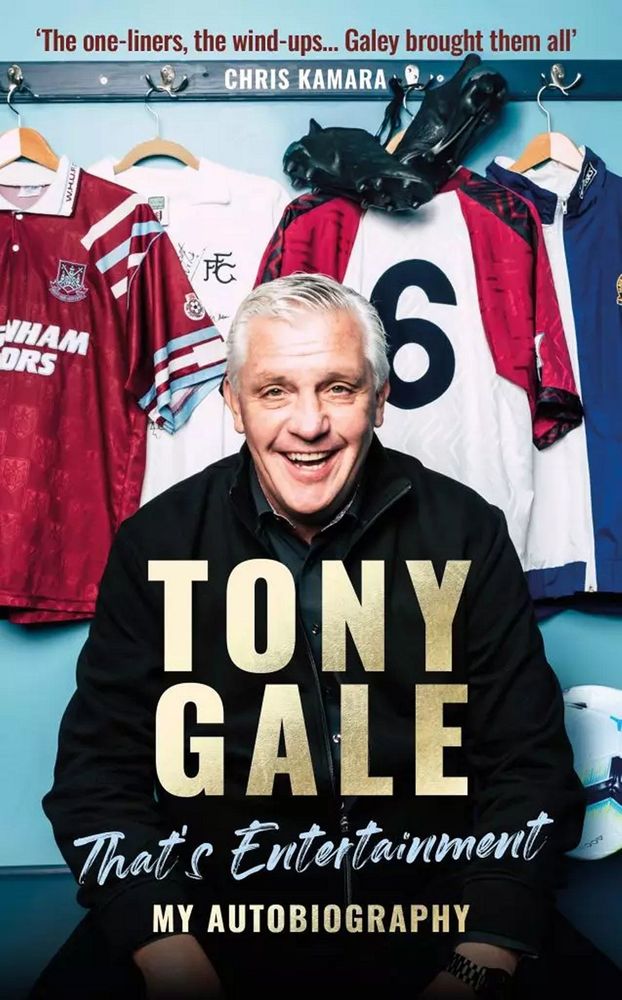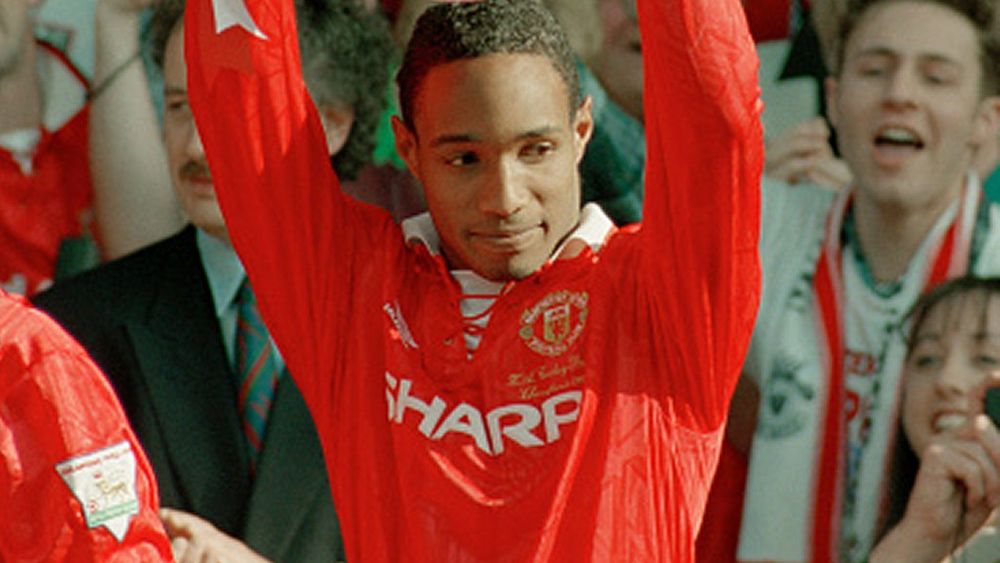
West Ham United's young midfielder had been offered the chance to leave Upton Park, but two of the senior players he trusted told him to wait.
"We told him to have another year at West Ham, really prove yourself," Gale tells Football Presse. "And then by the time you finish that year, not only Manchester United would be in for you, everybody would be in for you."
Ince ignored them.
And, as Gale readily admits, he was right.
"He disregarded our advice, which was understandable as well, and he was right in the end because he went straight into the team. And then after about six months of settling down, he was playing his best football."
There was little doubt that Ince possessed the personality to succeed at the highest level.
"He was a big character, Incy. He was full of confidence. He was a cocky so-and-so, but that's what you need when you're playing at top-flight level."
By the time Manchester United came calling in 1989, however, West Ham had changed dramatically. The club had finished third in the First Division in 1985-86, but were relegated to the Second Division in 1988-89.
The great side Gale had played in had been broken up, John Lyall had departed and the club would eventually suffer relegation. Ince's move became inevitable, but the famous photograph of him holding a Manchester United shirt before the transfer was completed made the situation far more bitter.
"We kind of laughed because he was badly advised," Gale says.
"He had an agent at the time. It was a nice bloke, actually, Ambrose Mendy. He was quite a famous agent. And I think it must have been Ambrose's idea — or, if it wasn't, he should have advised Incy against it — because he hadn't signed and he was holding up the shirt before the deal had been completed."
That was the part that angered West Ham supporters.
"We weren't bothered as players because we knew Paul was a cocky so-and-so and, you know, I was looking forward to him going. But the deal hadn't been done.
"And that's what rubbed the West Ham fans up the wrong way. They were like, 'He ain't even gone yet and he's holding up Manchester United shirts.'"
Gale can laugh about it now, but Ince's departure came against the backdrop of a West Ham team that had once looked capable of winning the English title.
The 1985-86 side finished third in the old First Division, still the highest league finish in West Ham's history. They won 26 of their 42 matches and finished only four points behind champions Liverpool. It remains West Ham's highest-ever league finish.
For Gale, though, the statistics don't adequately describe the football.
"That was the best team that I played in there," he says.
"That was a team that just took the game to everyone, every single game. How are we going to win it? How are we going to win it? Never based on defence. How are we going to win this game?"
The team was packed with players Gale still regards as exceptional: Phil Parkes, Ray Stewart, Alvin Martin, Alan Devonshire, Mark Ward, Frank McAvennie and Tony Cottee among them. West Ham's official history still describes the side as one of the finest the club has produced.
"And the title of the book, That's Entertainment — if that had been on the TV then, people would have been drooling over West Ham."
The problem was that much of the country barely saw them.
A television dispute meant there was a period without live football coverage, leaving West Ham's extraordinary run largely unseen by a wider audience.
"But no one knew anything about us," Gale says. "We just went under the radar."
When live football returned, West Ham provided the perfect advertisement.
Their opponents were Manchester United.
"We beat them 2-1. If you watch that game, Jacob, I think it was early '86 or late '85 — we beat them 2-1 at home. Have a look at that game as an advertisement for football."
Gale's memory of that afternoon is also a challenge to the modern assumption that football is automatically faster and more intense today.
"Tell me now honestly, you think the game's quicker now?"
He remembers challenges, goalmouth scrambles and players simply getting on with it.
"People smashing into each other, getting injured, dislocated shoulders, just trying to play with it. Bryan Robson, just everyone, you know, being — shall we say — respecting opponents, everybody just getting up and getting on with the game."
There was less arguing, less theatrics and, in Gale's memory, a greater emphasis on playing.
"No back chat to referees, everybody getting on with a game of football, which was probably one of the best games I've played in."
West Ham won 2-1 on February 2, 1986, with Mark Ward and Tony Cottee scoring after Bryan Robson had put United ahead.
Gale believes that team deserves to be remembered as more than the side that happened to finish third.
"We had tremendous players. Strike-force, Frank McAvennie. The defenders, myself and Alvin Martin, who used to like playing out the back. World-class goalkeeper Phil Parkes, Ray Stewart.
"I'd always go in favour of my own, or my own friends, I think."
Yet there is a lingering sense of what might have been.
West Ham lost several important players, injuries struck Gale, Devonshire and Liam Brady, and the team that had come so close to the title gradually disappeared.
"We'd sold a couple of players as well, hadn't we? A couple of star players had left. I think Cottee had left, McAvennie had left. Alan Dickens had left, Mark Ward had left.
"So there was gaping holes in what was nearly a title-winning side."
Three years later, West Ham were relegated.
By then Ince was preparing to leave for Manchester United, where he would go on to become a key part of Alex Ferguson's team.
Gale can therefore look back on his advice with a smile. He was wrong about Ince waiting — but perhaps right about the extraordinary West Ham team that surrounded him.
The old defender has no doubt about what that side could have achieved had circumstances been kinder.
"You're never too good to go down," he says.
"But we had — it was probably that phrase, 'you're too good to go down'. But we didn't have our players out on the pitch.
"They were all in the treatment room or they'd gone."
For Gale, that is the real story of West Ham's lost title challenge: not that they finished third, but that for one glorious season they played football with an ambition and freedom that he still believes would have captivated today's audience.
"That was a team that just took the game to everyone, every single game."
Tony Gales book "That’s Entertainment" is from Reach Sport - which is available here.