
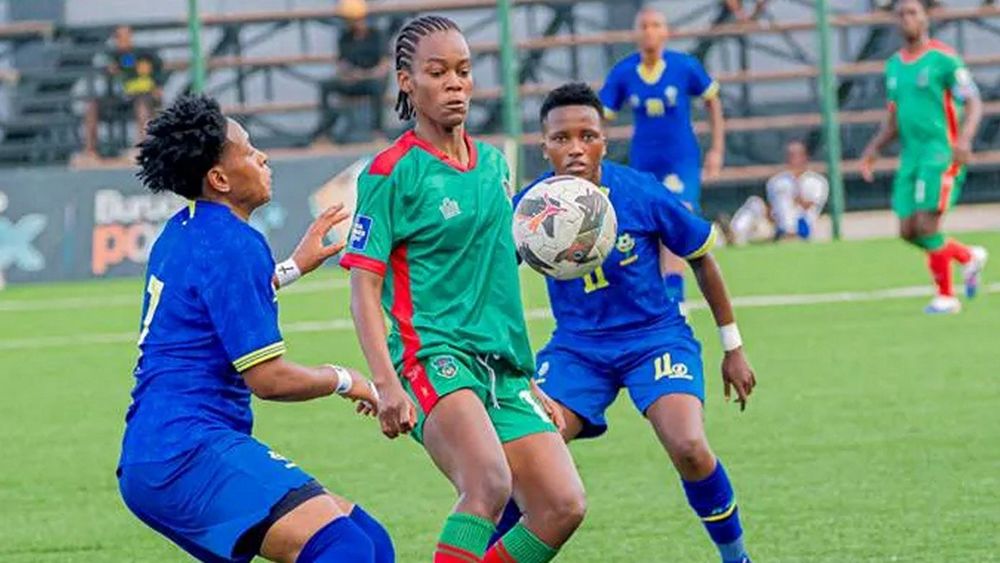
The two nations were joined in qualifying automatically by host Morocco and Cameroon after the four teams reached the WAFCON semi-finals.
The achievement has particular significance for Malawi, who arrived in Morocco as tournament debutants and the lowest-ranked team in the competition. Their progress included a stunning 3-2 victory over 10-time champions and reigning African champions Nigeria in their opening Group C match.
For Algeria, meanwhile, qualification represents the culmination of a rapid rise under French-born coach Farid Benstiti.
The four semi-finalists are guaranteed direct places at the 2027 FIFA Women’s World Cup in Brazil, while the four quarter-final losers entered the African play-offs for the continent’s two places in the FIFA Intercontinental Play-Off Tournament. FIFA has allocated Africa four direct World Cup places and two play-off places for the expanded 2027 tournament.
A troubled tournament finally produces historic moments
The road to Morocco was hardly straightforward.
CAF had initially scheduled the WAFCON for March, partly to avoid a clash with the men’s World Cup, but the tournament was subsequently moved to July and August.
There was then uncertainty over whether Morocco would remain the host after the country had already staged the men’s Africa Cup of Nations and was involved in several other major competitions. South Africa was at one point discussed as an alternative venue.
CAF also expanded the finals from 12 to 16 teams after qualification had already taken place, bringing Cameroon, Côte d’Ivoire, Egypt and Mali into the tournament.
The result has been a competition that has given four nations their first opportunity to compete at the WAFCON. Malawi and Cape Verde made their finals debuts, although their fortunes could hardly have been more different.
The matches have been staged across five venues in Rabat and Casablanca, with the tournament ultimately providing the platform for some of the most important moments yet in African women's football.
For all the uncertainty surrounding the organisation, the football has provided a compelling argument for the expansion.
Morocco survive a demanding Group A
Morocco entered the tournament under the guidance of Jorge Vilda, the former Spain coach who led his country to the 2023 FIFA Women’s World Cup title.
They began with a 4-0 victory over Kenya, with Ibtissam Jraïdi scoring twice, before defeating Algeria 1-0 through Sanaa Mssoudy.
A goalless draw with Senegal completed an unbeaten group campaign and sent Morocco through as Group A winners.
The squad reflects the growing international reach of the Moroccan game. Half of Vilda’s 26 players are based overseas, with representatives in France, Spain, Saudi Arabia, Belgium and Switzerland.
Captain Ghizlane Chebbak remains one of the most recognisable figures in the African game, while goalkeeper Khadija Er-Rmichi and a strong contingent from AS FAR provide a substantial domestic core.
Morocco were the only semi-finalists from the previous WAFCON to repeat that achievement, after defending champions South Africa, Nigeria and Ghana all fell before the final four.
Algeria turn promise into history
Algeria's progress has been one of the defining stories of the tournament.
Benstiti has been building the side since taking charge in 2022, following a coaching career that included four consecutive French league titles with Olympique Lyonnais, work with Paris Saint-Germain, Dalian Quanjian and the OL Reign project in the United States.
His Algerian squad is heavily connected to France, with 14 of the 26 players based there.
The Fennecs opened with a 2-0 victory over Senegal and then narrowly lost to Morocco before defeating Kenya 2-0 to secure progression.
Marine Dafeur and Lynda Bendris scored against Kenya, with Dafeur particularly symbolic of the diaspora connection running through the team.
Born in France, Dafeur represented French youth teams and made two senior appearances before switching allegiance to Algeria in 2023. She now plays for Bristol City.
Bendris was also born and raised in France and currently represents Cannes.
The result is a team combining a substantial European-based playing group with increasingly strong domestic infrastructure.
Algeria had never qualified for a Women’s World Cup before this tournament. That changed in Morocco.
Senegal fall short despite progress
Senegal had reached the quarter-finals at each of their previous two WAFCON appearances but were eliminated in the group stage this time.
They earned four points but were placed in a difficult group alongside Morocco and Algeria, the two teams that ultimately qualified for Brazil.
Seynabou Mbengue gave Senegal victory over Kenya, but a goalless draw with Morocco and the defeat by Algeria ended their campaign.
The tournament also marked the end of Mame Moussa Cissé's long tenure. The coach had been in charge since 2016 and announced his resignation after the elimination.
"Already before coming, I had thought that this AFCON should be my last," Cissé told Seneweb. "And I think today is the time to go. We will leave it to someone else to come and break this glass ceiling."
There are nevertheless clear signs of progress. Senegal have now qualified for three consecutive WAFCON finals.
French-based forward Mama Diop described that achievement as evidence of a programme moving in the right direction.
"It is a real sign of progress," Diop said. "Qualifying for the third time in a row shows that our work is paying off."
South Africa stumble after Japan statement
South Africa arrived with considerable expectations after winning the previous WAFCON, but their defence of the title ended in the quarter-finals.
That followed an intriguing preparation period in which Desiree Ellis's team demonstrated both their potential and their vulnerability against Japan.
South Africa lost the opening friendly 5-0 before producing a remarkable response three days later, defeating the Asian champions 1-0.
Linda Motlhalo scored the only goal, while Refiloe Jane won her 150th cap.
Ellis said the defeat had provided valuable lessons.
"You learn a lot more from defeats than what you learn from wins," she said. "This is part of our preparation."
The response against Japan was a reminder of the quality within the squad, but South Africa could not reproduce that consistency in Morocco.
Malawi produce the tournament's great story
If one team has changed perceptions of African women's football during this tournament, it is Malawi.
The Scorchers had never previously reached a WAFCON finals. Now they are going to the World Cup.
Their breakthrough has been years in the making.
Malawi won the COSAFA Women's Championship in 2023, and the Football Association of Malawi subsequently invested further in the women's game, including the launch of a National Women's Premiership.
The Chawinga sisters have been central to that transformation.
Temwa Chawinga, the Kansas City Current forward, and Lyon attacker Tabitha Chawinga brought elite international experience from careers spanning Sweden, China, the United States, France and Italy.
But Malawi are no longer simply a team built around two stars.
Faith Chinzimu, who plays for Swedish club BK Häcken, provides another attacking threat and scored twice against Angola to secure Malawi's first WAFCON qualification.
Rose Kadzere, who plays for Montpellier, also contributed during the tournament.
The victory over Nigeria was the statement result. Malawi led 2-0 before Nigeria pulled a goal back through Rasheedat Ajibade. Temwa Chawinga restored the two-goal advantage before Uchenna Kanu scored again in stoppage time.
The result was extraordinary given the historical gap between the nations.
Nigeria had qualified for every Women's World Cup since the competition began in 1991. Malawi had never qualified for one.
Now the Scorchers are heading to Brazil.
Recent FIFA reporting had already highlighted Malawi's qualification as a historic breakthrough, while the country's football leadership has credited increased investment in women's football for helping create the conditions for the achievement.
Nigeria and Zambia left fighting for another route
Nigeria's failure to reach the semi-finals means the continent's most consistent World Cup participant must now negotiate the play-off route.
The Super Falcons had won the previous WAFCON and possess one of the deepest squads in African football, with players spread across England, the United States, France, Italy, Mexico, Sweden, Canada, Saudi Arabia and elsewhere.
Esther Okoronkwo welcomed the expansion to 16 teams before the tournament, arguing that more countries should be given the opportunity to compete.
"I think it is great," she said. "We should eventually reach 32 teams because the more countries in the tournament, the better."
Nigeria recovered from the Malawi defeat by beating Zambia 1-0, but a later victory over Egypt was not enough to save Zambia.
Three teams finished Group C on six points, with Malawi winning the group on head-to-head goals, Nigeria finishing second and Zambia eliminated despite having the best overall goal difference.
For Zambia, it was a particularly painful conclusion after their run to the 2023 World Cup knockout stage.
Coach Nora Häuptle had hoped to take the Copper Queens to another World Cup, but they will instead have to pursue qualification through the additional route.
The rest of Africa takes another step forward
The expanded tournament also provided valuable experience for nations outside the traditional hierarchy.
Côte d'Ivoire topped Group B ahead of South Africa, with Burkina Faso recording their first WAFCON victory by defeating Tanzania 2-1.
Tanzania had already made history by beating South Africa in their opening match, their first victory in two WAFCON appearances.
Ghana reached the quarter-finals after a tight Group D campaign, while Mali narrowly missed out on the knockout phase after finishing level on points with Ghana.
Cape Verde's first appearance was another important milestone. Their qualification was built largely through the diaspora, with 17 of their players based in Portugal and others coming from England, France, the Czech Republic and elsewhere.
The country may not have advanced, but the debut itself represents an important development.
A new African order emerging
The most striking feature of this WAFCON has been the extent to which the old hierarchy has been challenged.
Nigeria remain a major force. South Africa remain a major force. Morocco are now firmly among the continent's leading sides.
But Malawi and Algeria have shown that the gap can be closed.
The expanded tournament has also demonstrated the value of giving more countries access to high-level competition. Cape Verde, Malawi, Tanzania and Burkina Faso all leave Morocco with experiences that can accelerate the development of their national programmes.
The question now is whether CAF can build properly on that progress.
The 2027 World Cup will give Africa at least six potential representatives, with four direct places and two more available through the FIFA play-off tournament. The global play-offs will ultimately determine the final three World Cup qualifiers from the intercontinental process.
For Malawi and Algeria, however, that process is already over.
They have made history.
And for a tournament that began amid uncertainty over its scheduling, hosting and even its long-term place in the CAF calendar, that may prove to be the most important legacy of all.
- Read the full version at Tim Grainey's Substack. His latest book is Beyond Bend it Like Beckham on the global game of women’s football. Get your copy today. Follow Tim on Twitter: @TimGrainey