The title won at Tottenham in 1971. The Double. Michael Thomas at Anfield. The triumphs of Arsène Wenger's era. But if he is asked for the Arsenal match that means the most, he goes back to a spring evening at Highbury in 1970.
It was the night Arsenal overturned a 3-1 deficit against Anderlecht to win the Inter-Cities Fairs Cup final 4-3 on aggregate.
And for Wengrow, it was about much more than a European trophy.
"The most important, memorable football match for me was when Arsenal won the Inter-Cities Fairs Cup in 1970," he recalled to Football Presse.
"You know, as I grew up as a little boy, really, they hadn't won anything for 17 years."
That context matters.
Arsenal had won the league championship in 1953, but the club's supporters had endured a long wait for another major trophy. The FA Cup had enormous prestige in that era, but Arsenal had not lifted it since 1950. Then came Anderlecht.
The Belgian side were no soft touch. They had players of genuine international standing, including Belgium captain Paul Van Himst and the Dutch striker Jan Mulder, who had scored twice in the first leg as Anderlecht won 3-1 in Brussels on April 22, 1970.
Arsenal's only goal came from a young substitute called Ray Kennedy. It would prove to be one of the most important goals in the club's history.
Six days later, 51,612 packed into Highbury knowing Arsenal had to overturn the deficit. Wengrow remembers the significance of the occasion more than anything.
"They beat Anderlecht, a very strong side. They lost the first leg 3-1.
"And they won the second leg at Highbury by 3-0."
Arsenal's comeback began in the 25th minute when Eddie Kelly scored, with Jon Sammels and Charlie George involved in the move. But for more than an hour, the tie remained on a knife edge.
Then came the moment that levelled the aggregate score.
George Graham found Bob McNab, whose cross was headed home by John Radford in the 75th minute. A minute later, Jon Sammels scored again.
Three goals in 51 minutes of football had transformed a 3-1 deficit into a 4-3 aggregate victory.
Arsenal had their first European trophy.
And, more importantly to Wengrow, they had finally broken the drought: "That was probably the greatest night for me."
It was the beginning of something.
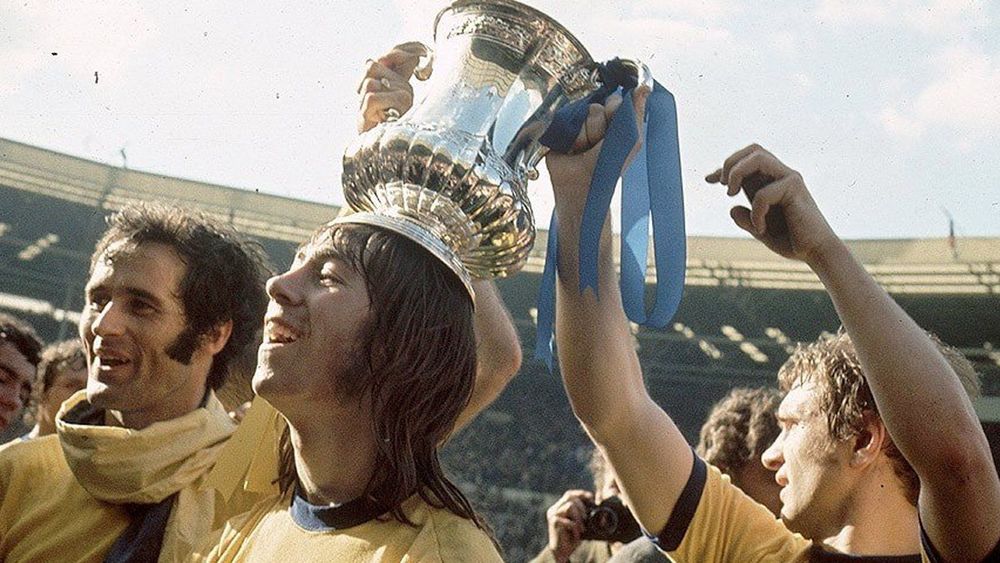
The following season Arsenal would win the league and FA Cup Double, beating Tottenham Hotspur in the final match of the league season before defeating Liverpool at Wembley.
Wengrow was there for those occasions too. But 1970 remained different.
"It was the first one.
"I remember vaguely Arsenal winning the Cup in 1950. They won the league championship in '53.
"But the league championship wasn't as big as the FA Cup."
The distinction is important when understanding the Arsenal of Wengrow's childhood.
"The FA Cup had all the glamour to it.
"The footballers, honestly, it might seem ridiculous now, but my guess is that the footballers of that era, if you asked them at the start of the season what they'd rather win, the league or the Cup, they would go with the Cup.
"The Cup was an enormous tournament. It was the only match that was televised live, live television as well, and it really bestowed glory on the players.
"The whole country got to know them."
And that is why the Fairs Cup mattered so much. Arsenal were not merely winning a European competition. They were finally creating a new generation of memories for supporters who had grown up hearing about the great Arsenal sides of the past.
Years later, Pat Rice would make exactly the same point when recalling the triumph. The former Arsenal captain said the 1970 Fairs Cup victory was the moment his generation finally felt it had matched the achievements of the club's legendary earlier sides.
For Wengrow, it was personal. He had followed Arsenal since childhood and had watched years of disappointment.
"I've been able to enjoy every single Arsenal success over these last 60, 70 years. And I've been present to witness them."
That is the extraordinary part of his story. The 1970 final was not something he discovered decades later in old footage. He was there at Highbury when Kelly scored. He was there when Radford levelled the tie. He was there when Sammels completed the comeback.
And he remembers what the victory represented.
"As I grew up as a little boy, really, they hadn't won anything for 17 years. That was probably the greatest night for me."
The Arsenal team that night would become the core of the side that won the Double twelve months later: Bob Wilson in goal; Peter Storey and Bob McNab at full-back; Eddie Kelly, Frank McLintock and Peter Simpson across the defence; George Armstrong, Jon Sammels, John Radford, Charlie George and George Graham. Bertie Mee was the manager.
On the other side stood an Anderlecht team containing Van Himst, Mulder and a host of Belgian internationals. Mulder had twice beaten Bob Wilson in Brussels.
Then, at Highbury, Arsenal turned the tie around. Kelly scored in the 25th minute. Radford made it 2-0 in the 75th. Sammels struck the decisive third only a minute later.
Arsenal won 3-0 on the night and 4-3 on aggregate.
And suddenly, after 17 years of waiting, Arsenal had something new to celebrate.
Not just another trophy. A European trophy. A trophy that belonged to Wengrow's generation.
"It was the first one. And I've had great nights.
"I've seen Arsenal win the league at Tottenham twice. But the Anderlecht game I just referred to, because it was the first one."
For a supporter who has spent 75 seasons watching Arsenal, that distinction still matters.
The trophies that followed would become part of Arsenal folklore.
The Double of 1971. The drama of Anfield in 1989. The Wenger years. The Invincibles. But before all of that came Highbury, April 28, 1970.
A 3-1 deficit. Three Arsenal goals. And a 17-year wait finally over.
"That was probably the greatest night for me."
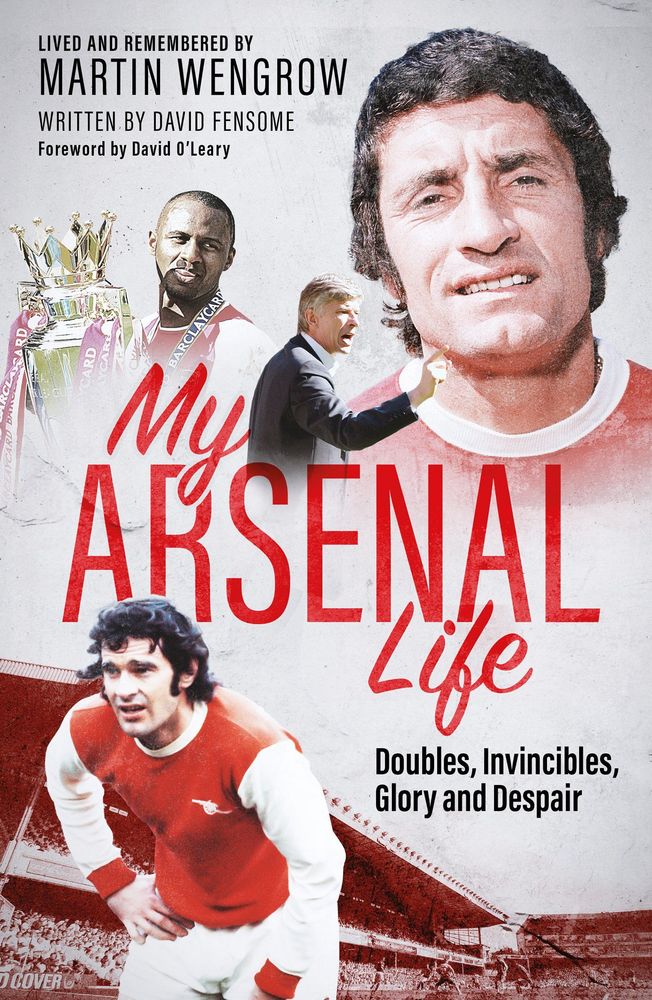
Martin Wengrove's book "My Arsenal Life: Doubles, Invincibles, Glory and Despair" is from Pitch Publishing - which is available here.