
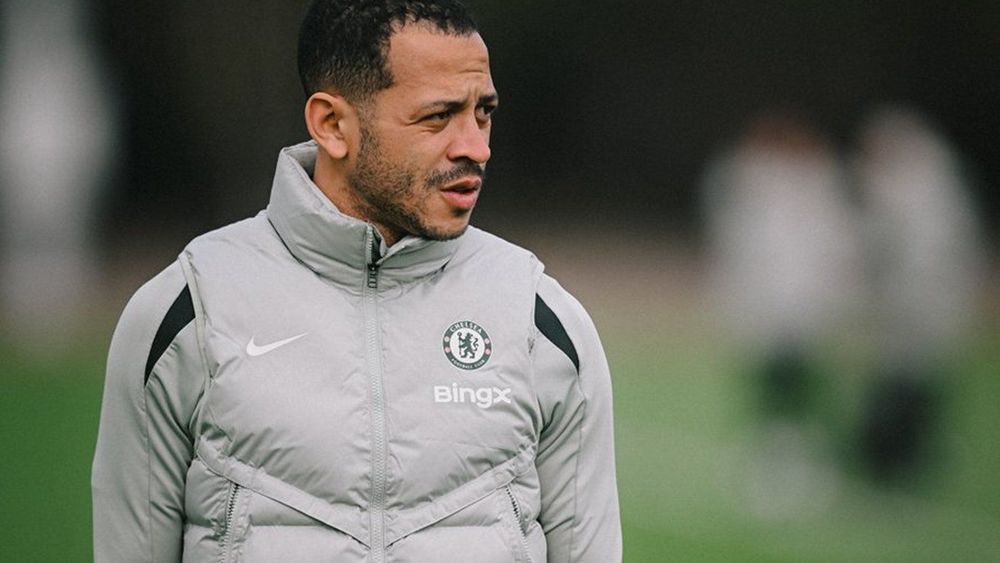
Rosenior was sacked after a disastrous run of five consecutive Premier League defeats without scoring, culminating in a 3-0 loss at Brighton in which Chelsea failed to register a shot on target.
The former Chelsea manager has since returned to France to take charge of Paris FC, but his experience in England remains a subject he is reluctant to discuss in detail.
In an interview with So Foot, Rosenior described his time at Stamford Bridge as both the best and hardest experience of his life, before making a pointed reference to the circumstances surrounding his departure.
"It was the best experience of my life, and the hardest, too. It was fantastic, even though it only lasted four months," he said.
"I don't want to go into details now. I'll talk about it one day, when the time is right. But in a country where tolerance is an important value, what happened there has nothing to do with football."
Asked to explain what he meant, Rosenior admitted he had deliberately avoided giving a direct answer. He then turned his attention to the reaction that followed a positive start to his Chelsea tenure.
"Actually, the moment that worried me the most was at the beginning, when we went through that five-game winning streak," he said.
"Any club would have been happy with such a run, but not Chelsea. You get good results and you're in the spotlight. Then, there was a kind of snowball effect in the media.
"They made fun of those instructions I gave (Alejandro) Garnacho on a scrap of paper when we were down to 10 men against PSG. The clothes I wore became a joke, the way I spoke, too. I'm not a joke!
"You're the first people I'm talking to about this, and probably the last for a long time, but one day, I'll tell you what really happened."
Rosenior's note to Garnacho during Chelsea's Champions League defeat by Paris Saint-Germain attracted considerable attention, as did his manner of speaking and his touchline behaviour. He was also mocked online with the nickname 'LinkedIn Liam'.
The 42-year-old believes the reaction reflected a wider expectation in England about how Premier League managers should behave, arguing that he was never fully accepted on his own terms.
"In England, there's this preconceived notion of what a Premier League coach should be, how he should behave. You have to conform to that standard. People who know me know that I'm someone who tries to be sincere and authentic," he said.
He also questioned the influence of media coverage and social platforms in shaping perceptions of managers and players.
"But I don't have control over how the media describes me or talks about me. What I've understood now, and this is important for all coaches worldwide, is that social media, or the media in general, can dictate public opinion about the quality of a player or a coach.
"This isn't new, of course, but the biggest lesson from my time at Chelsea is knowing that they are also capable of constructing the entire narrative around a club's trajectory."
Rosenior's comments offer his clearest indication yet that he believes the scrutiny he faced at Chelsea went beyond the team's results, although he has stopped short of explaining precisely what he meant by his reference to tolerance.