The former England and Manchester United defender had already experienced the biggest stages in football when a call came from Glyn Williams, who told him Chelsea needed numbers for the FA Cup, with players carrying yellow cards.
Parker understood his role.
“I was just a body, really," he recalled to Football Presse. "They needed numbers because there were players who had yellow cards and there was a chance that they weren't going to be available. So I went there and did what I had to do.
“I wasn't going there thinking I was going to be the main man. I'd already had my career. I knew what I could do and I knew why they'd brought me in. But once you're in a football club, you want to be involved. You want to play and you want to be part of it.”
Instead, Parker found himself inside one of the most intriguing dressing rooms in English football, alongside players whose names and personalities reflected the changing nature of the game.
Gianfranco Zola was already established as one of Chelsea’s great entertainers, while Roberto Di Matteo had arrived from Lazio and Gianluca Vialli brought the authority of an Italian international and Champions League winner.
For Parker, it was a very different environment from the one he had known at Manchester United, but the football itself remained familiar.
“I knew quite a few of the Chelsea lads anyway because of where I was from and the people I had played with. Dennis Wise was there, and there were a lot of West London connections, so it wasn't like I was walking into a completely strange dressing room.
“But then you look around and you've got Zola, you've got Di Matteo, you've got Vialli, and you realise that Chelsea was changing. There were all these foreign players coming into English football and bringing something different.
“I'd played with and against some fantastic players in my career, so I wasn't going there thinking, ‘Wow, look at these people.’ But you appreciated what they could do. Zola was unbelievable. You'd see what he could do with the ball and you'd just think, ‘How has he managed to get himself out of that?’
“It was a really interesting time because English football was changing. Chelsea were right in the middle of that change.”
The club’s transformation also brought a new managerial figure. Ruud Gullit, the former Netherlands captain and one of the most celebrated players of his generation, had become player-manager at Stamford Bridge.
Parker had enormous respect for Gullit the footballer. The two had shared the pitch at Italia 90, but Parker’s opinion of Gullit the manager was very different.
“I respected Ruud as a player. You couldn't not respect him. I'd played against him and I'd played with him at the World Cup. He'd been one of the best players in the world and he'd won everything. He was a fantastic footballer.
“But as a manager, I didn't think he could unify with a whole squad. I felt that he had his favourites and that the foreign players were getting treated differently. He wanted the top foreign players and I felt that some of the English players were being neglected.
“I'd been around football long enough by then to know that managers have their favourites. That's football. But I didn't think it was right when you were leaving people out for reasons that weren't purely football.”
That disagreement eventually became impossible for Parker to ignore.
As Chelsea prepared for the FA Cup final, Parker found himself excluded. Gullit, in Parker’s view, was attempting to keep him away from the occasion altogether.
“He tried to block me off from being there. That's how I saw it. He didn't want me to be around the team for the final.
“But you're not going to do that to me. I'd been part of the group and I'd played my football. I'd earned the right to be around those lads.
“I'd already invited my wife and a friend's wife. Everything was organised. So what was I supposed to do, suddenly tell everybody, ‘Sorry, I'm not going’? No. I wasn't having that.”
Parker decided that being omitted from the matchday plans did not mean he was going to stay away from Wembley.
He went to Chelsea’s North London hotel, where the team was staying, and made his own way into the preparations.
“I went to the hotel. I got on the team bus. I was going to be there because I wanted to be there. I wasn't going to let somebody tell me that I couldn't go to the FA Cup final when I'd been part of that group.
“I got on the bus with the team and went with them. That's what I did. I wasn't trying to make some big statement. I just thought, ‘No, I'm going.’
“Then after the game I went to the post-match event as well. I'd already made arrangements with people, and I wasn't going to suddenly disappear because Ruud Gullit had decided I wasn't part of his plans.
“You're not going to do that to me. That's basically what it came down to.”
The episode says something about Parker’s character as much as it does about his relationship with Gullit. He had spent his career in dressing rooms under strong managers, from Jim Smith at Queens Park Rangers to Alex Ferguson at Manchester United, and had learned that footballers could disagree with authority without losing their self-respect.
“I've always been somebody who will stand up for myself. That doesn't mean you're trying to cause trouble. It doesn't mean you're disrespecting somebody. But if you believe something is wrong, sometimes you've got to say it's wrong.
“I respected Ruud for what he'd achieved as a player, but that didn't mean I had to agree with everything he did as a manager. I'd been around long enough to know the difference between respecting somebody and just accepting everything they say.
“And I wasn't going to sit in my house on FA Cup final day because he didn't want me around. I'd been part of the squad. I'd made friends there. I'd been involved. I wanted to support the lads and enjoy the day.”
For Parker, the Chelsea experience also offered a front-row seat for a much bigger change in English football.
The club was becoming increasingly international, with players such as Zola, Di Matteo and Vialli bringing a different football culture into an English dressing room. Parker could appreciate the quality they possessed while still believing that the traditional English qualities had a place.
“You had players coming in from everywhere. When I was younger, you knew everybody because you had played against them or you'd come through the same system. At Chelsea, suddenly you've got players coming in from Italy and other countries and they're bringing their own football culture with them.
“That's not a criticism. It was actually interesting. You learned from them. You saw different ways of training, different ways of preparing, different ways of looking at football.
“But you also had to make sure you didn't lose the English side of it. You still needed characters. You still needed people who were prepared to put their foot in and compete. You needed people who understood what it meant to play in this country.”
Parker’s Chelsea spell was ultimately brief, but it added another chapter to a career spent navigating changing football cultures and strong personalities.
He had played alongside some of England’s most respected players, competed against the biggest names in Europe and won major trophies with Manchester United. At Chelsea, he found himself part of a club being reshaped by international stars — and involved in a dispute with its player-manager that he still remembers clearly.
“I've never regretted going to Chelsea. I went there because they needed numbers, but I ended up being around some fantastic players and seeing a completely different side of the game.
“You look back and you remember the people. You remember Zola, Di Matteo, Vialli, Dennis Wise. You remember the manager. You remember the arguments and the things that happened.
“And that's what football is. It's not always perfect. Sometimes you disagree with people. Sometimes things happen that you don't like. But you're in a dressing room, you're part of something, and you take those experiences with you.
“I went there thinking I was just going to help out. I ended up having an experience I'll never forget.”
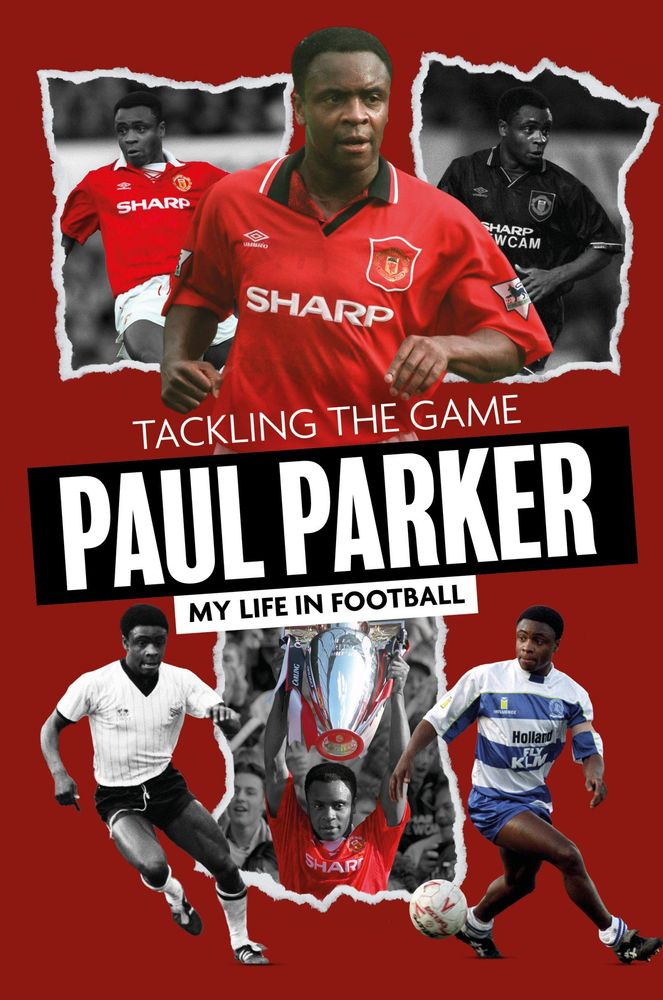
Paul Parker's book "Tackling the Game: My Life in Football" is from Pitch Publishing - which is available here.