By the end of the tournament, he was England’s right wing-back in a new system, with Mark Wright operating as the sweeper behind Terry Butcher and Des Walker.
For Parker, Italia 90 remains the month when everything came together: Sir Bobby Robson’s management, Paul Gascoigne’s emergence, an improvised tactical change and a group of players who were prepared to adapt because, as Parker puts it, they were simply footballers.
He also remembers Robson himself, whose personality left a deeper impression on Parker than any tactical instruction.
“I judge Sir Bobby as he was then, not what he was as a league manager, because Terry Butcher says he was incredibly tough. But as a national team manager, one was softly spoken, the other one could be soft-spoken, but predominantly he was as hard as nails," Parker tells Football Presse.
“Different ways, different ways of managing, but for both of them the end result mattered most. With Bobby, by his manner and with his compassion, everything about him, you just didn't want to let him down.
“The moment when you'd done something wrong, he'd have a way of putting his arms out and talking to you. He didn't shout and scream. He'd just get to you.
“But Sir Alex (Ferguson), it would just be ferocious and it would be about you as a man. How are you going to take it? Are you going to sulk or are you going to want to shove it back up his jacksie?
“Predominantly, everyone nine times out of 10 wanted to shove it back up his jacksie because if you'd done that, the first thing he would do was come in, pat you on the back and tell you well done, because that's what he was looking for.”
With Robson, the emotional connection was different.
Parker, who was still with QPR at the time and didn't land his move to Manchester United until a year later, had enormous respect for the England manager and remembers the effect Robson’s own emotions could have on the players around him.
“The way he managed was softer, and you just felt sad. You felt like you let him down and you wanted to go out there and do it for him and get back.
“On those occasions when you saw that emotional side of him when you had achieved something, sometimes it made you want to cry to see how excited he was.
“If it was your child behaving like that, you'd tell them to calm down, don't be so soppy. But he was an incredible man. He was incredible.
“I just wished that I'd have been around him a lot longer within that England squad, really, to be perfectly honest.”
England’s opening game against the Republic of Ireland in Cagliari ended 1-1, Gary Lineker giving Robson’s side the lead before Kevin Sheedy equalised. Parker did not play that match.
England then drew 0-0 with the Netherlands before beating Egypt 1-0 through Mark Wright’s goal. The result sent England through as Group F winners.
The most significant change had happened almost without warning.
Robson decided to move Mark Wright into a sweeper role and England changed from their familiar 4-4-2. Parker became the right wing-back, with Butcher and Walker alongside Wright. It was not something that had been planned before the tournament.
“It was made during the group stage after the first game. It wasn't thought about if anything went wrong. It just happened.
“Now I can imagine in today's world that they'll have so many alternatives if this, if that, if that. But there was no way, and I think a lot of the other players are back as well, that Sir Bobby had that in his head to start with.
“If someone can tell me different, then I think, wow, there was a good reason why I went along then. Because at that time I'd never played right-back, I'd never played full-back, wing, never played wing-back in my life, and I hadn't played full-back for five years.”
There was one important difference between Parker and the rest of the defensive unit.
He had experience of playing in a sweeper system at Queens Park Rangers. The others did not.
“I was the only one in there who played it because I played it regularly with QPR. Everyone else was back four. England was 4-4-2.
“But I just think we were footballers. We were all generally, in that year, natural footballers. You got asked to do something and you did it.
“Because we were kind of defensive-minded, it wasn't an attacking back five or anything like that. If I was going to attack, I would have been better off doing it as a full-back rather than as a wing-back, where I was starting further up the field than what I would normally have been happy with.
“I was getting the ball on the half-turn, or I was further up the park as well, which was a little bit more busy in there.
“But if you're a footballer, you get on with it and you do it.”
England’s first knockout game was against Belgium in Bologna.
The match remained goalless for 119 minutes before David Platt scored in the final minute of extra time to send England into the quarter-finals.
Then came Cameroon.
England led through Platt before the African side turned the match around with two goals. Gary Lineker equalised from the penalty spot before scoring another penalty in extra time to win the game 3-2.
For Parker, it was exactly the sort of competition Robson had prepared his players to embrace.
“At that time, you just wanted to do something, to achieve something. And there's no bigger stage to achieve anything than to go and do it in a competition for your country.
“There's nothing bigger.”
But alongside the tactical story was the emergence of Gascoigne.
Parker believes Italia 90 represented the peak of Gascoigne’s powers. He had seen the Tottenham Hotspur midfielder develop into an extraordinary player, but in Italy he reached another level.
“Given what happened after that, I have to say yes. I have to personally say, in that time I was with him, that month when I was away from him, that's when he reached that bit up there, that pinnacle.
“It was just, again, you can look at things and you can look at regrets. Gazza's will be that FA Cup final when he lost his head against Nottingham Forest and that challenge he made on Gary Charles. It cost him, it cost him bad.
“But that was just Gazza. It was just his enthusiasm. That was a young child being let out on the playground on his own and the referee hadn't — the parent had the opportunity to calm him down, didn't take the opportunity.”
Parker believes the injury Gascoigne suffered the following season changed the course of his career, although he insists Gascoigne was still a great player when he returned.
For Parker, however, there is a distinction between greatness and sustained greatness.
“He was still a good player, great when he came back. But I think everything affected everything else.
“When you talk about wanting to call him a great, and he was great, when you're talking about really great players, there's longevity there as well and consistency in what they do.
“You can talk about Messi, you can talk about Ronaldo. It's the consistency of doing that. Zidane over that time, Henry. All those kind of things.
“Gazza had that, but we still haven't had a player like Paul Gascoigne.”
England’s quarter-final victory set up a semi-final against West Germany in Turin.
By then, the team that had started the tournament playing 4-4-2 had become something completely different. Parker had adapted to a role he had never played at international level, and England had reached the last four of a World Cup.
The semi-final became the defining night.
West Germany took the lead through Andreas Brehme before Lineker equalised in the 80th minute. Neither side could find a winner in extra time. In the penalty shootout, Stuart Pearce had his effort saved and Chris Waddle sent his over the bar as West Germany won 4-3.
Parker remembers the achievement through Robson rather than the mechanics of the defeat.
The England manager had taken a group of players who had initially been playing a familiar system and allowed them to become something else.
And the emotional bond between manager and players had become one of the defining characteristics of the campaign.
“You just felt sad. You felt like you let him down and you wanted to go out there and do it for him and get back.
“And on those occasions when you saw that emotional side of him when you had achieved something, sometimes it made you want to cry to see how excited he was.
“He was an incredible, incredible man.”
There was still one match to play.
England faced hosts Italy in the third-place play-off in Bari and lost 2-1, Roberto Baggio opening the scoring before David Platt equalised and Salvatore Schillaci restored Italy’s lead from the penalty spot.
Parker started that match at right wing-back, having become an established part of Robson’s new system during the knockout stages.
The medals were gone, but England had finished fourth in the world.
For Parker, the significance of Italia 90 has lasted because of what the players were asked to do, how quickly they adapted and the character of the manager who led them.
He also believes the tournament represented something that modern football has gradually lost.
“We were footballers. We were all generally natural footballers. You got asked to do something and you did it.
“Given at that time, you just wanted to achieve something. There's no bigger stage to achieve anything than to go and do it in a competition for your country.
“There's nothing bigger.”
For Parker, Italia 90 was therefore more than England’s best World Cup performance since 1966.
It was a tournament in which a familiar team became an unfamiliar one, Gascoigne announced himself on the world stage, Robson’s management brought out an extraordinary emotional response from his players, and a defender who had not played full-back for five years suddenly found himself operating as a right wing-back at a World Cup.
It all happened without the elaborate contingency plans Parker believes would surround such a tactical change today.
They were simply told to play.
And they did.
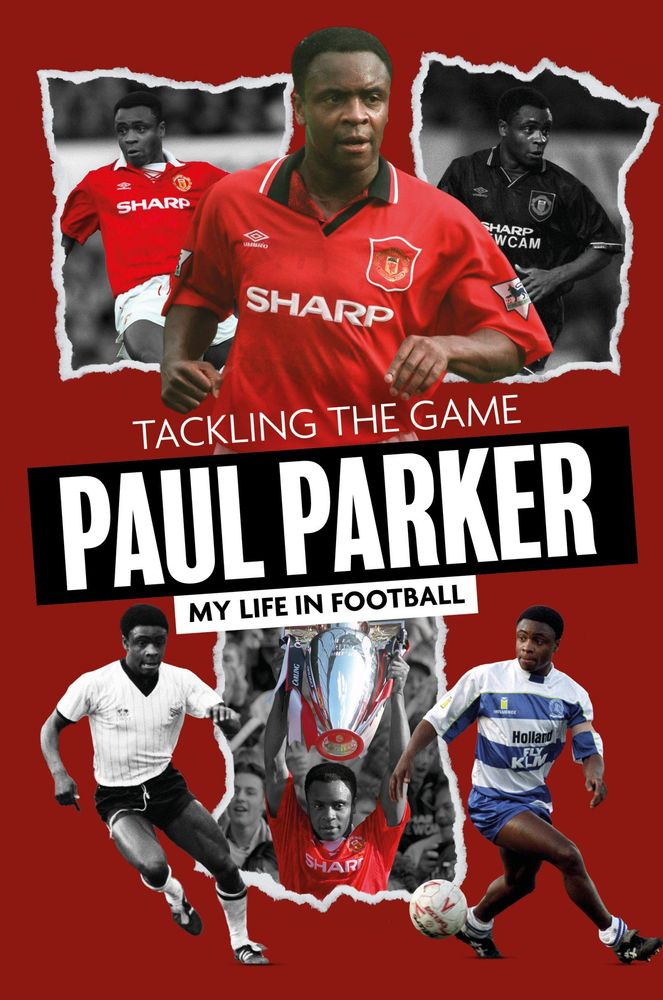
Paul Parker's book "Tackling the Game: My Life in Football" is from Pitch Publishing - which is available here.