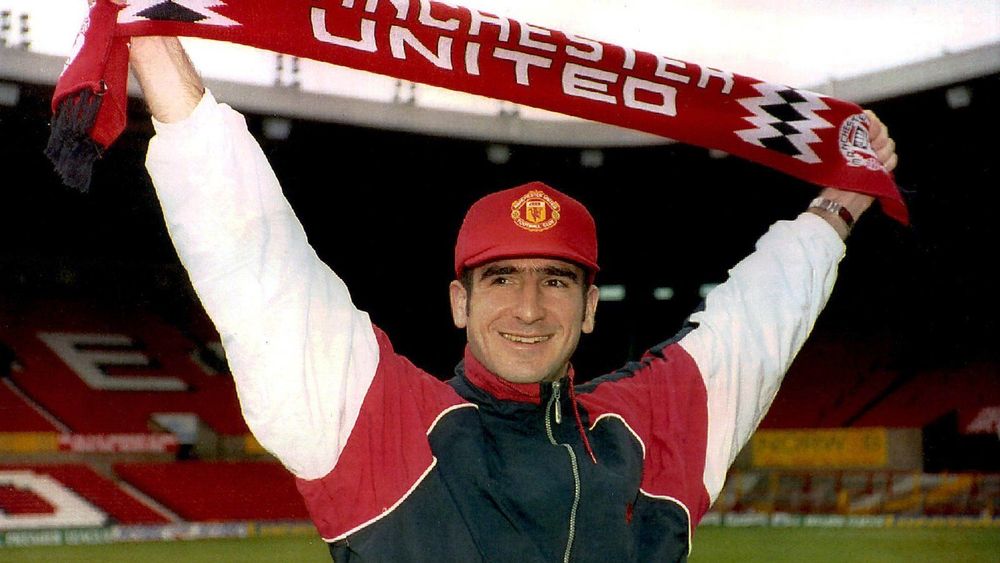
Cantona had already helped Leeds United win the final First Division title before making the move to Old Trafford, but Parker had never paid particular attention to him as an opposition player. What became immediately obvious at United, however, was that the Frenchman possessed something the team had been missing.
“He was someone we didn't really know much about," admitted Parker, speaking to Football Presse. "All the boss had really done was ask the two centre-halves who had played against him. Brucey (Steve Bruce) loved him. When Brucey likes something, he seriously loves it. He absolutely loved him.
“Brucey just loved anyone with technical ability. He would just stare at it and champion them all the time. Him and Pally (Gary Pallister) loved that technical ability. And Pally is a tough nut to crack, but even Pally said good things about him as well.
“Then you see bits of him and then he comes in, and the difference he made was incredible.”
Parker believes Cantona’s arrival could easily have created problems elsewhere. A player with his ability and status might have generated jealousy among established teammates, particularly after joining a dressing room that had already been together for some time.
At Manchester United, however, Parker says the opposite happened.
“I think if he'd gone to any other club, and it happened at Leeds, there would have been bitterness towards him and jealousy because of what he was as a footballer.
“Every time you speak to people now, even now, when people come up to you, they always say, ‘What was Eric like?’ And you're waiting for me to say, ‘Oh, he's an arrogant so-and-so, flash.’
“But Eric was one of us. We'd go out as a team and we'd get to a bar and we'd all say, ‘Put £10 in for a whip.’ Eric would put £20 in the whip because he was going to drink champagne or something like that. He was going to buy it. But he would join in and he would always be with us. He would sit with us.
“Yes, he could sometimes come across as aloof, but he had his own way, and we got to know how he was. He was a gentleman in his manner. Everything about him was just immaculate.”
Parker had already encountered Cantona at the 1990 World Cup, where the Frenchman was part of the France squad. But his real appreciation of him came at Manchester United, where he saw close-up the qualities that made Cantona so influential.
There was also an obvious physical contrast.
“When Eric turned up one pre-season, I'm going to say it was '93-'94, he looked like the Pillsbury Doughboy. Honestly, he was just like that big white thing from Ghostbusters.
“And we all looked at him, and I think everyone looked at the boss and looked at him. But wow, did that man work his nuts off in pre-season.
“He was up the front of anything. He ran and ran, and that was the old-fashioned way of doing it.”
That example mattered to Parker because it challenged the idea that Cantona was simply a gifted footballer who could rely on his ability.
He had the technical qualities, but he was also prepared to work.
“He could run, by the way. He could really run. And when he came back, he worked incredibly hard. That was something you saw very quickly.
“He wasn't just somebody who was going to stand around because he was a great footballer. He worked. And because of the person he was and the ability he had, everyone wanted to watch him and everyone wanted to be around him.”
The impact was not simply about Cantona’s individual qualities. Manchester United had finished the 1991-92 season behind Leeds United in the title race, and Parker believes the team had reached a point where opponents had worked out how to blunt them.
United needed another solution.
“He did raise the level in a way. Everyone wanted to watch him and wanted to just be around him. But it was his personality as well. He added something different to the dressing room in that sense, the way he was.
“We suddenly had a Glaswegian trying to speak French, which wasn't good, to be honest. We'd love to have kicked the Glaswegian out of the dressing room, but he was the manager of the football team, so we couldn't kick him out.
“But the manager fell in love with him. The manager was absolutely in love with the man. And we all did because of the difference he made.
“He gave us, as the boss always said, another dimension, which cost us in the back end of '91-'92.”
Parker believes the previous season’s problems had exposed United’s lack of options. Injuries had also played a part, leaving the team increasingly reliant on Mark Hughes, known as Sparky to his teammates.
The problem was not that United were suddenly a poor side. It was that opponents had learned how to stop them.
“We had injuries and we were reliant, say, on Sparky (Mark Hughes). We virtually, if you say it, ran out of ideas. We just didn't have another way.
“Teams just wanted to punt us. Unless you get to the back end of a season and you're chasing something, every team comes to punt it. Everyone wants to be that team to punt it, especially in today's world where it's all glossy in the media.
“The idea is, ‘Can we stop them? Can we be that team that buffers them a little bit as well?’ And everyone would talk about us for months and months about this.
“That's what happened. We just didn't know how to prepare for it. So the following season, there was more knowledge.”
Cantona did not simply remove the problem. His arrival gave United another way of dealing with it.
Parker says the team had learned from the disappointment of the previous campaign and was mentally better prepared when similar situations emerged.
“We hit a bad spot, but we had a better way of playing out of it. We knew we could get ourselves out of it. So we improved as a team.
“Everything changed and the dressing room changed a bit as well. It just relaxed everything. The boss was more relaxed as well, in certain ways — as relaxed as he could be.
“But there was just that belief after failing. And it was a failure. You can't argue with the fact that whoever wins a league deserves to win a league. Simple as that.
“We were just in better shape mentally to go into the following season. So when we got those games, when teams were trying to put a blanket over everything, we knew how to fight back.”
For Parker, Cantona was therefore not simply the missing goalscorer or the glamorous signing who transformed Manchester United's attack.
He arrived at precisely the moment when the team needed another solution, while his personality allowed him to become part of the existing group rather than an outsider.
The following summer, Ferguson made just one major addition to the squad, bringing in Roy Keane from Nottingham Forest. Parker sees a clear contrast between that approach and the modern tendency to rebuild extensively after success.
“Eric, when he came in that November, made an incredible difference to us. And then you move on to the following season.
“You look at what Liverpool did this summer when they won the league. I'm there during the summer saying, ‘I don't understand Liverpool. You don't do that.’ You don't go out and bring all these players in like what they're doing.
“All Sir Alex did was just bring one player in, and that was Roy Keane. One player. And Roy made a massive difference.”
The title that had escaped United in 1991-92 was finally secured in the inaugural Premier League season, with Cantona playing a central role after his November arrival.
For Parker, the significance of the Frenchman was already clear long before the celebrations.
“He gave us another dimension, but he also gave us belief. That's probably the biggest thing.
“We were just in better shape mentally to go into the following season. We had a better way of playing out of it. We knew we could get ourselves out of it.
“And that's what Eric did. He came in and made an incredible difference to us.”
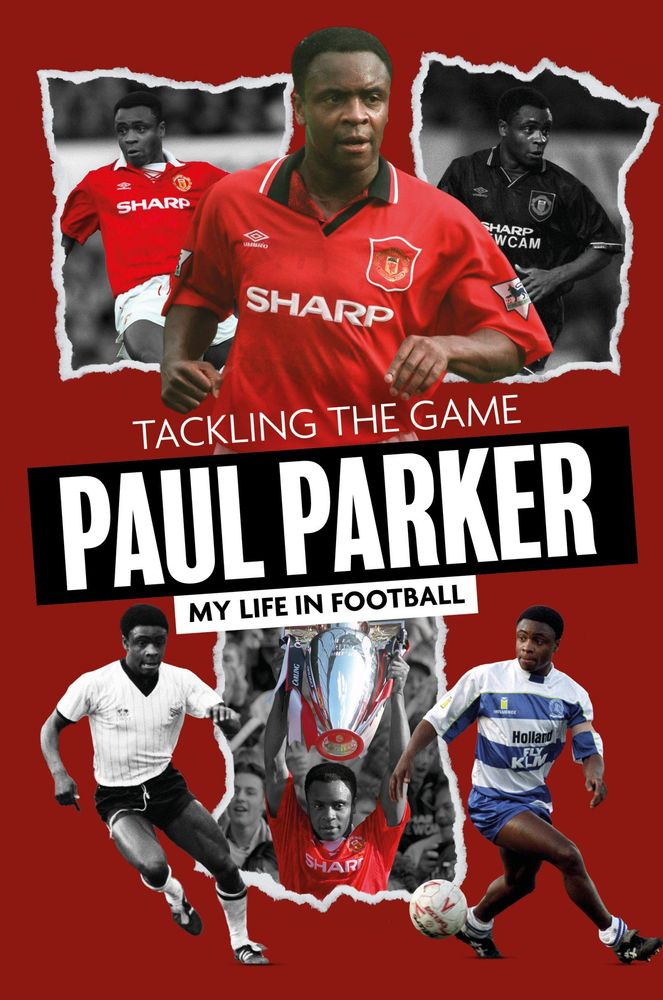
Paul Parker's book "Tackling the Game: My Life in Football" is from Pitch Publishing - which is available here.