
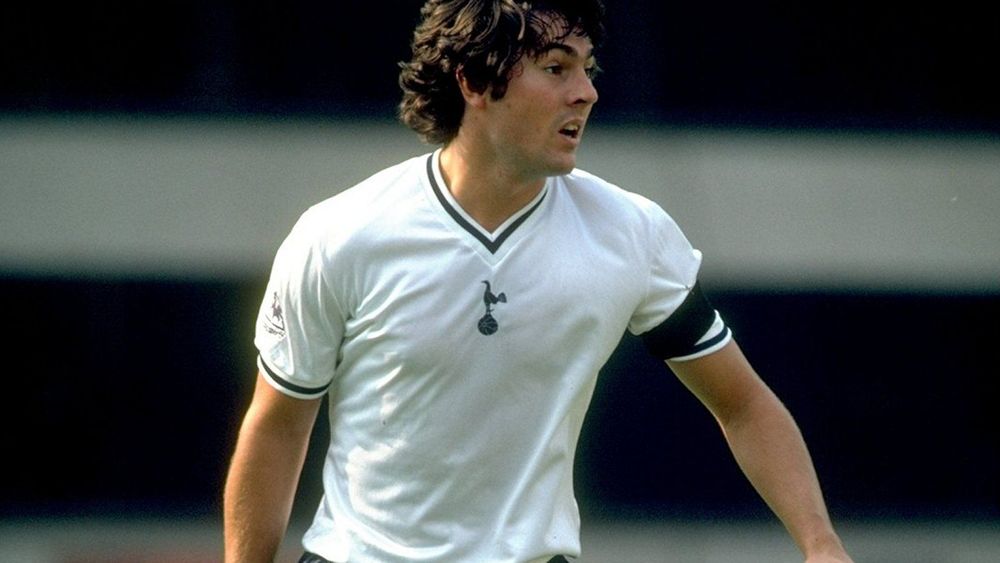
But when asked to compare the likes of Karl-Heinz Rummenigge, Allan Simonsen, Emilio Butragueño and Jorge Valdano with the strikers he faced in England, the former Spurs defender had little hesitation in making his argument.
For Miller, the quality of British forwards during the 1980s was exceptional, with Liverpool's formidable partnership of Ian Rush and Kenny Dalglish standing above the rest. It was an era when domestic encounters could be every bit as demanding as European competition, and when the physical intensity of English football presented its own particular challenge.
He told Football Presse, "To be fair, when we were playing in Europe, we were our teams here, Liverpool, Everton, ourselves, Ipswich, Aston Villa. We all conquered Europe. So we were the best teams in Europe, by the way.
"I know there were Bayern Munich and Real Madrid and Barcelona and whatever, but we were the best. We were winning the trophies all the time.
"And all I'm saying is certainly when you play in England, playing against Woodcock and Mariner at Arsenal, Frank Stapleton and Mark Hughes at Manchester United, Rush and Dalglish, the best two I've ever played against, by the way, as a pair.
"They were the best-ever pairing, trust me, up front. You've seen their record and what they did."
Miller's assessment was not simply based on reputations or the achievements of individual players. He believed the standard of opposition he encountered week after week in England meant that facing European forwards was not necessarily a greater challenge.
"After we played against those lot here, playing against European players was not really much more of a challenge.
"Of course, Karl-Heinz Rummenigge was a good player. I played against him four times, and a number of others. But some of them were nowhere near what we had in England."
He also remembers the considerable physical demands of playing against the country's leading forwards, recalling the battles with Aston Villa's Peter Withe and Gary Shaw, and Everton's Graeme Sharp and Andy Gray.
"Paul Mariner at Ipswich was a great player. Peter Withe and Gary Shaw at Villa. Graeme Sharp and Andy Gray at Everton. Two nasty Jocks, by the way.
"They were very physical. Both good friends of mine. We're all great friends now, by the way. We always see each other, we hug and kiss and cuddle because we know we played in great times.
"But when we played, it was World War III. It was tough going. It was not for the faint-hearted. Today we'd all be sent off in the first five minutes, undoubtedly."
It was an era in which Miller believes defenders had to be prepared for considerably more physical confrontation, with little opportunity to ease themselves into a match.
White Hart Lane was a second home
While the challenges on the pitch helped shape his career, Miller's relationship with Tottenham was also forged through his connection with White Hart Lane.
Having joined the club as a schoolboy, the stadium became a familiar part of his life long before he established himself in the first team. It was more than simply the place where he played his football.
"I loved it, great atmosphere. You know, it became part of my life.
"I remember I used to go there Tuesday and Thursday nights, every day for school holidays. So, I mean, I knew it so well, and it became a second home really.
"It was a fantastic atmosphere when it was full, which it often was for us. We had some glory nights there, not least winning the UEFA Cup.
"Not many teams win a European trophy in their own stadium."
Miller also remembers how the atmosphere could influence visiting teams, particularly those arriving for European fixtures.
"Of course, because of the noise. I'm sure some players, foreign players, were intimidated. Absolutely.
"You've seen Liverpool over the years with the Kop. It certainly intimidated teams. I've watched some of Liverpool's great European nights and it definitely makes a difference."
The noise generated by supporters was an important part of the home advantage, and something Miller believes remains central to Tottenham's identity despite the move away from their historic ground.
The new Tottenham stadium gets his approval
The former defender was not particularly interested in suggesting that everything was better at White Hart Lane. In fact, his assessment of Tottenham's new stadium is overwhelmingly positive.
Asked whether something had been lost in the move, Miller was quick to defend the atmosphere generated by the modern ground.
"No, the new stadium makes noise. It's good.
"It could be better because I think they need to see better football. They need to see a more successful team.
"But no, the new stadium, the noise is fantastic. Sixty-odd thousand. Our fans are wonderful, especially the ones in the South Stand. They're really loud. There's 18,000 of them there. They make a lot of noise.
"So no, the noise is great, by the way. The acoustics, everything else is wonderful."
Miller is also impressed by the stadium's architecture and design, drawing a comparison with Real Madrid's redevelopment of the Santiago Bernabéu.
He believes the two projects share an important connection through the engineers and designers involved.
"The only one now, I believe, that comes close to ours is Real Madrid's new one, and they used the same engineers and designers to do their one.
"But what I'm saying is that shows you how good ours is. They used the same engineers and designers to do theirs as they've done ours."
For Miller, then, the old White Hart Lane will always occupy a special place in his life, but the new stadium has successfully retained something that mattered enormously to him as a player: the ability of Tottenham supporters to make their home ground an intimidating place for opponents.
The surroundings have changed, the capacity has grown and the facilities are on an entirely different scale. But the noise, he insists, remains.