Yet the former forward is equally emphatic about another side of their characters: the toughness that made them formidable footballers.
Speaking to Football Presse, McVeigh recalled how Mabbutt, Tottenham’s club captain, treated everybody with respect, regardless of age or status, and how Hughton took a personal interest in helping him develop. Both men left a lasting impression, but their reputations for decency should never be mistaken for weakness.
Gary Mabbutt’s simple gesture before McVeigh’s Tottenham debut
“You have your Gary Mabbutt at Spurs, who was just an exceptional person because he had the ability to behave like he wasn’t a footballer. Footballers acted and behaved in a certain way, and he definitely carried himself in a much more distinguished way. He just always did everything with respect. It didn’t matter whether you were a 16-year-old or a 36-year-old, he’d treat you equally as well.”
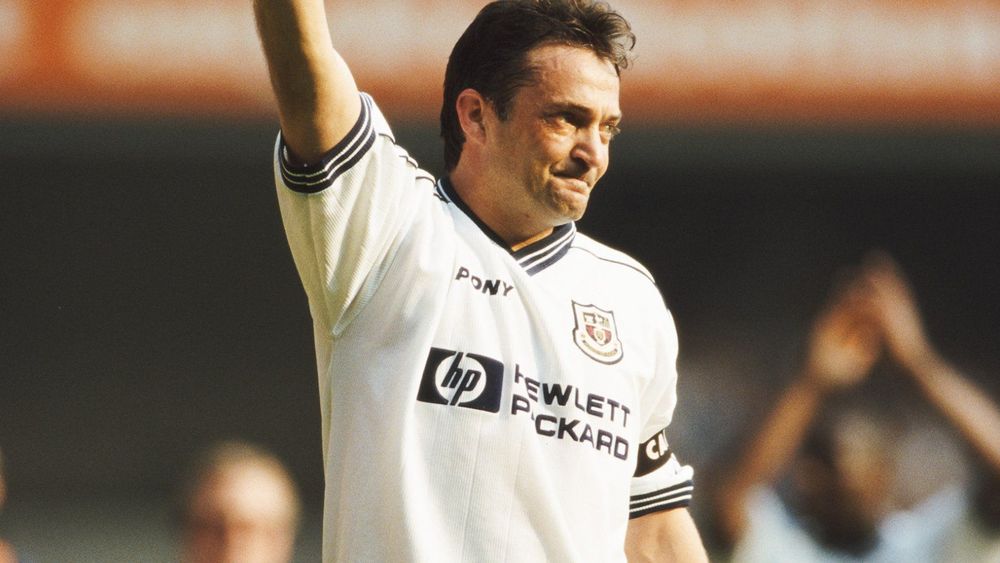
Mabbutt’s consideration extended to the young players trying to establish themselves in the first team. McVeigh recalled how the captain took the time to speak to him before his home debut in 1997, despite being injured and unavailable for the match.
“He said to me before I went out on my home debut, ‘Do you know I scored on my home debut?’ Over the years, Glenn Hoddle scored on his home debut, Paul Gascoigne scored on his, Gary Lineker scored on his home debut.
"And he went through all the players and he went, ‘Paul, I think you’re gonna score on your home debut.’ Anyway, I scored on my home debut.”
It was a memorable piece of encouragement from a senior professional who had no obligation to offer it. For a young forward preparing to play at White Hart Lane, the words of an established club captain carried particular significance.
But McVeigh is keen to make clear that Mabbutt’s generous nature away from the action did not tell the whole story.
“As soon as he trained, there was no nice guy”
“He was the kind of person where he was just so amazing to everybody. And that nice guy image was great, but let me tell you, as soon as he trained, there was no nice guy.”
McVeigh draws a similar distinction with Hughton, whose influence on him began when he arrived at Tottenham in 1994. By then, Hughton had enjoyed a distinguished playing career with the club and represented the Republic of Ireland at the 1990 World Cup. He was working as Tottenham’s reserve-team coach when he first took the young McVeigh under his wing.
“He was the first person as a coach to take me as a player. No one else had asked, no one else had said to me, or I didn’t suggest it. He said, ‘Paul, come on, let’s go and grab a bag of balls and we’ll go and do some finishing after training.’”
McVeigh wondered whether their Irish connection helped bring them together. He had arrived from Belfast, while Hughton had represented the Republic of Ireland internationally despite being born and raised in England. Whatever the initial connection, the relationship became something far more enduring than a coach helping a young player with his finishing.
“Every single person I speak to about him say, ‘Oh, isn’t Chris a lovely guy?’ And I’m like, ‘Yes, yes, he is.’ And that’s when my book launched, and he’s like a surrogate dad to me 30 years after I met him. He still has that, you know, I still have that relationship with him.”
That affection has survived the passage of time and the different paths their careers have taken. Hughton went on to manage several clubs, including Newcastle United, Norwich City and Brighton & Hove Albion, while McVeigh developed his work in psychology, leadership and performance.
Nevertheless, the former forward remembers the competitive side of Hughton just as vividly as the personal support he received.
“There’s no such thing as a nice Chris Hughton”
“But let me tell you, see, whenever he trained on the pitch with us in that, you know, early days, the 1990s, when his legs were still able to carry him around the pitch, there’s no such thing as a nice Chris Hughton.”
McVeigh also invokes Gareth Southgate to illustrate the difference between a person’s public reputation and the demands of professional football. He remembers the former England manager as an opponent who wasted little time making life difficult for a young forward making his Premier League debut.
“Everybody looks at Gareth Southgate, and I do, I’m the same. I look at him and thinking, what an eloquent guy, what a really smart, what a lovely man, what a really nice guy. And yet I made my debut for Spurs away at Aston Villa, and Gareth Southgate was marking me. Teddy and I played up front, and Gareth Southgate and, God rest him, Ugo Ehiogu, who’s passed away now, were playing centre-half.”
McVeigh’s recollection of that afternoon underlines his point.
“And Sir Gareth Southgate kicked the shit out of me that day. The first one was a stud in the back, and I was lying on the floor. He’s like, ‘Welcome to the Premier League,’ because he knew I was making my debut.”
For McVeigh, these experiences reveal something fundamental about the people who succeed in football. Kindness, respect and consideration for others can coexist with the determination to win individual battles and impose oneself on the opposition.
“So this nice guy image is very, very different from what you might see 15, 20 years down the line, or what people perceive you to be, until you have to go out and fight for a ball or fight to try and win a game on a pitch.”
The toughness behind football’s good guys
He returns to Mabbutt and Hughton to make the point explicit.
“There’s no such thing as a nice Chris Hughton. No such thing as a nice Gareth Southgate. There’s no such thing as a nice Gary Mabbutt. These nice guys cannot — it’s impossible to exist in football as a nice guy because essentially every single one of them would have broken someone’s legs if they had to.”
It is a deliberately provocative description, but one that captures the distinction McVeigh wants to draw. Mabbutt’s encouragement before a young player’s home debut and Hughton’s willingness to stay behind after training were expressions of their character, not evidence of a softer competitive edge.
Both men understood that looking after people and competing fiercely were not opposing qualities. For the young forward who encountered them at Tottenham, their example demonstrated that football’s toughest competitors could also be among its most decent people.
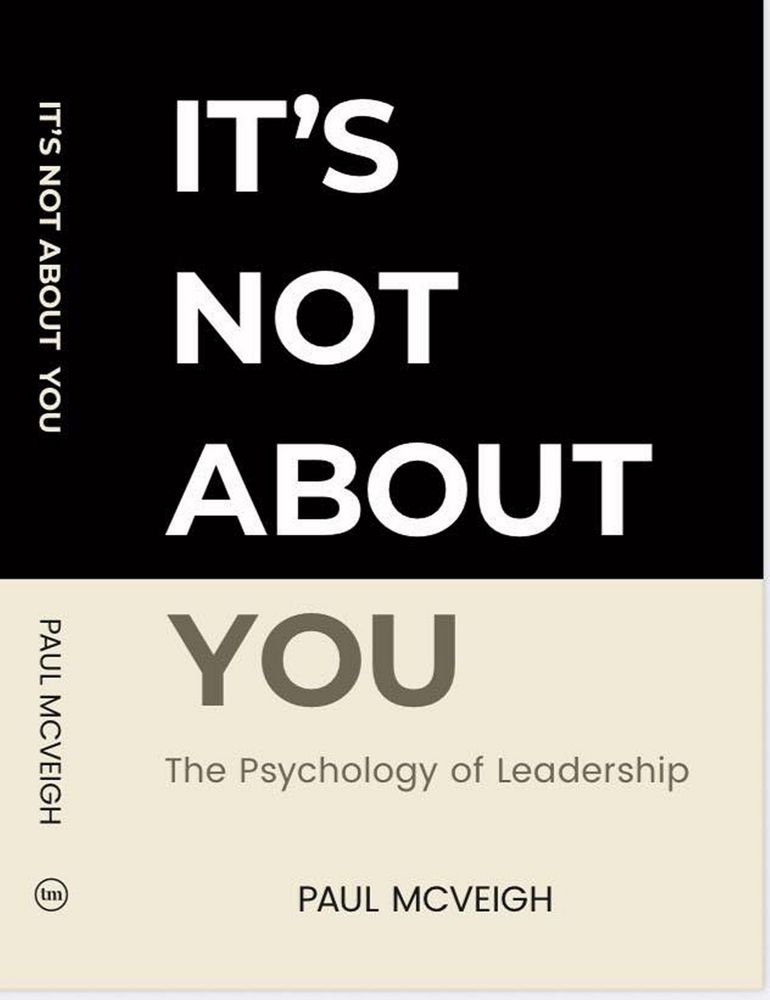
Paul McVeigh is author of "It's Not About You: The Psychology of Leadership" - which is available here.