
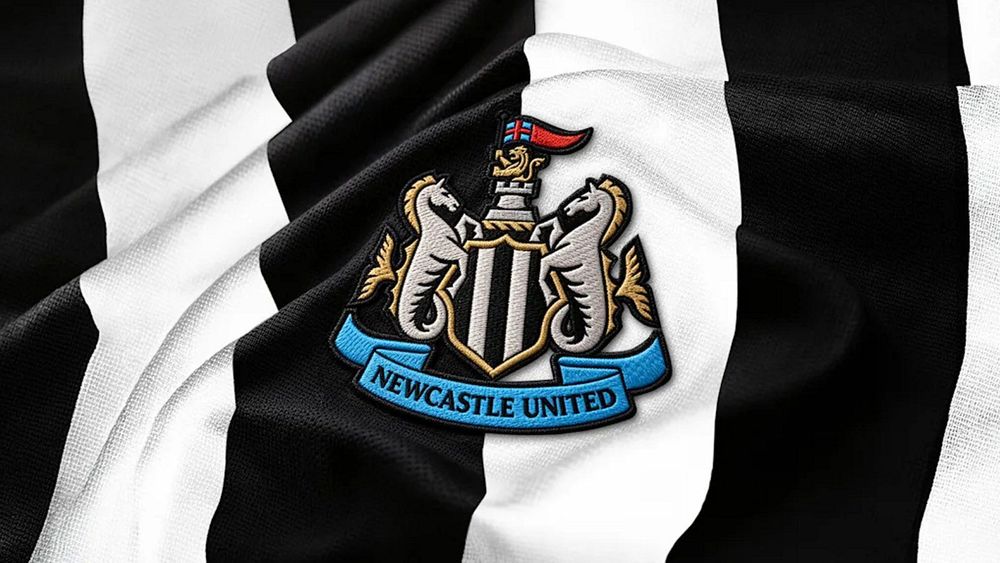
The Magpies recently revealed a new primary crest following an extensive consultation with supporters, but the wider rebrand also includes alternative marks and signage designed for different uses.
Chief marketing officer Steven Taylor says the approach was shaped by fan feedback, with the castle emerging as the most important element of the club’s identity during the consultation process.
“We’re not just announcing a new crest, we are announcing a new brand identity for the club,” Taylor told BBC Newcastle.
“It includes a secondary mark that includes a castle, and we selected the castle because in the fan survey, it came across loud and clear that we should treat the castle as the most sacred and important part of the crest.”
Newcastle United’s consultation showed strong support for retaining the historic elements of the badge, with the castle, shield and other traditional features all preserved in the updated design.
The changes will now begin appearing across St James’ Park, where hundreds and potentially thousands of existing versions of the old crest will gradually be replaced.
“There is a rolling implementation where across the stadium we have hundreds if not thousands of the crest that will gradually be replaced,” Taylor said.
The new identity is already being introduced across Newcastle’s digital channels, while the updated primary crest will eventually appear on the club’s playing kits.
The wider project forms part of Newcastle’s ambition to develop the club commercially and establish it as a genuine title contender.
Taylor said the work went “way beyond the crest”, describing the new identity as a storytelling platform intended to increase engagement with supporters around the world.
Newcastle’s updated branding therefore represents more than a change to the badge itself. The club is attempting to establish a flexible visual identity that can work across the stadium, digital platforms, merchandise and its wider global ambitions.
The castle’s prominent role is also a direct reflection of supporters’ priorities, with the club choosing to build its secondary identity around one of the symbols most closely associated with Newcastle and the city.
The rollout will now continue gradually as the club moves towards its longer-term commercial and sporting targets.
Newcastle’s own consultation confirms that the castle was overwhelmingly identified by supporters as an essential element of the crest, while the new identity is being phased across physical and digital platforms.