A conversation with a teenage Wayne Rooney at Goodison Park helped him find his answer.
Mick Rathbone had spent years wondering why some footballers could walk into the biggest matches of their careers without a hint of anxiety, while others struggled to perform despite possessing all the necessary ability. At Everton, he found himself working alongside Wayne Rooney, a teenager whose talent was already apparent. But it was not just what Rooney did with a football that stayed with Rathbone. It was the way he approached the game.
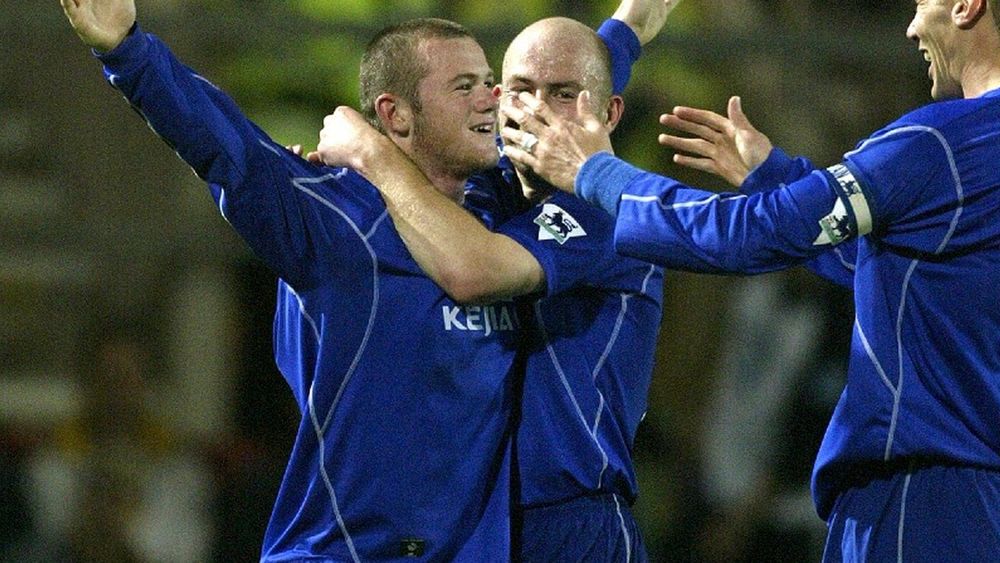
“I was there when Wayne scored that goal," Rathbone smiles when recalling that moment to Football Presse. "That was my third game for Everton. That was jaw-dropping, and that was the announcement of the best player of a generation. We all knew it anyway at the club, but that was the kind of official unveiling of this generational superstar.
“Was Wayne Rooney the best young player you ever saw? Trevor Francis in the early days was. But, yes, Wayne was.”
Rooney's extraordinary strike against Arsenal in October 2002 announced him to the wider football world, but Rathbone had a more personal reason for being interested in the young forward. His own playing career had been shaped by a lack of confidence, and he had spent much of his life trying to understand why.
“All through my first book, because I had no confidence when I was a young player at Birmingham. The book's a 35-year journey to success in the cup finals as a physio, but it's about doubting yourself and it's about anxiety and it's about underachieving because you're terrified of playing. And really, the first years at Birmingham in the top division are very, very dark.
“So the book carries a fascination through me of that kind of anxiety and performance anxiety. I tell the story in my first book. It's always, for me, that quest. Why are some not nervous? Why are some nervous? Why was I terrified? Because I was such a good player.”
Rathbone had left Birmingham decades earlier and established himself in football medicine. By the time he arrived at Everton, he had spent years around players at different levels of the professional game. Yet the question remained: what allowed some footballers to thrive when the pressure was greatest?
His first Merseyside derby at Goodison Park provided an answer he would remember for the rest of his career. It was a televised Saturday afternoon fixture against Liverpool, and Rathbone was preparing for kick-off when Rooney wandered into the medical room.
“Anyway, it's now 30 years later since I've left Birmingham, and I'm now at Everton. I'll tell this story. It's the first Merseyside derby for me and for Wayne, at home at Goodison, four o'clock Sky game. So I'm getting ready, an hour and a half before kick-off.
“I'm nervous. I'm not playing. But I'm nervous. I'm only the physio. My hands are sweaty. Wayne comes into the medical room, he's kicking the ball against the wall, and I say, ‘Wayne, relax, enjoy, don't be too nervous.’
“He goes, ‘Baz, I'm not nervous.’”
Rathbone was surprised. He was feeling the pressure of an occasion in which he would have no direct influence on the result, while Rooney, one of the players expected to make the difference, appeared entirely comfortable.
“But in a funny kind of way, for me, I needed him to be nervous. I needed that. I closed the door, went to him, I said, ‘Mate, it's okay to be nervous.’
“He goes, ‘Baz, I'm no more nervous than if I was going out to play in the park with my school friends.’
“And I say in my book, in a nutshell, 30 years of searching for me, that's it. Some people are born to be at that level and some people aren't.”
For Rathbone, it was a revelation rooted in his own experience. He had spent years questioning why he had been so frightened of playing, despite believing he was good enough. Rooney's answer suggested that, for some footballers, the biggest occasions did not feel fundamentally different from the game they had always loved.
It was a distinction Rathbone continued to observe as his career took him through different levels of the professional game. The players at the top were not simply better footballers, he believed. They also possessed a particular kind of self-belief.
“When I started being a physio at Halifax in the '90s, in front of 2,000 people, I noticed the players when they came in looked really nervous, tense and that, like it was a massive big deal.
“Fast forward 35 years, I'm at Anfield for the Merseyside derby, or at Man United, or at Chelsea, or at Goodison when they played Liverpool maybe, and your Nevilles and your Kales and your Tim Howards, your Carseys, your Kev Kilbans, they're coming in, they're laughing and joking.
“And I say in my book, that's the difference. These guys are born to be at the top. And yes, they're good players, but the ones in League Two are good players. The ones at the top, I guess, are slightly better players. Of course they are. But it's more than that. It's that innate belief and that understanding that this is where you live.”
Rathbone was careful not to suggest that ability, preparation or hard work counted for nothing. He had spent his professional life helping players recover from injuries and return to the pitch. But his experiences had convinced him that confidence was not something a physio could simply supply with a few encouraging words.
“Everything's a problem, everything's nervous and that, like, you know what I mean? So I saw that in that time at Everton, something I've been looking for and searching for for 30 years. You know, why was I scared? Why was I so nervous?
“And I kind of concluded, I said in the first book, it's just innate. It's part of who you are, what you are, that self-belief. And you can't really put an arm around your shoulder and say, ‘Come on, you're fantastic.’ You know, it's in you. It's what you believe. It's your DNA, for want of a better word.”
That was what made Rooney's response so memorable. Rathbone had been nervous before a derby that would shape the mood of an entire city, yet the young forward had described the experience in the language of a child heading out to play with his friends.
Rooney's talent was obvious. His goal against Arsenal had already provided the spectacular evidence. But Rathbone's memory of the teenager in the medical room offered something more personal: a glimpse of the self-belief that, in his experience, separated those who could inhabit football's biggest stages from those who struggled to feel comfortable there.
For a man who had spent 30 years searching for an explanation, Rooney had delivered it in a single sentence.
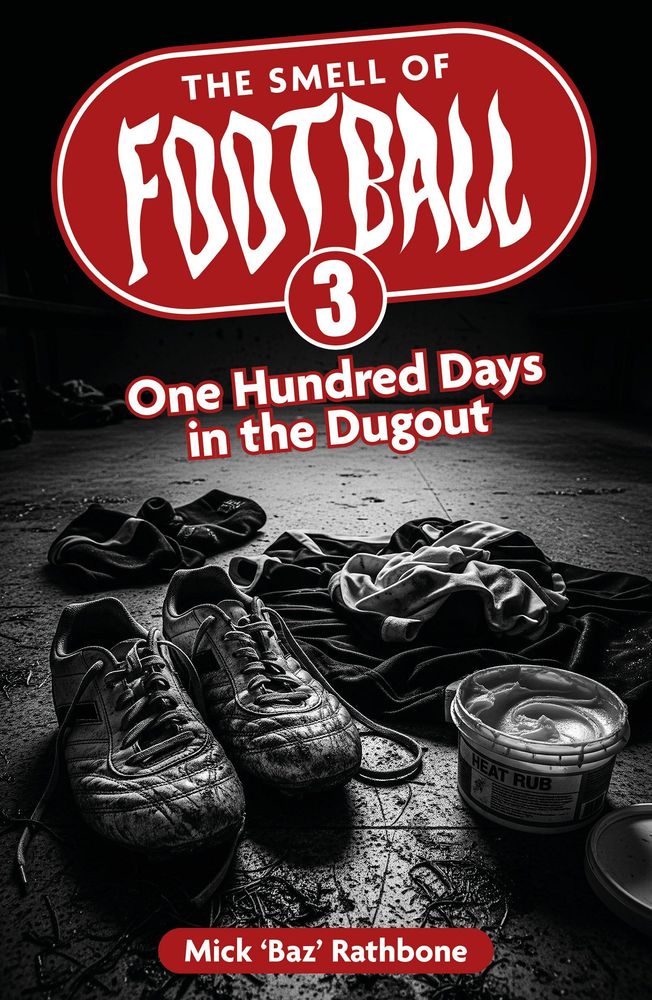
Mick Rathbone is author of "The Smell of Football III: One Hundred Days in the Dug Out" from Pitch Publishing - which is available here.