He was inside.
He recalled to Football Presse, “I've been lucky because I've been at all the games where we've also lost major finals, European Champions League, for example, to Barcelona, and then FA Cup finals. But I've been able to enjoy every single Arsenal success over these last 60, 70 years.
“And I've been present to witness them. I consider myself very fortunate because I grew up with so many of the players who had great success in the 70s.”
That access reached its extraordinary peak in 1971.
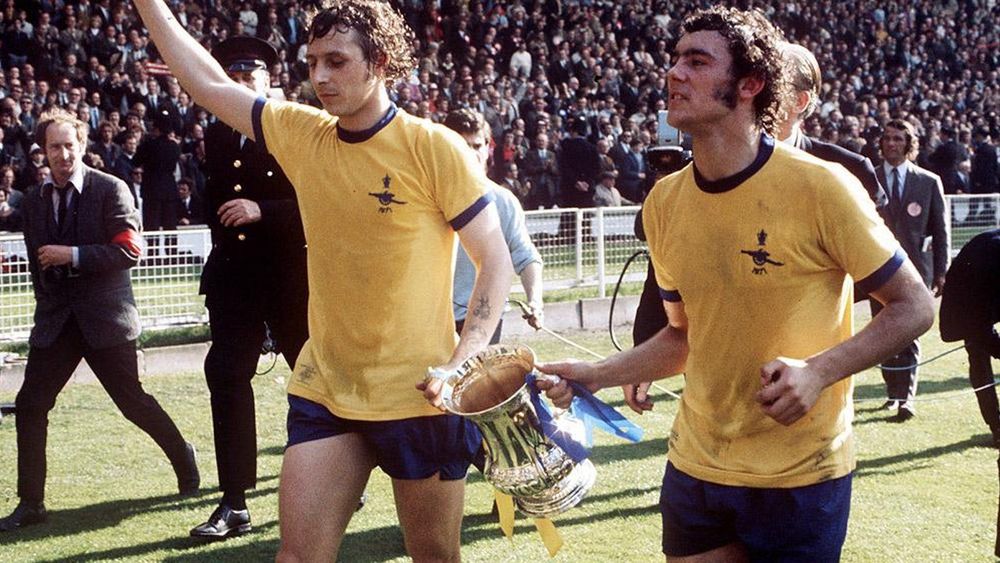
Arsenal clinched the First Division title at White Hart Lane on May 3, beating Tottenham 1–0 through Ray Kennedy's late header. Five days later they returned to Wembley and beat Liverpool 2–1 after extra time to complete the club's first Double. George Graham was in the Arsenal side for both matches.
For Wengrow, however, the significance went far beyond the trophies.
“When they won the first leg of the Double at Tottenham I was in the changing room with the players who were my friends as well as my heroes. Then on the following weekend Arsenal played Liverpool at Wembley to win the Cup and the Double, and I was able to be in the changing rooms again with them, celebrating and drinking with the Cup.
“No one has ever done that before, no one will do it again.”
It is difficult to separate the extraordinary access from the friendships that made it possible.
Wengrow was not simply a supporter who had found a way into the inner sanctum for one special occasion. Over the years, the players he had grown up watching became people he knew personally, and some became close friends.
“That was the thing. I grew up with so many of them. They weren't just footballers to me anymore. They were friends.
“And that's why I was able to be around them in those situations. It wasn't that I was some supporter who suddenly appeared in the dressing room because Arsenal had won something. I knew these people. I'd grown up with them, and we'd stayed close.”
The relationship lasted for decades.
“Particularly close friendships, I still have. But the problem is now that we're losing people. I've still got people I'm in touch with, but it does make it difficult, to be truthful with you.
“I've been very lucky in my life with the people I've known through Arsenal. Some of them were my heroes when I was a little boy and then, somehow, they became my friends. That's something that is very difficult to explain to somebody who hasn't experienced it.”
Frank McLintock remains one of the clearest examples of that connection.
Wengrow still speaks about the former Arsenal captain with obvious affection, describing him as one of the most generous and outgoing people he ever met.
“Frank McLintock, I'm still in touch with all the time. He was the most generous, outgoing person you could meet.
“It's funny because George and Frank were the best of friends, but they couldn't be more different. Frank was the most generous, outgoing person you could meet, and George was the exact opposite. And yet they've stayed friends.”
The friendships also changed Wengrow's experience of Arsenal's history. He did not simply witness the great moments; he sometimes experienced them from inside the group that had created them.
“To crown it all, to be able to celebrate in the changing rooms at White Hart Lane and then at Wembley five or six days later, I don't think anybody's got a story remotely to match that.
“I've been there for so many of the great moments, but the 1971 Double was different because of the people. These were the players I'd grown up watching. They were my heroes, and suddenly I was celebrating with them.”
The intimacy of those memories is what makes Wengrow's story different from a conventional account of Arsenal's first Double.
He remembers the team, the trophies and the victories, but he also remembers the people behind them — the friendships that survived long after the medals had been won.
And after more than seven decades following Arsenal, that may be what matters most to him.
“I've been able to enjoy every single Arsenal success over these last 60, 70 years. And I've been present to witness them.
“I consider myself very lucky that I grew up with so many of the players who had great success.”
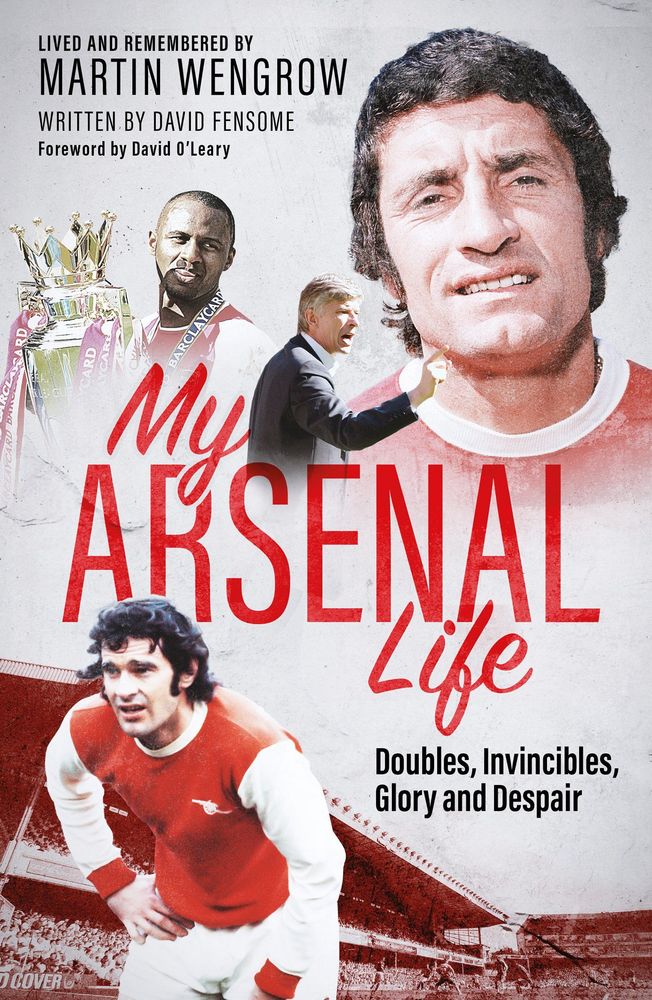
Martin Wengrove's book "My Arsenal Life: Doubles, Invincibles, Glory and Despair" is from Pitch Publishing - which is available here.