It had lost belief.
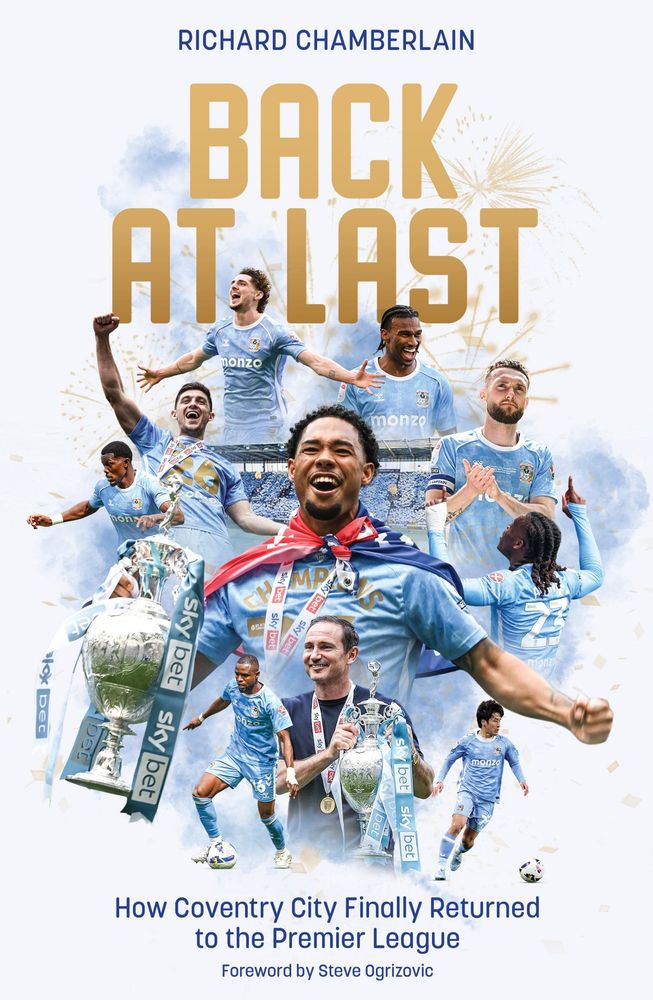
Richard Chamberlain, the Coventry supporter and author of "Back at Last", remembers a club that had gradually become accustomed to survival rather than success, even before its extraordinary fall from the Premier League to League Two.
“I think Coventry, the city, the football club, we had a losing mentality for many, many, many years,” Chamberlain tells Football Presse.
“Going back to even in the Premier League, we were always up against it, battling to survive. So I didn't realise it at the time. But then when you come down, it's difficult to switch that to a winning mentality.
“And I don't think we ever did that until Mark Robins came in and definitely under Frank Lampard. Lampard is somebody who has won way more games than he's ever lost as a player.
“You can see from what he does as a manager, and he goes to win games, whereas for a long time, fans, we would think of it as, well, let's not lose. And I think we were stuck with that mentality.
“For a very, very long time. And it's difficult to sustain some kind of promotion push when you're thinking, let's just get a draw here, or you go into the final minutes of games thinking, let's hang on.
“And I think that's something that has changed at Coventry. Mark Robins started it, Frank Lampard has definitely taken it on. But yeah, I think that was a major barrier for the club of ever getting back.”
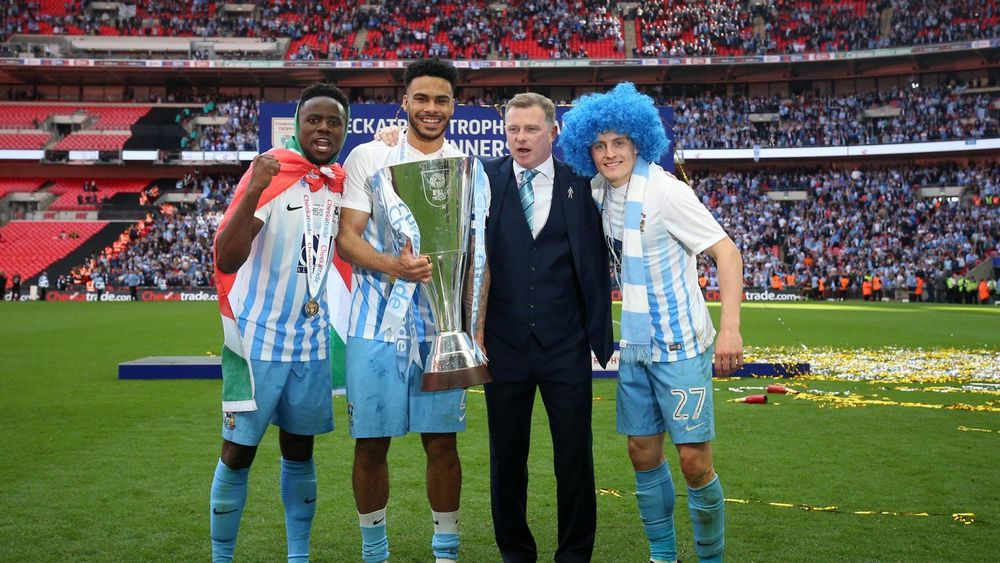
That is why Robins' legacy at Coventry cannot simply be measured by two promotions, an FA Cup semi-final or taking the club to within a penalty of the Premier League.
He changed the way the club thought.
Robins returned when Coventry were heading towards League Two and, although relegation eventually arrived, he then took them back up at the first attempt. Two years later they were promoted to the Championship.
But Chamberlain believes the deeper change was happening away from the league table.
“The belief just ebbed away and ebbed away and ebbed away,” he says. “There's still, it still was there a little bit, but it was diminished each season.
“What happened afterwards was probably the lowest points because there was just apathy around the club and people stopped caring. And we lost the generation of fans because, you know, with the stadium and all of this and not playing in Coventry, there wasn't any kind of — nobody cared about the football club within the city.
“You know, obviously the core group of fans that do, but going to the city now, everyone's talking about football because the team's back on the up. Whereas there was a period where there was apathy.”
That apathy had become particularly stark when Coventry dropped from League One into League Two.
“When we were relegated, we were in League One and we were absolutely awful in League One. And we went down to League Two,” Chamberlain says.
“And it was that apathy, but there was also anger at the ownership, at the fact that we were playing, we'd gone to Northampton and we'd sold all the players on the cheap and all of this kind of thing.
“So I think that was probably the lowest point when we went down from League One to League Two because you just thought, you didn't even have that thinking of, well, we'll come straight back up at that point.”
Robins inherited that club.
He also inherited supporters who had spent years watching managers arrive, provide a brief burst of optimism and then disappear.
“We always had a new manager, you know, so you always get that optimism and you think, oh, maybe under this manager, we might do something and we'd get a new manager and we would always start well.
“So you very quickly buy into it and think, oh, no, this is different. But yeah, within six months, we were back to square one again. So yeah, there wasn't a lot looking back to base it on.”
Robins eventually built something that did not disappear after six months.
He established an identity, rebuilt the relationship between the team and its supporters and, most importantly, made winning feel normal again.
That is why his departure in November 2024 was so unpopular. Nobody was demanding that he be sacked, according to Chamberlain, and there was an expectation that he would eventually turn another difficult spell around.
“I think it was a very unpopular move to sack Mark Robins to start with because he'd done so well,” he says.
“Normally managers are sacked, fans are demanding it. Like Gordon Strachan, fans wanted him sacked. He was sacked. Nobody was calling for Mark Robins to be sacked.
“Everybody would have been happy for him to be given, you know, at least until Christmas, because traditionally we would start poorly and then turn it around under Mark Robins.”
Frank Lampard ultimately completed the job Robins had started, taking Coventry back to the Premier League in 2026 after a 25-year absence. But Chamberlain is clear that the foundations belonged to his predecessor.
Lampard has carried the winning mentality forward.
“Mark Robins started it,” Chamberlain says. “Frank Lampard has definitely taken it on.”
And that may prove to be the most important part of Robins' Coventry legacy.
He did not get them back to the Premier League.
He made them believe they could.
Robins is now trying to produce another revival at Stoke City, where he remains manager after taking charge in January 2025.
For Coventry, though, his place in the story is already secure.
The club that eventually returned to the Premier League was no longer the club he inherited.
Richard Chamberlain is author of "Back at Last: How Coventry City Finally Returned to the Premier League" from Pitch Publishing - which is available here.