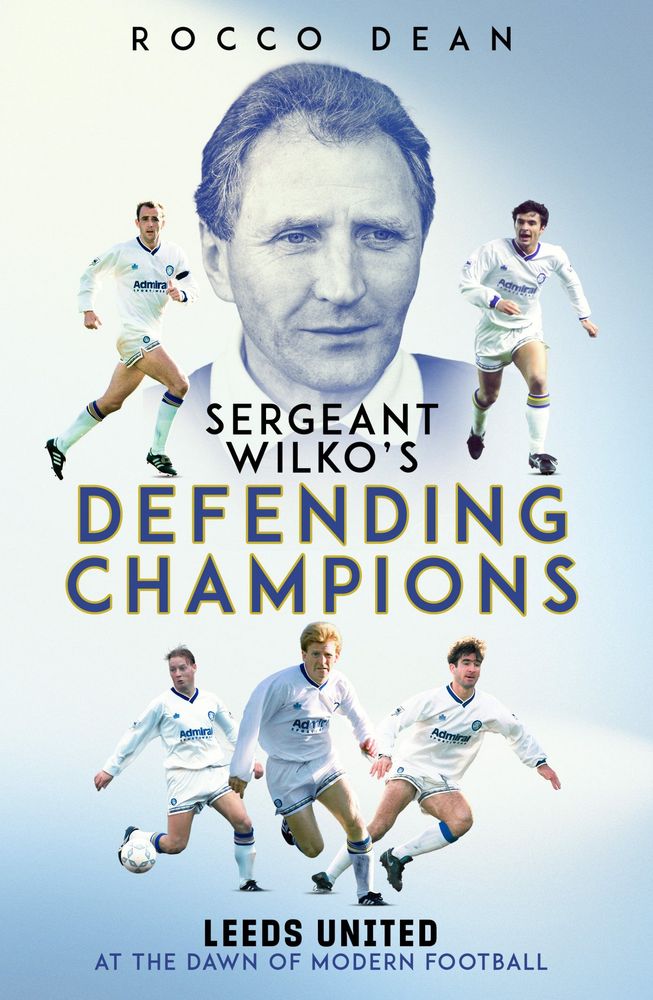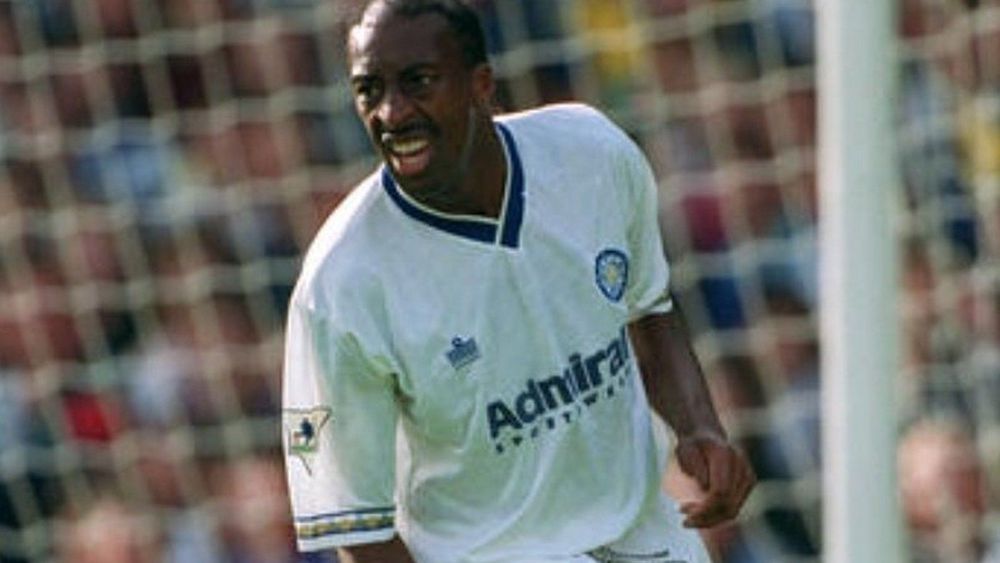
But Rocco Dean believes the champions could not have achieved it without them — and one of them even carried a remarkable Sheffield Wednesday connection with Brazilian legend Zico.
When people remember Howard Wilkinson's Leeds United, the midfield of Gordon Strachan, Gary McAllister, David Batty and Gary Speed usually takes centre stage.
Then there is Lee Chapman, Tony Dorigo and the arrival of Eric Cantona.
But Dean, author of a new book examining the extraordinary season that followed Leeds' First Division title, believes some of the less celebrated members of Wilkinson's side deserve far more recognition.
"Chris Whyte was absolutely vital for Howard Wilkinson's resurrection of the club," he tells Football Presse.
Whyte had arrived from West Bromwich Albion in 1990 after a remarkable career that had taken him from Arsenal and England Under-21s to America, where he played indoor football, before returning to English football.
For Leeds, he became a formidable centre-back alongside Chris Fairclough.
"He was a very, very solid centre-back. He was a real presence in the box for set pieces, attacking and defensively, which was such an important part of Leeds' game."
That importance was particularly obvious during the title-winning campaign, when Leeds' ability to exploit set pieces became one of their great strengths.
Whyte played 34 league matches in 1992-93, but the following season exposed just how much had gone wrong defensively.
"Him and Chris Fairclough at the back, just for whatever reason, they just weren't at the races."
"Defensively, yeah, we went from the best team at set pieces to the worst. It was so stark and unexplainable for anyone really."
Dean also remembers a different side to Whyte's game that is largely absent from modern recollections.
"You'd see him and you'd think, you know, quite a gangly defender."
"But I always remember how silky he was at skipping past an attacker. If an attacker was running towards him to charge him down thinking he's just going to boot it, he just sidestepped them."
"He used to do it all the time. It was a bit of a party trick. It was quite basic, but in 1992 it felt quite impressive."
If Whyte was the overlooked defensive foundation, Speed and Batty were the quiet engines of the midfield.
Speed, in particular, has become increasingly appreciated with the passing of time.
"He was just a phenomenal player," Dean says.
"Looking at what they did and how they played, some of the highlights, some of the reruns of the matches like the Stuttgart game, that incredible comeback, the way Speed played that day — he was playing as a central midfielder that day, just a complete midfielder."
Leeds overturned a 3-0 first-leg deficit against VfB Stuttgart with a 4-1 victory at Elland Road in September 1992, with Speed scoring one of the goals.
Dean's appreciation of Speed has changed with age.
"I think for me, as I got older, Speed, he probably did go a bit stale at Elland Road and he wasn't having the impact by the mid-'90s."
"But looking back at what a fantastic player he was, it sort of almost fills me with regret that I didn't appreciate him enough at the time."
Speed's contribution was enormous. He played 39 league matches in the 1992-93 season, more than any Leeds outfield player other than Lee Chapman, and had been named the club's Player of the Season during the title-winning campaign.
Then there was Batty.
Often remembered primarily as a ball-winner, Dean argues that description badly undersells him.
"Batty himself was just a phenomenal player, and I think underrated for his ability on the ball."
"He was seen as a hard man, a ball winner, a destroyer. But we saw when he came back to Elland Road in his later years what a terrific footballer he was as well."
"His passing was exemplary, his football brain, his footwork — technically a fantastic player."
Batty was also capable of spectacular finishing when he chose to shoot.
"You see some of the goals that he scored. He scored some fantastic goals."
"He just never used to want to shoot."
Together, Speed and Batty formed part of a midfield that Dean believes contained five genuinely world-class players when Tony Dorigo is included.
"That midfield quartet and Tony Dorigo, I think they were the five world-class players in that team that helped them to win the league."
And then there was Sterland.
The Leeds 'Zico'
Sterland had joined Leeds from Sheffield Wednesday in July 1989 for around £600,000, reuniting with Wilkinson, and became one of the most attacking full-backs of the period. His free-kick ability had already earned him the nickname "Zico" at Hillsborough.
Dean's research uncovered just how much affection still exists for him.
"I went to Hillsborough the other day, I went in their megastore, and on the back wall there's a huge photo, like a mosaic of all their club legends."
"And on the changing room wall is a Brazil shirt with number 2 Zico on the back."
"That is referring to Sterland because his nickname starting from Sheffield Wednesday, they called him Zico because he was so good at free kicks."
For Dean, seeing that tribute was unexpectedly moving.
"He was honoured on that wall of Sheffield Wednesday greats, which really warmed my heart."
Sterland was also hugely important to Leeds' title-winning football. His attacking runs and delivery complemented Dorigo on the opposite flank, giving Wilkinson's side width and another route towards Chapman. He scored six league goals in the championship-winning campaign.
But injury cruelly robbed Leeds of much of his contribution during the title defence.
"We just missed him so much that second season."
"The team was lopsided without having him marauding down the wings."
Sterland eventually returned after multiple ankle operations, only to suffer another injury that effectively ended his Leeds career.
"He came back and he was actually playing well, and then he just did it again, and that was the end of him."
"And yeah, it must have been so hard for him to take that."
Dean's personal verdict is unequivocal.
"He was such a great guy as well. I have had the pleasure of having a little chat with him. Just a brilliant, brilliant guy."
"As good a guy as he was a right-back."
Those players help explain why Leeds' 1991-92 title was not simply the product of a handful of famous names.
The midfield stars attracted the headlines, Chapman scored the goals and Cantona later became one of football's most famous figures. But Whyte's defending, Speed's extraordinary versatility, Batty's intelligence and Sterland's attacking threat formed part of the machinery that made Wilkinson's champions work.
And perhaps that is why the subsequent collapse was so extraordinary.
These were not simply a few celebrated players surrounded by ordinary footballers. They were a remarkably deep, balanced side whose supporting cast was every bit as important as its headline acts.
Rocco Dean's book "Sgt Wilko's defending champions" is from Pitch Publishing - which is available here.