
It was a football club designed to give youngsters in the East End of Newcastle an opportunity to play.
While pursuing his own ambitions at St James' Park, Clark was spending Thursday evenings coaching children and Sundays running a team. What began as a community initiative would go on to enjoy a long history, with Shola Ameobi and his younger brothers Sammy and Tomi among the youngsters who came through its ranks.
Nearly four decades later, Walker Central is still going, something Clark takes considerable pride in.
"That came from the aforementioned Brian Clarke," Clark told Football Presse. "Brian was from the Walker area of Newcastle, which is the East End, and I was from there as well.
"We didn't have anything for the kids of Walker. We had Wallsend Boys Club, and then you had St Mary's and things like that, but there was nothing in the Walker area.
"He'd done a lot of great work at Wallsend, but he wanted to go on his own and he set up Walker Central and he asked me to be a part of it.
"I was always keen on coaching, even at a young age. I enjoyed watching and taking notes of sessions, what my managers and coaches had done, even at such a young age.
"I used to take the boys for training one night per week and then we'd have a match on a Sunday, and I absolutely loved it.
"We got that up and running. And with the backing of local businessmen who helped fund the club and help run it with the finances that required, it went on to have a fantastic, successful period of time since it's been started. And it's still going now."
Clark's involvement was about providing something for children in the neighbourhood where he had grown up. He understands the importance of grassroots football and the opportunities it can offer to youngsters who might otherwise miss out.
"It's given the opportunity for, dare I say it, but that's where I'm from and I'm not ashamed, of underprivileged boys and girls to get an opportunity to be part of a team and learn those disciplines and enjoy being together with friends, playing football and training and keeping fit.
"So yeah, it's something that I'm proud that I was part of."
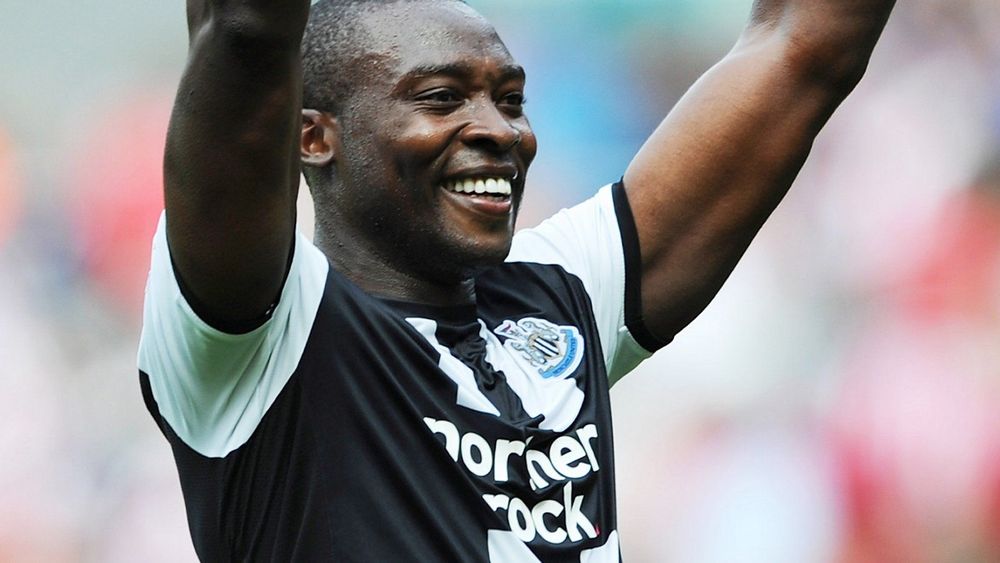
Among the club's most notable success stories was a young Shola Ameobi, who would eventually become a prominent figure at Newcastle United. Clark remembers the connection with particular affection, especially given the progress made by the Ameobi family.
"Brian Clarke, who set it up, unbelievably one of our first young boys to come through that set-up at Walker Central was a young Shola Ameobi.
"Shola and his younger brothers came through that as well. So Shola still plays a big part in the community and in the football club as well.
"And so there's many a success story. It's like a lot of the boys' clubs of the area.
"We have a real rich history of good competitive boys' club football in the area. Now, obviously, with girls' teams as well and ladies' teams, and they carry on that success. And that's why the North East's been a good breeding ground for professional footballers."
For Clark, the experience was never simply about identifying future professionals. He enjoyed the coaching itself, and the commitment required to balance his own football career with helping youngsters develop.
Asked where that dedication came from, he explains that it was simply an extension of his lifelong love of the game.
"No, I just loved it. I love football, you know. People have asked in the last few weeks when I've been getting involved in management why I want to do it at the age of 54, but I love football.
"I love watching it. My family ridicules me because I'm sitting watching any kind of football on TV sometimes, and not even an English channel in the commentary.
"So I try and tell them it's because I'm trying to learn a different language, but it's not really. It's just I love football. It's what I've known. It's the only thing that I've known and I love.
"I've been surrounded by it with family and friends all my life, and I love being a part of it.
"It's been a great way to have earned a living. It's a great way to have enjoyed the lifestyle that I have, but it's also just something that I love doing.
"As long as I can remember, there was a ball. And as I said, I came from the East End, Newcastle. We didn't have a lot. I was the boy who had the football. So if they didn't play it to my rules, I would take the hoof and pick the ball up and go home."
That early coaching experience also reflected something Clark had been considering for a long time. Even while developing as a player at Newcastle, he was already thinking about what would come after his playing career.
He began taking coaching badges early, determined not to reach retirement without having prepared for the next stage of his life in football.
"I didn't want to get to the end of my career and then think, oh, what am I going to do? I start my coaching badges now.
"I started them early, so I was gaining my coaching certificates as I played. So when the day eventually came, I thankfully was in a position where I could make the decision when my career finished. I had something to go into.
"I never hid the fact that I always wanted to be the manager, but I knew I had to do the necessary work, becoming a coach and then an assistant and learning from experienced people.
"And yeah, we got the opportunity and just went from there, really. So yeah, I knew. I knew what I wanted to do."
Clark's journey into management would eventually take him around the country, but the foundations were already being laid while he was still a teenager. Walker Central gave him the opportunity to coach, learn and contribute to his local community while continuing to pursue his own playing ambitions.
The fact that the club is still operating today, with the Ameobi brothers among its graduates, provides a lasting reminder of what can come from giving young people an opportunity.
For a 16-year-old who was already chasing his own Newcastle United dream, it was another way of making a contribution to the football community that had shaped him.