
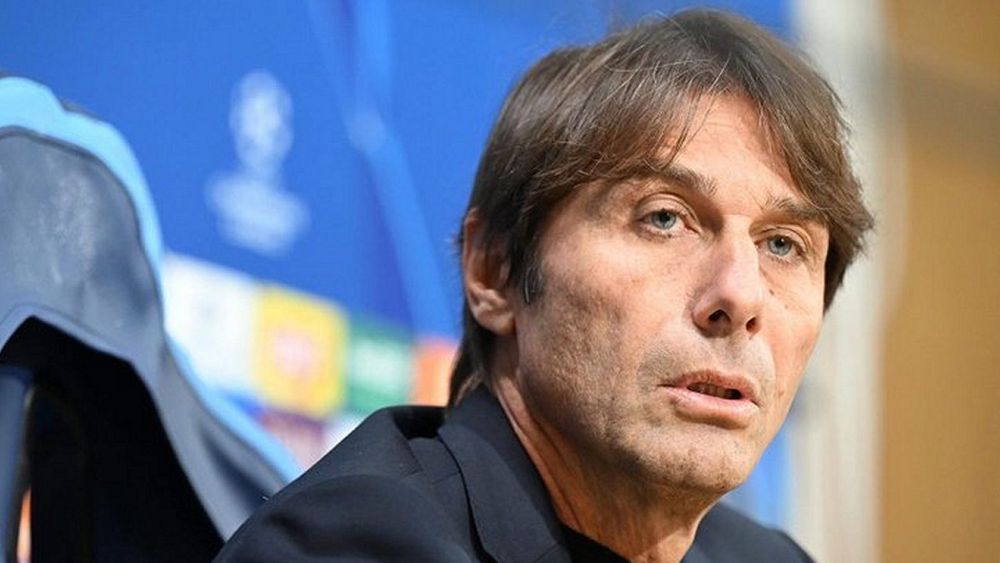
Having worked with Antonio Conte at Siena and Gian Piero Ventura at Pisa, the former French midfielder has a clear distinction between the qualities of the two managers, believing Conte's relentless demands could become difficult to sustain while Ventura possessed exceptional coaching ability but lacked the managerial qualities required to succeed with Italy.
Genevier may not be a household name outside Italian football, but he spent 21 years playing in the country after progressing through the academy at Lyon. He made his move to Perugia in 2003, subsequently representing clubs including Pisa, Siena and Torino, experiencing different levels of Italian football and working with several prominent coaches along the way.
His time at Pisa between 2007 and 2009 was particularly memorable, both for the football and his relationship with Ventura.
"This experience was very, very positive," Genevier told Football Presse. "I have very good memories of Pisa, and I had probably one of my best seasons as a player. We reached the semi-final of the play-offs the first year, and at the end of the second year I had a lot of Serie A teams who tried to sign me.
"Even with the coach, everything was perfect, the atmosphere. There were a lot of players coming from Serie C at this time, so we wanted to play in Serie B and we were very available with the coach.
"For me, Gian Piero Ventura was probably one of the best coaches in terms of football. His training sessions, his ideas, and his way of explaining the game were very good, and I improved a lot with him."
It was an endorsement that Genevier would reinforce when discussing Ventura's coaching methods in greater detail. His admiration was based on the daily experience of working under him, particularly the way he communicated his footballing ideas and developed players.
Genevier's subsequent move to Siena offered a contrasting experience. Having attracted interest from several Serie A clubs after leaving Pisa, he believed joining a smaller top-flight side would provide the best opportunity to establish himself in the division.
Instead, his time at Siena proved disappointing. He struggled for regular opportunities and suffered a serious knee injury in 2010, aged 28, which kept him out for almost a year. It was a particularly difficult setback because he felt he was reaching the best period of his playing career.
"So Siena was not very positive because when I was at the end of my contract in Pisa, I had a lot of opportunities in Serie A. I chose Siena because I thought that it would be the best decision because it was a small team in Serie A, and for me coming from Serie B, it was probably the best decision.
"In fact, it was not like that because I didn't play a lot and I had a serious knee injury in 2010 when I was just 28 years old, I think. And it was a very important moment for me. I was probably at my prime. It was the best moment of my career for me.
"And it was very difficult because I missed almost one year. I didn't play a lot, maybe the last 10 minutes of the last game of the season with Antonio Conte."
Although Genevier's opportunities to play under Conte were limited, he remembers the manager's standards and mentality particularly well.
"Conte was a very good coach because I remember his high standards and his strong mentality."
However, Genevier also has reservations about the intensity of Conte's approach, believing the demands he places on his players and those around him make it difficult to maintain the same relationship over an extended period.
"In my opinion, Conte is a very demanding coach, you know, and that's why it's not easy. He can't stay more than a couple of years in a team because he wants too much from everyone and it's not easy."
Conte has subsequently established himself among Europe's most successful managers, winning league titles with Juventus, Chelsea, Inter Milan and Napoli. His uncompromising standards and demanding approach have become defining characteristics of his coaching career.
For Genevier, however, Ventura remains the coach who made the greatest impression on him in terms of understanding and teaching football.
"He was probably on the field the best coach for me."
His praise is accompanied by a significant criticism of Ventura's managerial capabilities, particularly when it comes to dealing with players outside the daily working environment of a club.
"He was very focused on the field because he was not a good manager. That's why he didn't have a lot of success, in my opinion, with the national team in Italy, because, you know, with the national team you have to manage the players, and you don't have a lot of time on the field with the players, and he was not ready for that.
"He's one of the coaches who need to have the team every single day because he has a lot of things to transmit to the players. He needs time."
Ventura's time with Italy ended in disappointment when the national team failed to qualify for the 2018 World Cup, losing their play-off against Sweden. It was the first time Italy had missed the tournament since 1958.
Genevier believes the demands of international management exposed Ventura's limitations, with the former Pisa coach better suited to working with players every day and developing his tactical ideas through regular training sessions.
Importantly, his criticism is not personal. Despite his reservations about Ventura's managerial qualities, Genevier retains considerable affection for the man who had such a positive influence on his development.
"Honestly, I still have a good relationship with him because he was a nice person, but he was not a good manager."
For a player who spent more than two decades in Italian football, the distinction between the two managers remains clear. Conte impressed him with his standards and mentality, but Ventura's ability to teach the game, communicate his ideas and improve players left the deeper footballing impression.
It is a reminder that the qualities required to be an exceptional coach and those needed to manage an entire football club or national team are not necessarily the same.