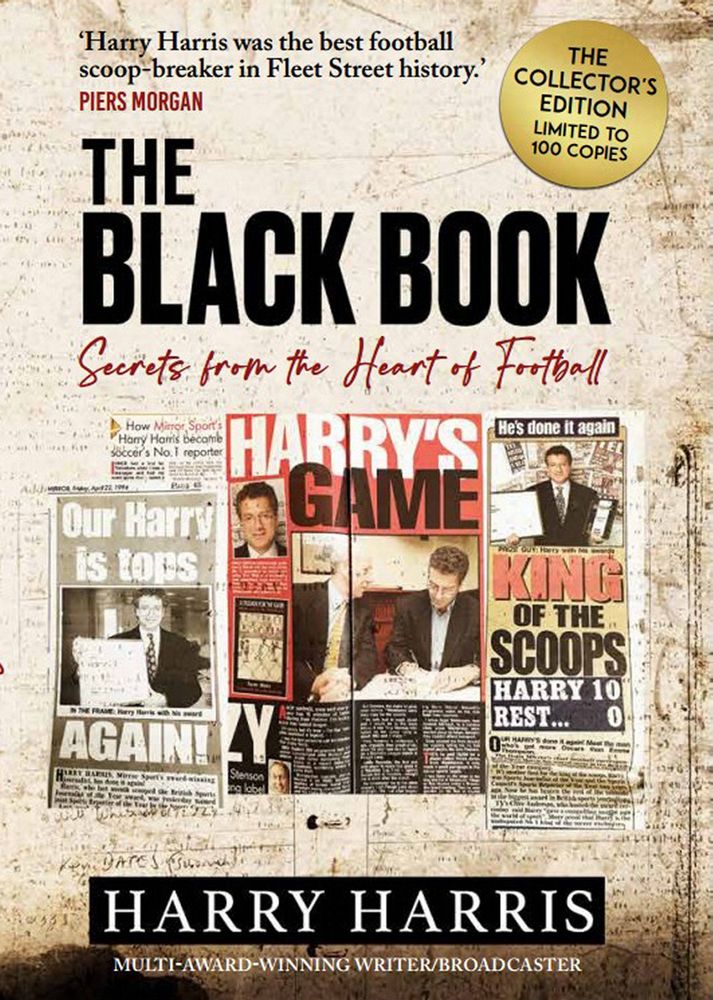

The journalist and the former Chelsea chairman were great friends, but there were disagreements, a ban from the Stamford Bridge press room and two High Court trials along the way. They eventually reconciled, and Harris's experiences gave him a first-hand view of one of the most turbulent periods in Chelsea's history.
Asked whether it was true that Bates had banned him from the Chelsea press room, Harris confirmed the story.
“Indeed. I was. We did have our ups and downs. He took me to two High Court trials, but we were best of friends at the end,” Harris smiled, speaking with Football Presse.
The ban had clearly caused a serious rift at the time. Harris was not even certain whether Bates continued to hold a grudge, but he remembered that the chairman had certainly been unhappy with him.
“I'm not sure whether he held a grudge or not, but because he did ban me, but he held a grudge at the time, that's for sure. But he — we got back together, so we were — a few ups and downs.
“It's all the details of that in this book, which is I think well worth reading because it's just amazing what life was like back then, that you had — journalists had this kind of relationship which you could have these ups and downs.
“I don't think journalism is quite the same now where journalists could be that close. So it would never happen like that now.”
For Harris, the relationship was representative of a different era in football journalism, when reporters could become personally close to club chairmen, even if that relationship sometimes broke down spectacularly.
His connection with Bates also meant he found himself caught up in Chelsea's internal power struggle during the 1990s. Asked whether he had covered the boardroom battle between Bates and Matthew Harding, Harris corrected the premise.
“Oh no, I didn't cover it. I was in the middle of it.”
The conflict was serious, with Harris in no doubt about how close the club came to tearing itself apart before Roman Abramovich's arrival.
“Well, it was tearing itself apart. There was no question. Yeah, no question about it.
“So I remember, and in those days you had access outside the dressing room at Stamford Bridge where a selected group of journalists like myself would wait to meet, speak to the players and the manager. I'd have a chat with one or two players, speak to Glenn Hoddle, we'd pass it through.
“Then I'm just standing there with about 2 other journalists and Matthew Harding passed and he looks at me, moves, walks on, stops, does a U-turn, comes back, comes to me, he says, 'You're the one I've got to watch out for.'
“Then went off again.
“And he was right. He was dead right.”
It was a revealing encounter. Harding clearly regarded Harris as someone who could influence the situation, and the journalist's recollection underlined just how personal the divisions had become.
Bates had bought Chelsea for £1 in 1982, when the club was crippled by debt and Stamford Bridge was under threat. Harris was asked whether modern Chelsea supporters gave the former chairman enough credit for saving the club.
“No, no, they do. They love him even to this day. Yeah, yeah. They — I've always experienced being with Ken and, and the connection he had with the Chelsea fans. They just adored him, and rightly so, because of what he did for the club.”
Harris had witnessed that connection personally. Whatever the controversies surrounding Bates, he believed Chelsea supporters recognised the significance of what the chairman had done for their club.
The arrival of Abramovich in 2003 brought a new financial reality to English football. Harris was asked how quickly Bates realised that the game had changed.
“Oh no, no, he realized, but you know, he was adaptable.
“But he could have battled on, and he was the kind of person who would have battled on, and he might well have resolved the financial issues, and there were other options out there flying around, but this was the simplest, the cleanest, straight cash deal, no strings attached.
“And like all people with a good business sense, you know when the time is right to take the money and go.”
Bates's sale of Chelsea marked the end of his 21-year period in charge. Harris's assessment was that he understood the changing landscape and recognised the value of accepting a straightforward offer rather than continuing to fight on.
Harris also had a wider perspective on the reaction among football's established chairmen when wealthy overseas investors began taking control of clubs. Asked about the immediate response behind closed doors when figures such as Abramovich entered the game, he recalled a strongly negative reaction.
“They loathed it. They were totally against it.
“And it clearly changed football and made life harder for a lot of owners and chairmen.”
For Harris, Bates's place in Chelsea's history cannot be separated from the circumstances in which he took over, the fight to preserve the club's home and the eventual decision to sell. His own relationship with the chairman was complicated, but it gave him a close view of the man behind the public controversies.
Bates could ban a journalist from the press room and take him to court, yet the two could ultimately become friends again. Harris also saw the affection Chelsea supporters continued to hold for him, and believes they understood what he had done for their club.
Harry Harris is author of "The Black Book: Secrets from the Heart of Football" from Legacy 11 Books - which is available here.